Volunteer scuba divers pull 144 pounds of trash from Sasamat Lake before Christmas
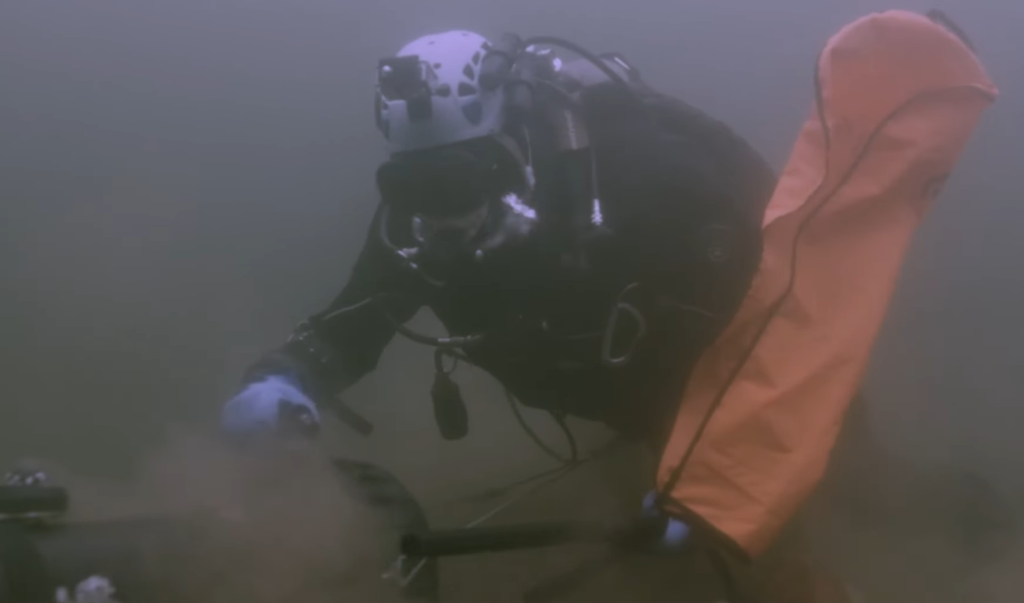
Just before Christmas, Henry Wang and a group of more than a dozen volunteers gave local residents the gift of a cleaner Sasamat Lake.
The group spent the morning of Saturday, Dec. 16 diving into the frigid, five-degree waters, collecting more than 144 pounds of trash from its depths. Instead of milk and cookies, they had donuts and coffee.
For Wang, the scuba diving challenge and environmental awareness he spreads online is gratification enough.
Local news that matters to you
No one covers the Tri-Cities like we do. But we need your help to keep our community journalism sustainable.
“I’ve been doing it long enough and making social media about it long enough that I’m starting to show a presence in people’s minds,” Wang said. “Whatever people drop in the lake, if we run into it, we pick it up.”
As the founder of Divers for Cleaner Lakes and Oceans, Wang is no stranger to B.C.’s garbage-strewn lake beds. He’s been trying to clean them up for more than a decade.
The organization, composed of dive professionals and other volunteers, travels to dozens of Lower Mainland Lakes every year to do similar cleanups.
The initiative got its start in Port Moody in 2013 after Wang and fellow founder Jonathan Martin went for a dive at Buntzen Lake and were shocked by the amount of trash resting on its floor.
After repeated trips, Buntzen was eventually cleansed of more than 1,700 pounds of forgotten garbage.
In the duo’s first eight months as lake janitors, they removed 7,700 pounds of litter from Rice Lake, Buntzen Lake, Browning Lake, Cat Lake, Alice Lake, Lost Lake and Alta Lake.
December’s Sasamat excursion resurfaced more of the same: more than 600 discarded liquor and drink containers, along with fishing rods, kayak paddles, sunglasses, clothing and other forgotten oddities. A lost cell phone in a waterproof bag was even returned to its owner.

Although Wang says they’ve slowed their cleanup pace slightly since COVID-19 due to a loss of available volunteers, the group still managed to carry out 47 dives in 2023.
“We’re kind of slowly putting the team back together,” Wang said, noting the previous two years, they carried out a combined 109 dives.
Finding qualified divers, however, is challenging in itself. They need to be comfortable solo diving in conditions with zero visibility and frequent entanglement hazards, according to Wang.
Normally, scuba divers travel in pairs, but in a lake-cleanup dive, they won’t be able to see each other due to the amount of silt that gets kicked up.
“We’re pretty careful on who we pick up,” said Wang, who is trained as a cave diver. “We purposely seek out divers that are highly certified.”
The low-visibility conditions in Sasamat Lake also make it difficult to judge how much of a dent the divers are making in the garbage problem.
Wang admits there was no real method used to grid the cleanup.
For his part, he swam out to a random point in the lake, dropped about 70 feet deep, and travelled in a straight line back, collecting everything he could before silt clouds obscured his sight.
Wang said if he sees four beer cans, he will have to feel around for the third, and often completely lose the fourth due to the silt.
“We don’t know what we can’t see,” Wang said. “I can’t get all of it sometimes. That’s just what it is. I don’t lose sleep over it, I just keep going because there is more.”
Wang said all lakes have their challenges, but most have distinct geographical features, making it easier for divers to orient themselves and be more methodical in their cleanup.
He described Sasamat Lake as a “giant nondescript bowl,” shallow around the edges and deeper in the middle.
“I don’t have a point of reference. I don’t actually know where I am in the water,” Wang said. “I’ll just pick a line and say I’m going this way.”
He said some UBC students attempting to design some mechanism to more thoroughly clean lake beds have approached him looking for video references, but Wang seemed skeptical.
Lakes have diverse floor beds: some consist of logs, others rocks, some are very silty and some have a large amount of diversity.
Wang said that anything that dredges the bottom of a lake would likely destroy ecosystems, whereas picking garbage by hand leaves the environment intact.
One might think it would be frustrating to return to a lake and see a new patch of trash in a previously swept area, but Wang chalks it up to human nature.
He said Cultus Lake in Chilliwack and Cat Lake in Squamish are the worst for garbage, simply due to the amount of recreational activity.
Wang said he can remove 150 beer cans from under Cat Lake’s dock after a long weekend.
“People are going to do what people are going to do,” he said. “People party on the lake with a lot of drinking, inevitably. You’re gonna lose things, either maliciously or unintentionally.”
Wang said it is nice to offer a normally expensive service free to local governments, and he hopes the organization can be monetized enough to be self-sustaining in the future.
His TikTok channel has reached more than 114,000 followers, and the most recent dive at Sasamat Lake was sponsored by Pacific Pilsner.
“The cleanup diving and content creation diving is just a hobby. There’s no real pay in it,” Wang said. “It’s actually pretty easy for us to do this, because we’re doing it for fun.”

Author