Port Moody holds off on changing 2050 population projection
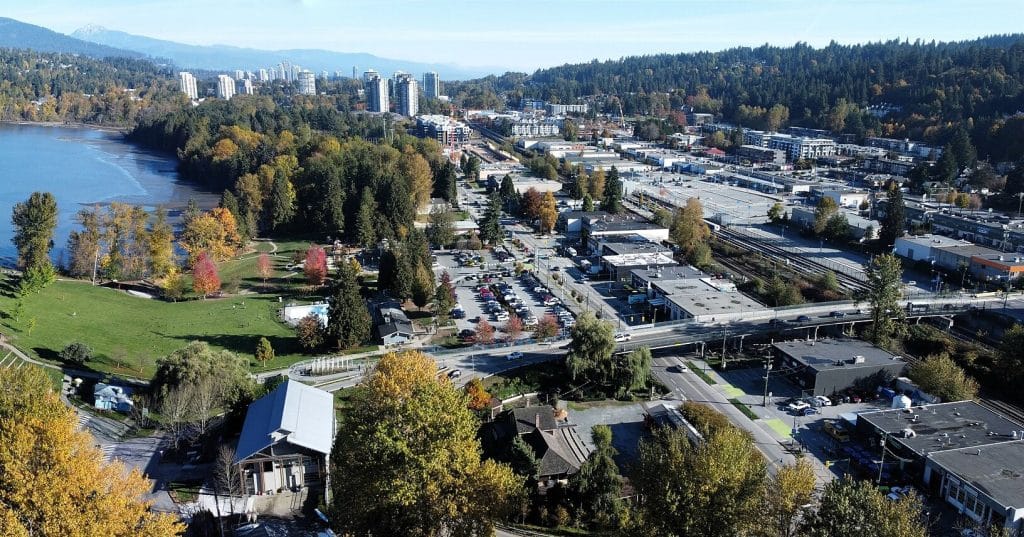
Port Moody will hold off on changing its projected 2050 population of 74,300, with council opting to wait for new census data and more information about development trends before reconsidering the figure.
Council unanimously endorsed staff’s recommendation on Sept. 29 to report back in the second quarter of 2027 with updated census data, followed by another report in the fourth quarter with information on development trends and regional growth projections.
The decision leaves the population projection contained in the city’s recently adopted Official Community Plan (OCP) unchanged for now, rather than immediately lowering it to either 70,500 or 68,000 – two alternatives presented by staff.
Local news that matters to you
No one covers the Tri-Cities like we do. But we need your help to keep our community journalism sustainable.
Coun. Diana Dilworth said there remains too much uncertainty to justify changing the projection, particularly given the relatively small difference between the current figure and some of the alternatives.
“I think it’s very reasonable at this time to just sit and wait,” Dilworth said, arguing that sending staff through another recalibration exercise would be considerable work for a relatively small change.
Port Moody’s 74,300 projection was developed through modelling that considered the city’s existing development pipeline, redevelopment potential, infill housing and new provincial rules allowing greater density around transit stations and on properties previously dominated by single-family housing.
Staff noted the figure is fundamentally different from Metro Vancouver’s projections. Metro’s 2025 high-growth scenario projected Port Moody reaching 51,182 people by 2051, but its methodology is primarily demographic, taking into account migration, births and deaths, while the city’s projection is land-based and incorporates local development capacity and provincial planning rules.
That distinction was at the heart of council’s discussion.
Coun. Haven Lurbiecki, the lone councillor to oppose the OCP when it was adopted earlier this year, said changing the population number without changing the land-use policies underlying it would accomplish little.
“When you have an official community plan, you raise your hand in support of an official community plan, you were saying you were in support of the development that is envisioned in that plan,” Lurbiecki said.
She said council had already discussed projections ranging between roughly 70,500 and 74,300 during the OCP process, and argued the exercise reinforced her earlier opposition to having staff revisit the figure.
Coun. Kyla Knowles pushed back on the characterization that supporting the OCP amounted to supporting a near doubling of Port Moody’s population.
Knowles pointed to provincial legislation requiring municipalities to allow additional density in transit-oriented areas and small-scale multi-unit housing, saying those changes substantially affected the city’s development capacity.
“To say that by voting for the plan . . . we want to see 74,500 people in the city is patently false,” Knowles said.
She nevertheless said she continues to have “serious lingering concerns” about the accuracy of the projection, particularly because of changes in the development market and the effects of provincial legislation.
Staff’s report acknowledged that current market conditions are one reason to wait. Under the option approved by council, staff will monitor development activity to get a clearer picture of project timelines and market conditions before determining whether the 2050 projection should be recalibrated. That approach requires no OCP amendment or changes to other city plans.
Coun. Samantha Agtarap said the projection should not be interpreted as a population target.
“The way I see it is it’s really planning for the infrastructure and amenities that we might need should we get to that population,” Agtarap said.
Staff told council the city’s previous OCP provides an example of the problems that can arise when the population figure and land-use plan do not align.
The 2014 OCP ultimately used a projection of 50,000 people by 2041 despite staff’s parcel-by-parcel analysis at the time estimating roughly 61,000 to 63,000. Staff said the land-use plan was not changed when council lowered the projection, and subsequent amendments allowing developments including Coronation Park, Moody Centre, Woodland Park, Westport and Oceanfront were also not fully reflected in the 50,000 figure.
Agtarap said the history helped explain why the jump to 74,300 can appear more dramatic than it otherwise would.
She also questioned how inaccurate growth projections could affect the city’s development cost charges (DCCs) and amenity cost charges (ACCs), which are used to fund infrastructure and amenities associated with growth.
The staff report stated that lowering the projection could affect both programs. Because ACC rates are based partly on the number of expected new homes, reducing growth assumptions could remove some projects from the program but could also, under some scenarios, increase costs per unit. The precise effect could not be determined without reviewing individual projects.
DCCs operate over a shorter, 10-year horizon and are used to help fund infrastructure required by new residents. Staff said most projects currently contemplated would likely still be required under a lower projection, although utility modelling could need to be rerun depending on where and how projected growth changed.
Coun. Amy Lubik similarly cautioned against treating the maximum development permitted under the OCP as something that will necessarily be built.
“Allowance isn’t necessarily a minimum,” Lubik said, noting a site zoned for a 20-storey building could ultimately be developed with a much smaller project.
Coun. Callan Morrison, who brought forward the original request with Mayor Meghan Lahti to examine recalibrating the projection, said the exercise helped clarify for residents that 74,300 is not a target council is attempting to reach.
“I 100 percent say that that is not accurate,” Morrison said.
While Morrison said he would prefer a figure somewhere between Metro Vancouver’s projection and the city’s, he acknowledged the city has to account for development that could occur, even if weak market conditions mean some projects do not proceed in the near future.
He also pointed to the uncertainty created by provincial housing legislation, particularly around SkyTrain stations, where municipalities are required to permit minimum levels of density.
Lahti said the city needs to strike a balance because an inaccurate projection can have financial consequences in either direction.
“Lower growth projections could result in higher DCC levies,” she said. “But lower actual growth could result in not receiving enough money to pay for the infrastructure that we need to bring in up front.”
The mayor said the issue is not closed and she wants future reports to provide more detail about how different components of the projection were calculated, including the number of properties affected by provincial small-scale housing requirements.
Staff estimated that immediately changing the projection to either 70,500 or 68,000 could cost between $25,000 and $250,000, depending on how much consultant work and how many master plans, financial tools and utility models would need to be revisited. An OCP amendment would also require changes to the city’s Regional Context Statement and acceptance by Metro Vancouver, with staff estimating the process would take at least four to six months.
The city will have another opportunity for a more comprehensive recalibration in the coming years. Provincial rules now require municipalities to update their OCPs at least every five years, meaning Port Moody’s plan must be updated by 2030. Staff anticipated beginning that work in 2028, when Metro Vancouver is also expected to undertake a comprehensive update of its regional growth projections using 2026 census results and updated demographic information.
Author