Port Moody urges province to make long-term commitment to climate action funding
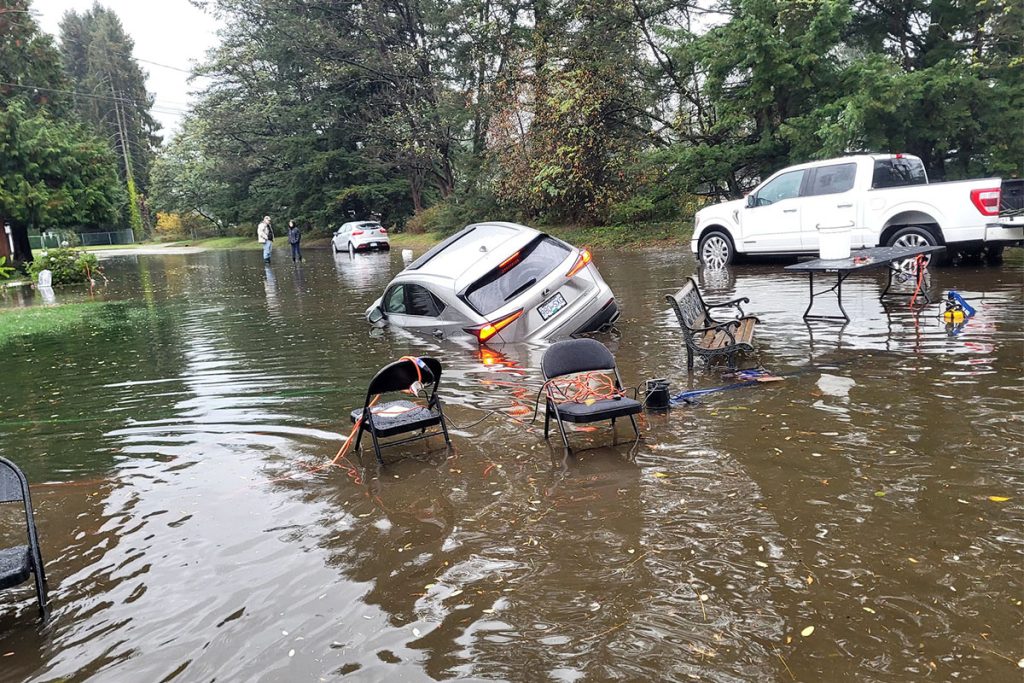
Port Moody council is urging the provincial government to commit to long-term funding for local climate action, warning that the potential loss of a key grant program could stall projects aimed at protecting residents from extreme weather and climate-related risks.
Council unanimously approved a Union of British Columbia Municipalities (UBCM) resolution on June 9, calling on the province to renew the Local Government Climate Action Program (LGCAP) for at least five years beginning in 2027 and make it a core component of its CleanBC strategy.
Coun. Samantha Agtarap, who brought forward the motion, said LGCAP has been a reliable and cost-effective funding source that helps local governments move climate plans from paper into action.
Local news that matters to you
No one covers the Tri-Cities like we do. But we need your help to keep our community journalism sustainable.
“This funding helps fill a critical gap between strategy and action, which enables implementation,” Agtarap said. “It is a proven cost-effective program that enables local governments to deliver projects that protect residents from extreme weather, including extreme heat and flooding.”
The move comes after the program was not included in the Ministry of Energy and Climate Solutions’ 2026-27 service plan, creating uncertainty for municipalities across B.C. that rely on the funding to support climate adaptation and emissions-reduction initiatives.
Under the current three-year, $74-million LGCAP agreement, local governments receive annual funding allocations that help support climate staff positions, policy development and projects ranging from building retrofits to fleet electrification and resilience planning.
Agtarap noted the program has provided stable funding for years, but its uncertain future threatens staffing, expertise and project continuity.
She added research cited by the Insurance Bureau of Canada shows investments in climate adaptation and resilience deliver benefits that outweigh costs by a six-to-one ratio.
“These inconsistent funding streams undermine our established programs through the loss of staff expertise, project continuity, and rebuilding this capacity requires significant time and resources,” Agtarap said.
Coun. Callan Morrison said he supports the resolution but suggested the funding uncertainty raises broader questions about provincial priorities.
He said he hopes the province responds to calls from local governments and that the resolution receives strong support from delegates at the upcoming UBCM convention.
“It’s a big chunk that has been taken out of climate action initiatives that local governments have counted on to be able to make meaningful action or advance plans,” Morrison said.
Morrison also added that he’s looking forward to discussions on potentially revising Port Moody’s own climate targets and timelines.
Coun. Amy Lubik described the province’s decision not to renew the program as “very short sighted,” arguing municipalities are on the front lines of responding to climate-related emergencies.
She pointed to recent atmospheric river events in B.C. and the increasing need for local governments to prepare for extreme weather.
“We think of climate targets often, but when we think about adaptation, resilience, how do we take care of our community when it comes to heat domes?” Lubik said. “Whether or not targets on greenhouse gas emissions change, it doesn’t change that the climate is becoming in some cases very dangerous to the health of our residents.”
According to the advocacy memo presented to council, local governments have relied on provincial climate-action funding programs since 2008, first through the Climate Action Revenue Incentive Program and later through LGCAP.
Staff warned that discontinuing the program could lead to the loss of climate positions, delayed projects and reduced capacity, particularly in smaller communities with limited tax bases.
The resolution will be forwarded to the annual UBCM convention next fall.
Author