$165M federal loan to fund hundreds of rental homes at Port Moody’s Inlet District

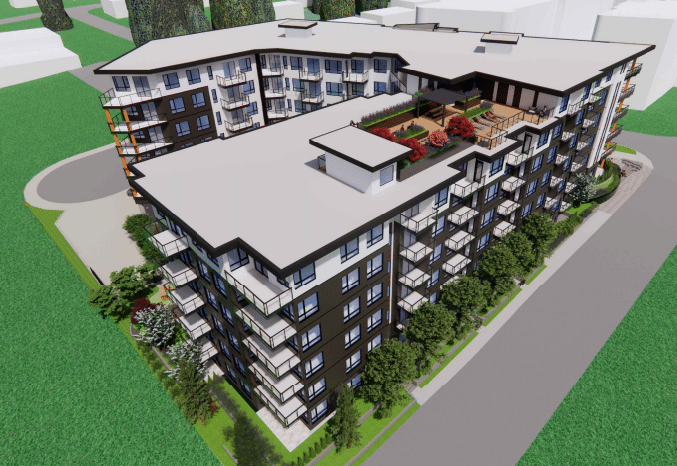
Wesgroup has secured more than $165 million in low-cost financing to help build 342 rental homes at its massive Inlet District development in Port Moody, including 86 below market units.
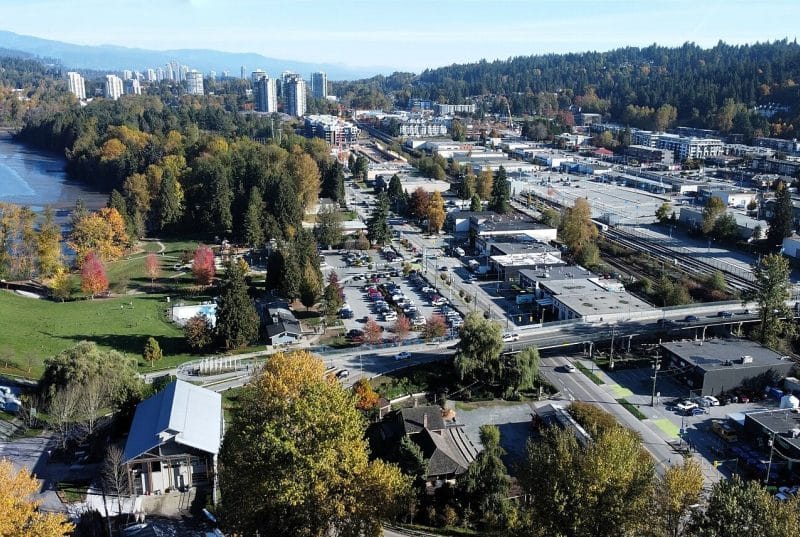
The federal funding was announced on Friday, Aug. 28 at the 15-acre Inlet District construction site just north of the Inlet Centre Skytrain Station, and comes through the Canada Mortgage and Housing Corporation’s Apartment Construction Loan Program (ACLP).
Kaylen Blomkamp, Wesgroup’s director of development, said the financing is helping the company move ahead amid difficult conditions for rental construction.
Local news that matters to you
No one covers the Tri-Cities like we do. But we need your help to keep our community journalism sustainable.
“Delivering rental housing at this scale requires strong collaboration between government and the private sector,” Blomkamp said. “We are grateful for CMHC’s investment and the City of Port Moody’s continued support, which together are helping us move this important project forward and deliver much-needed homes in a complete, transit-connected community.”
The funding marks a significant step forward for a rental component that was still uncertain in a project that intends to add more than 5,500 new residents to Port Moody’s population – the biggest development in the city’s history.
Council originally approved the Coronation Park redevelopment in 2023 with six towers ranging from 26 to 31 storeys, roughly 2,600 homes and 100,000 sq. ft. of commercial space. At the time.
Only 101 homes were planned as rentals and none were below market, which was a common criticism of the project. Wesgroup later signed a letter of intent offering to explore additional affordable housing in exchange for more density.
In May 2025, Wesgroup returned to council with a proposal for substantially more density, arguing the additional development was needed to offset roughly $30 million in unexpected Metro Vancouver development cost charges and make a purpose-built rental building financially viable.
That proposal included adding another tower and increasing the height of three others. In exchange, Wesgroup proposed converting one of the towers along Ioco Road entirely to rental housing, with one-quarter of its homes offered at below-market rates.
At the time, Wesgroup said access to the federal loan program was key to making the rental component work, and asked council for a letter confirming the city supported the project’s alignment with CMHC’s affordability goals.
Council unanimously agreed to provide the letter, and later approved an amendment that would convert an office building into a rental housing building to keep the project on track.
Friday’s announcement confirms Wesgroup has now secured that federal financing.
Mayor Meghan Lahti called the funding announcement “excellent news for Port Moody,” pointing to the need for housing for young people, families, seniors and essential workers.
“This project will increase the supply of much-needed rental housing in Port Moody, in a transit-oriented, well-connected location. It’s an example of what can be achieved when governments, community partners such as CMHC, and the private sector work together toward a common goal.”
The federal government said the broader master-planned community, formerly known as Coronation Park, is expected to eventually include more than 2,500 homes, commercial space, a daycare and grocery store.
Along with the $165 million federal loan, Wesgroup is contributing $19.29 million in land and cash equity toward the project.
The ACLP provides developers with fully repayable, low-interest loans intended to encourage construction of purpose-built rental housing. As of March, CMHC had committed $30.82 billion through the program toward more than 78,200 rental homes across Canada.
Port Moody-Coquitlam MP Zoe Royer said the Inlet District funding will help ensure workers and families can continue living in the community.
“This project will create more rental homes in Port Moody, helping families put down roots and ensuring that young people, teachers, healthcare professionals, and other workers can continue to live and thrive in the community they call home,” Royer said.
Author