Tri-Cities turn mostly blue as Conservatives flip three ridings
Just two years after the B.C. NDP ran the table in the Tri-Cities, the Conservative Party very nearly flipped that table, taking three of five ridings on their way to forming majority government.
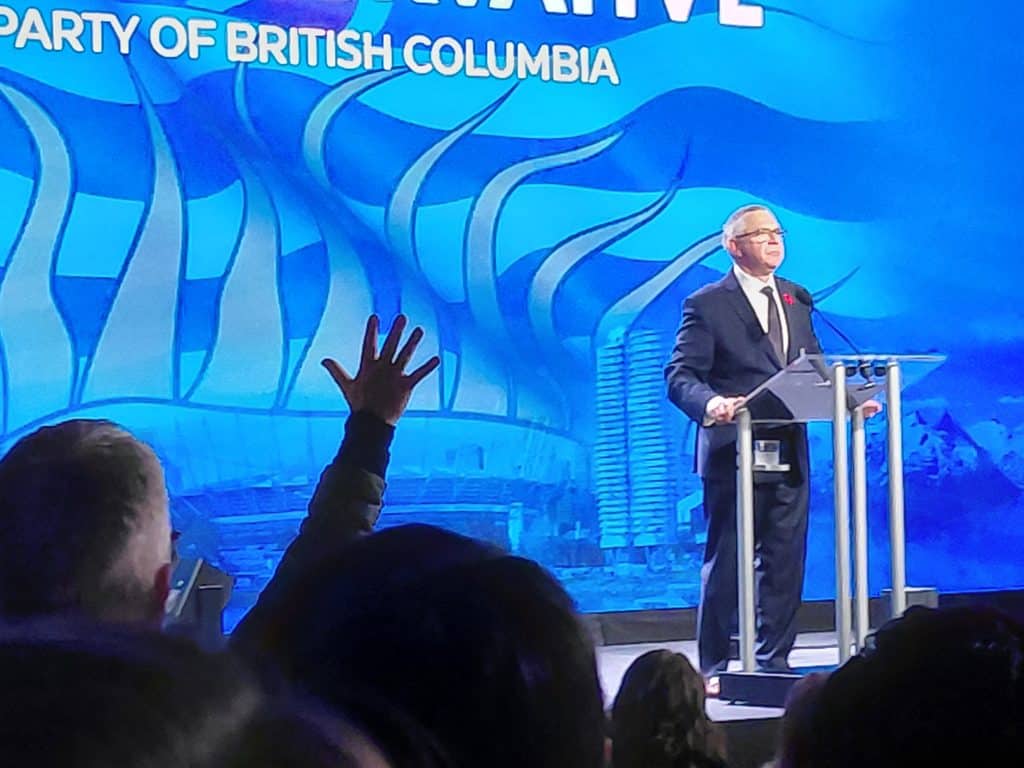
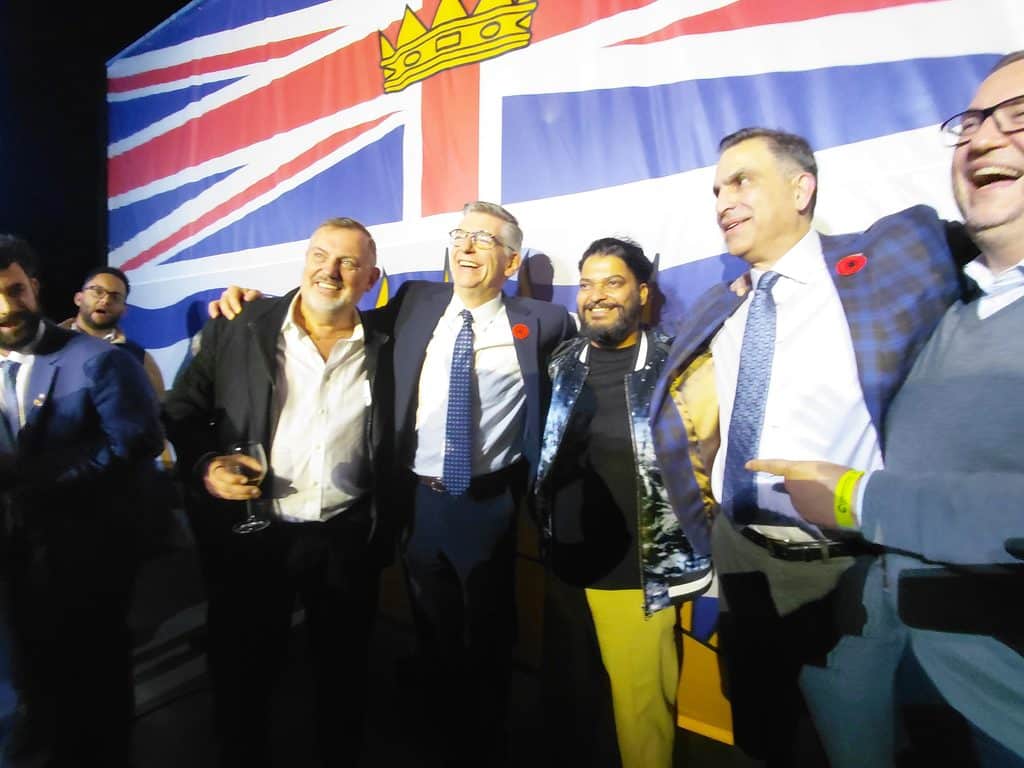
The mood was euphoric off Terminal Avenue in Vancouver where Conservative supporters packed an event centre, cheering and embracing and occasionally chanting “Lorne!” as premier elect Lorne Doerkson made his victory speech.
“I believe in the protection of private property rights,” Doerkson said, before being drowned by cheers. “And a British Columbia where parks are open to all British Columbians.”
Local news that matters to you
No one covers the Tri-Cities like we do. But we need your help to keep our community journalism sustainable.
Doerkson underscored the need for fiscal prudence as the new government aims to make B.C. the most prosperous province in the country.
“I want a B.C. where a hard day’s work gets you a family home and a future right here,” he said. “To the business owner that is thinking about taking what they have built somewhere else in this country, I am begging you to stay. . . . We are going to make it worth your while, I promise you that.”
Attendance was sparse and enthusiasm was muted across town as the NDP faithful filed into a Vancouver hotel near the harbour and nodded along to tunes by Loverboy and Neil Young.
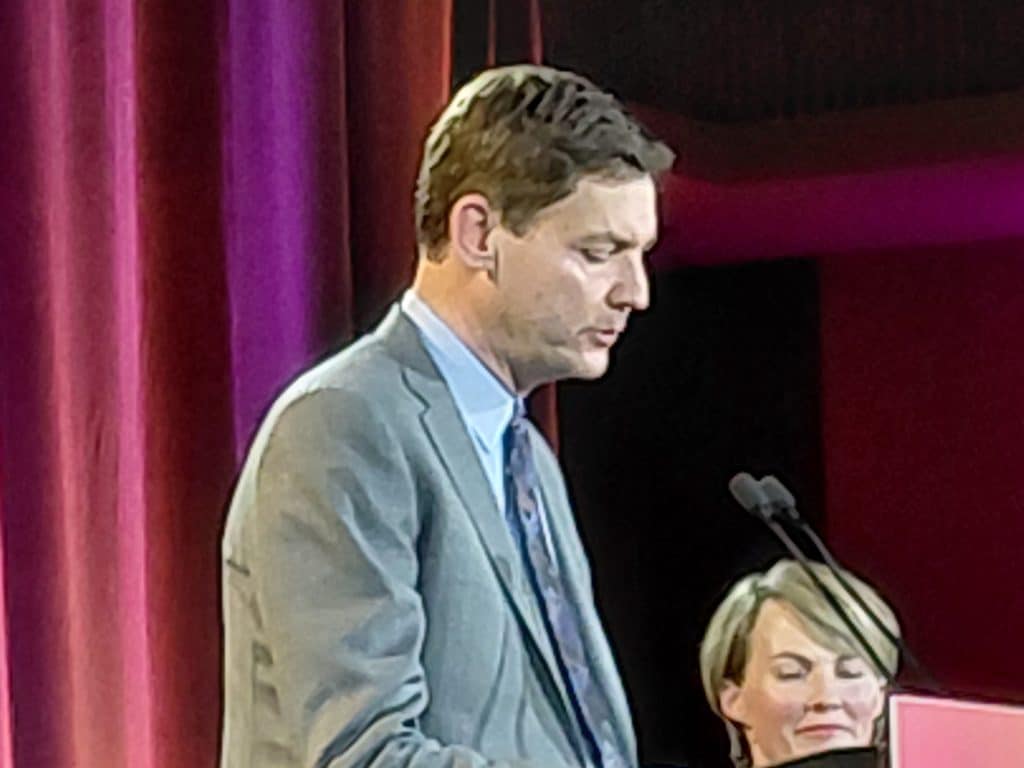
“The people of British Columbia have asked us to be the official opposition,” Premier David Eby told the crowd.
During his brief speech, the premier noted that a great many hard-working NDP MLAs fell short at the polls on Saturday.
“It breaks my heart and I accept full responsibility,” he said.
He listed NDP accomplishments – schools built, the minimum wage boosted, family doctors added – but explained that a change in the party was necessary.
“I’ll be offering my resignation as premier,” he said. “Obviously,” he added, drawing titters from a few supporters. “It is time for new leadership within our party,” he concluded.
Port Moody-Burquitlam
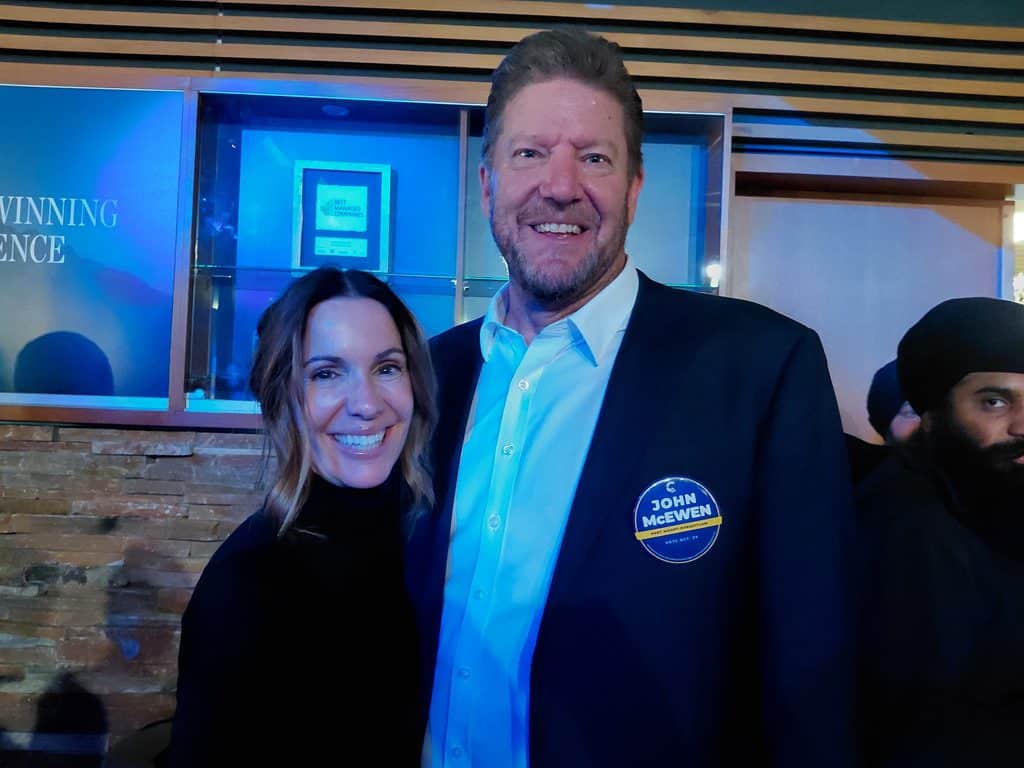
Former Anmore mayor John McEwen made the jump from the village to Victoria as he defeated incumbent Rick Glumac in a riding that has recently supported the NDP.
“We started from nothing,” McEwen said, reflecting on the whirlwind election period.
The MLA-elect had been about to step away from politics when the election was called. McEwen switched into campaign mode and soon found he had a certain about of name recognition.
“A lot of people knew me already,” he said, noting his work as a mayor and a vice-chair at Metro Vancouver.
However, in going door-to-door McEwen said he sensed both that a majority of voters wanted a change and that the NDP were failing to persuade the electorate.
“It seemed like Eby and the NDP just kept tripping over their feet . . . they didn’t understand what voters were really after,” he said.
McEwen received 46 percent of the vote, finishing a little more than four percent ahead of Glumac.
Glumac’s support dipped by approximately 10 percent compared to 2024.
Glumac campaigned on his work bringing an Urgent Primary Care Centre to Port Moody and a plan to turn Burrard Thermal into a “utility scale battery storage facility.”
“This is the start of good local jobs, a stronger local tax base, and a cleaner energy future for our region,” he stated.
Green Party candidate Wei Chou finished with eight percent
Port Coquitlam
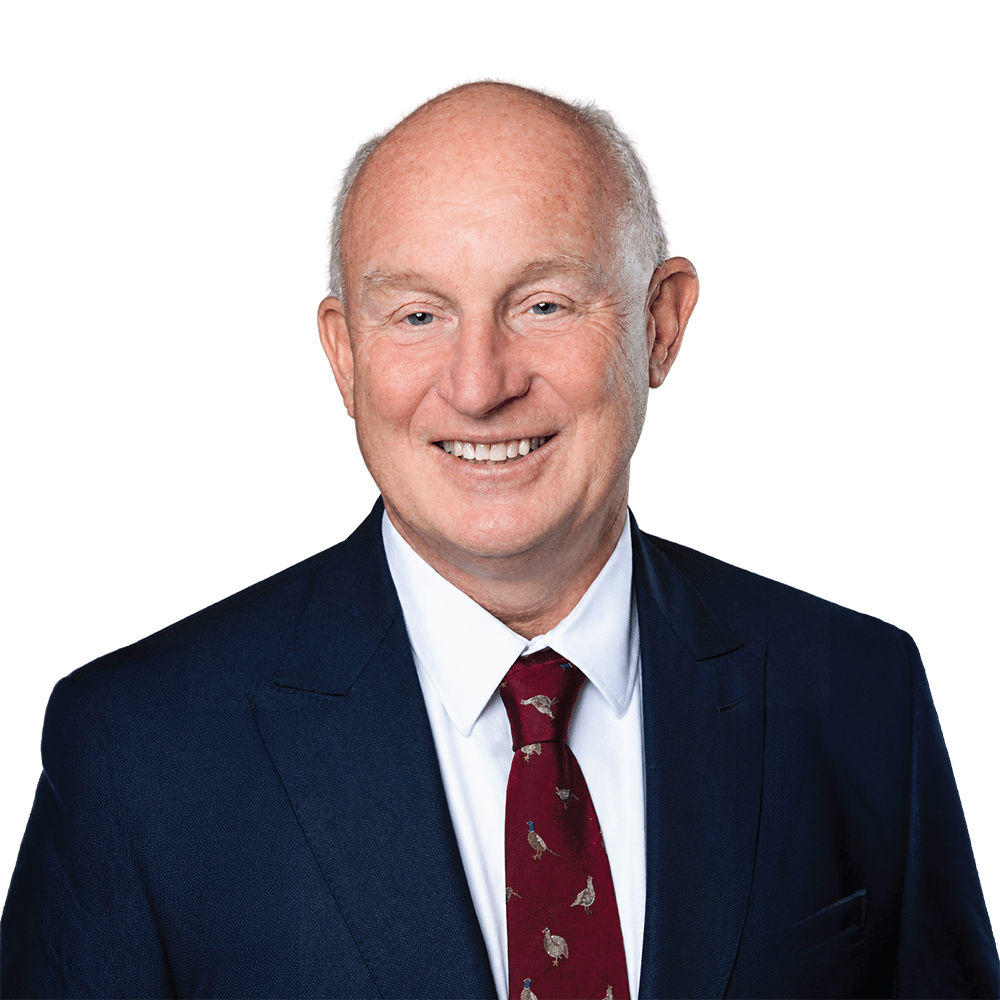
The city of rails and rivers was one of the few bright spots for the NDP, as incumbent Mike Farnworth held off Conservative Party challenger Keenan Adams in a replay of the 2024 election.
However, while Farnworth won by 15 percent in 2024, he squeaked by Adams on Saturday, winning by a little more than 400 votes, or 1.8 percent.
Adams congratulated Farnworth on Saturday.
“He deserves it,” he said. “The people made their choice and I wish him the best.”
Farnworth has now won seven straight elections in the riding.
During the campaign, Farnworth noted upgrades were underway to the Coquitlam River Bridge to “ease local congestion” and make the area more walkable.
“Working alongside TransLink and the federal government, we are upgrading the Port Coquitlam Transit Centre to support electric buses and double deckers to expand service frequency and reliability across PoCo,” he stated.
Coquitlam-Burke Mountain

The Conservative Party had a particularly strong showing in Coquitlam-Burke Mountain, where Ryan Peterson notched 52.5 percent of the vote.
After winning a nailbiter in 2024, NDP incumbent Jodie Wickens finished with 39 percent of the vote on Saturday.
Peterson thanked Wickens for being a “committed leader” in the community while acknowledging the responsibility that comes with forming government.
“it’s up to us to deliver on our commitments,” Peterson said, noting the pledge to bring an MRI to Eagle Ridge Hospital and build the Burke Mountain Middle School.
Peterson characterized the timing of the election as: “David Eby trying to save his job,” he said.
“They ran one of the worst campaigns in Canadian history,” Peterson added. “Their economic policies were absolutely destructive to our province. . . . The timing of the election was absolutely appalling.”
Being out on the campaign trail, Peterson said the economy was the top issue, adding that there’s also a need to get drugs off the street and improve B.C. hospitals.
“We’re not going to cut health care. We’re going to transform heath care and make it work for British Columbians,” he said.
He also encouraged greater communication with residents.
“Of course we’re going to make mistakes . . . so talk to us,” he said.
B.C. Green Party candidate Valerie Morrison finished with just under six percent of the vote while Kaden Mann of CentreBC received 2.1 percent of the vote.
Coquitlam-Maillardville
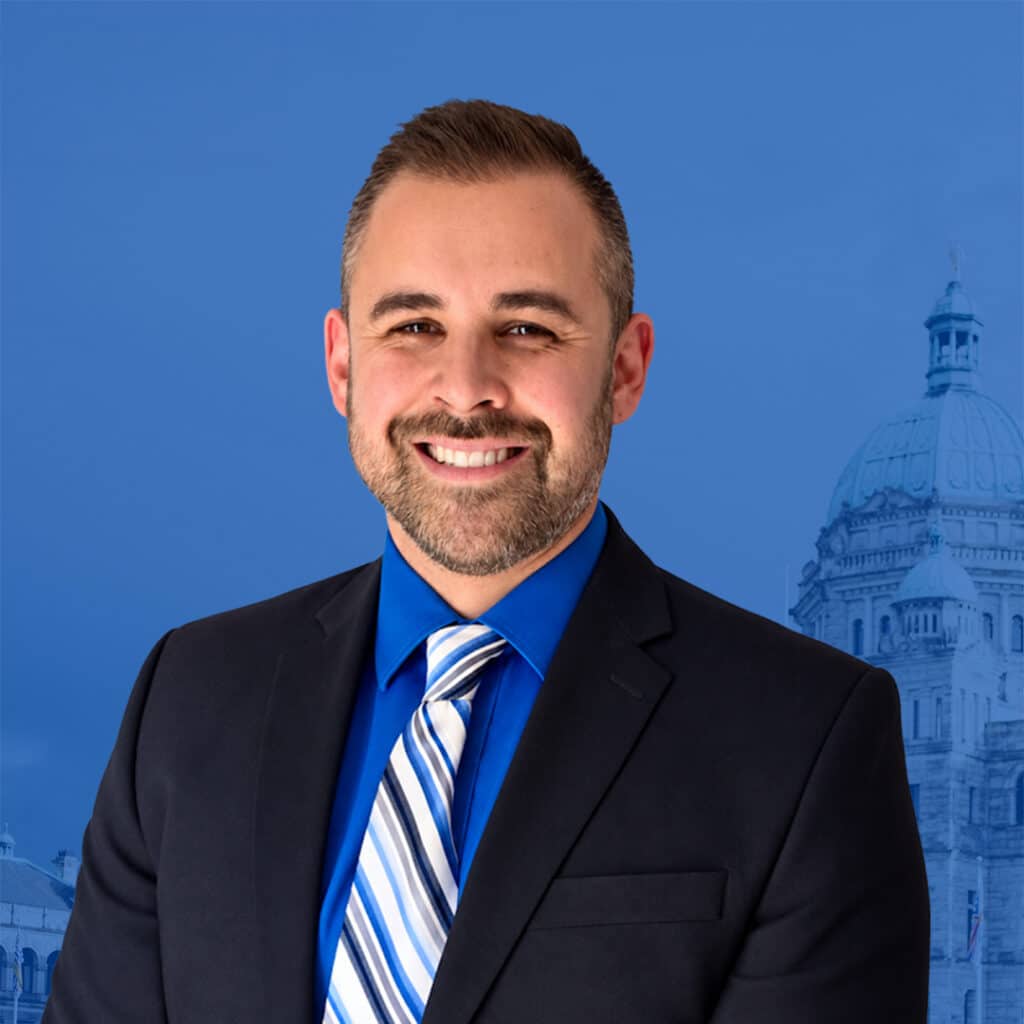
Matt Liang is the new representative for Coquitlam-Maillardville after garnering 49.5 percent of the vote, approximately eight percent ahead of NDP incumbent Jennifer Blatherwick.
The result is a reversal from 2024, when Blatherwick received 50 percent of the vote and finished 11 percentage points ahead of her closest challenger.
Liang previously served as a deputy sheriff and a child care counsellor and noted the need to support community safety. He has also worked as health and safety facilitator for the BC General Employees’ Union.
Green Party candidate Nicola Spurling received nearly nine percent of the vote, an increase of 2.5 percent from 2024.
New Westminster-Coquitlam

While NDP support dipped on Saturday, New Westminster-Coquitlam remained an orange stronghold.
NDP incumbent Jennifer Whiteside won re-election in New Westminster-Coquitlam with 50.3 percent of the vote, comfortably ahead of Conservative Party candidate Michele Lau’s 34 percent.
Whiteside’s support was down approximately nine percent from 2024.
Support rose sharply for Green Party candidate Maureen Curran, who received 15 percent of the vote, up from 11 percent in 2024.
Discussing efforts to restore biodiversity and protect watersheds, Whiteside touted the NDP’s record on environmental preservation.
“Next, we will invest $30 million per year into the BC Watershed Security Fund, to secure healthy watersheds and thriving communities for generations,” she stated.
Whiteside served as Minister of Labour, Minister of Education, and Minister of Mental Health and Addictions. She has also worked as the lead negotiator for the Hospital Employees’ Union
All results are considered preliminary until certified.
Author