Referendum on Moody Centre tower height rejected; support chalked up to ‘misinformation’
No referendum will be held on tower height in Moody Centre, despite a large amount of public support at Tuesday’s meeting.
Council voted 6-1 against putting the transit oriented area’s (TOA) 40-storey limit to a public vote, with many claiming misinformation was sowing division in the community.
“We’ve all witnessed that this is already happening,” said Mayor Meghan Lahti. “We were elected to make decisions, and in my opinion, the next election is the referendum.”
Local news that matters to you
No one covers the Tri-Cities like we do. But we need your help to keep our community journalism sustainable.
Tower height has been central to public discord around development in the community, and the referendum would have put support for Moody Centre’s TOA framework to a public test.
Introduced by Coun. Haven Lurbiecki, the motion states a level of density has been advanced without any mandate from the community.
“The story of the Moody Center (TOA) framework is a story of not allowing residents to have a voice,” she said. “Let’s put this issue to rest once and for all. No more excuses.”
Lurbiecki cast the sole vote against adopting the TOA framework in December 2023
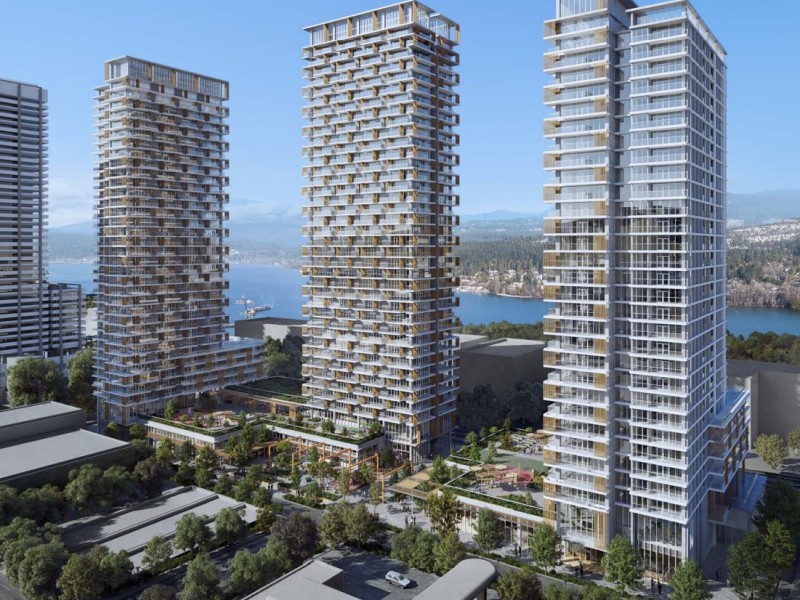
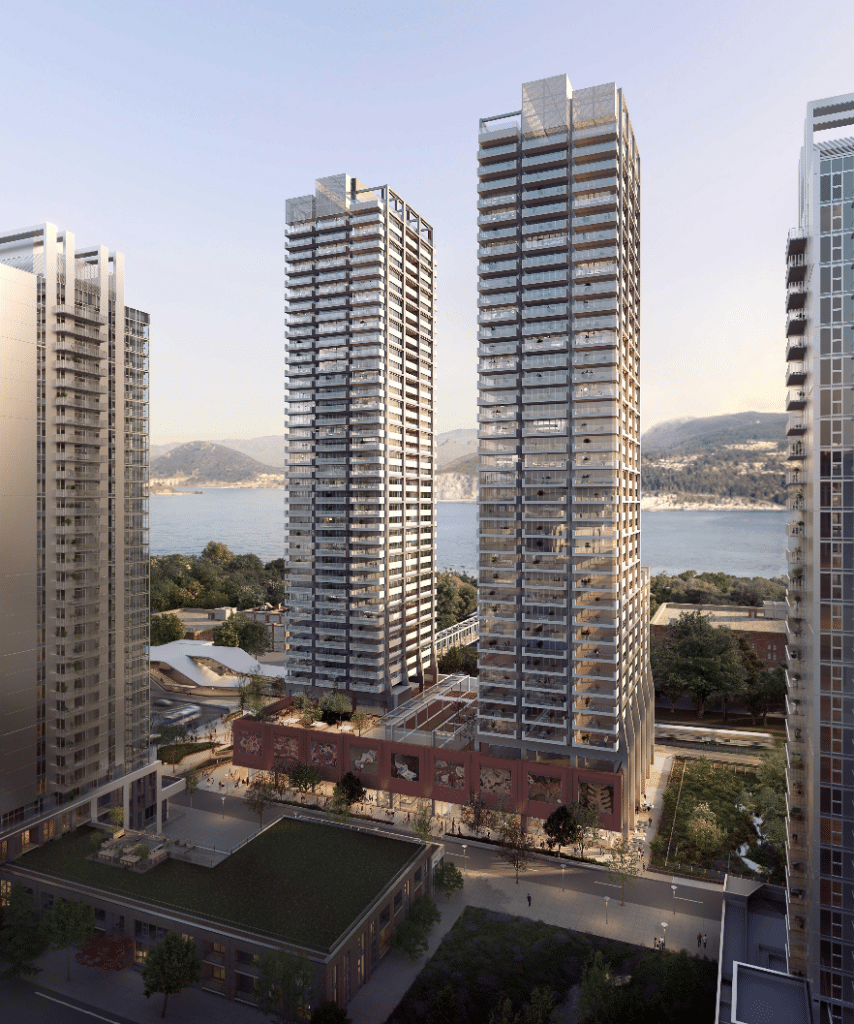
The framework upped allowable tower height in the Moody Centre TOA from a 26-storey maximum to 40 storeys, envisioning up to 14 towers in the 23-acre area on the north side of St. Johns Street. It also stipulated these height allowances would only be granted if key amenities or infrastructure updates were provided to the city, and set out a variety of design guidelines for developers.
But Lurbiecki said the framework was pushed through with no community engagement, runs contrary to past survey results, and subverts the official community plan (OCP) process.
As evidence, she pointed to a 2020 OCP survey in which a majority of residents were opposed to even a 26-storey maximum for Moody Centre, as well as declining community satisfaction in a recent bi-annual survey, level of public input at council, and online discussions.
At Tuesday’s meeting, a majority of council said a referendum would be flawed.
The proposed referendum would have gauged the level of support for the framework’s tower height, and put a freeze on OCP amendments and rezonings in Moody Centre until the results were published.
Tuesday’s public input functioned like a mini public hearing, lasting for more than one hour. Out of 26 speakers, 16 were in favour of a referendum, while 48 out of 59 emails received on the topic were in favour.
Residents were also divided on tower height during last week’s public hearing on Moody Centre’s first three towers: 31 out of 46 residents were in favor of the development, but approximately 60 of 90 emails expressed opposition.
A majority of councillors blamed online misinformation for the level of public opposition to the proposed tower heights, though few examples were cited.
Lurbiecki and former Coun. Steve Milani, who campaigned together, have been active on social media attempting to rally residents against the level of density being planned.
Coun. Kyla Knowles said it was “shocking” how many written submissions were based on “disinformation” and “rumours” being spread on local Facebook groups by “bad actors.”
“These sort of misinformation campaigns are an issue that this council is going to have to deal with sooner or later,” Knowles said. “It is, in my opinion, ridiculous to even consider a referendum, which will surely be as divisive as the proponent hopes it will be.”
Coun. Callan Morrison agreed, and even apologized for the amount of “inflammatory messaging and manipulation of facts that has occurred online by a very active and vocal group.”
Coun. Diana Dilworth asserted some in the community are actively trying to pollute public discourse into an “us versus them mentality.”
“Disagreement cannot be construed as disrespect,” Dilworth said.
Councillors also cast doubt on whether the referendum’s moratorium would even be legal, as council has a legislative responsibility to hear all applications.
Mayor Lahti said it was based on a “false premise,” stating legal counsel has told council it cannot freeze applications under the Local Government Act, adding Lurbiecki is well aware of this.
“One has to ask then, what is the motive here? Is it to say we aren’t listening? Because that seems to be the common theme,” Lahti said. “Set up a straw man, and then point back and say, ‘See, they’re not listening.’”
Knowles agreed, stating municipal referendums are rare, expensive, usually non-binding, and easily manipulated by misinformation and special interest groups. She said referendums oversimplify complex issues to a binary choice. “They are famously unreliable,” Knowles said.
Relying on a referendum to guide municipal policy would also be bad governance, according to several councillors.
Coun. Samantha Agtarap said referendums usually have low participation rates, are not guaranteed to be a representative sample of the community, and overlook nuance.
“I don’t believe that a proposed referendum will improve our understanding, nor reduce community division,” Agtarap said. “We need more than a yes-or-no answer.”
Coun. Amy Lubik said a referendum would shut down community dialogue, and feedback is needed to inform policy decisions on things like affordable housing, greenspace, unit layout and size, and developer levies.
She said the 2020 community survey frequently referenced by Lurbiecki was not balanced, even though she supported it at the time.
“I’ve actually been thinking a lot about how we steward these conversations, and I think that as a city, we’re not doing the best job,” Lubik said. “I think it’s important to admit when you’ve missed the mark.”
Lahti said a referendum on technical issues like tower height would lead to inconsistent and contradictory policies, as well as poorly informed choices on infrastructure, environmental, and economic viability.
Without building higher, Lahti said the result would be more towers crammed together, and the loss of tens of millions of dollars in amenities. “In what world is that a better option?” she said.
Dilworth concurred, adding that the proper venue for input on urban planning decisions is the OCP process, and not a “wasteful, time delaying” referendum.
Public engagement on the OCP update is set to begin this spring, after being delayed for more than a year due to new provincial housing legislation.
Moody Centre’s second set of towers is headed to a public hearing next month.
Author