Port Moody cuts OCP tower heights to regain negotiating power, but political rivals accuse council of creating the problem
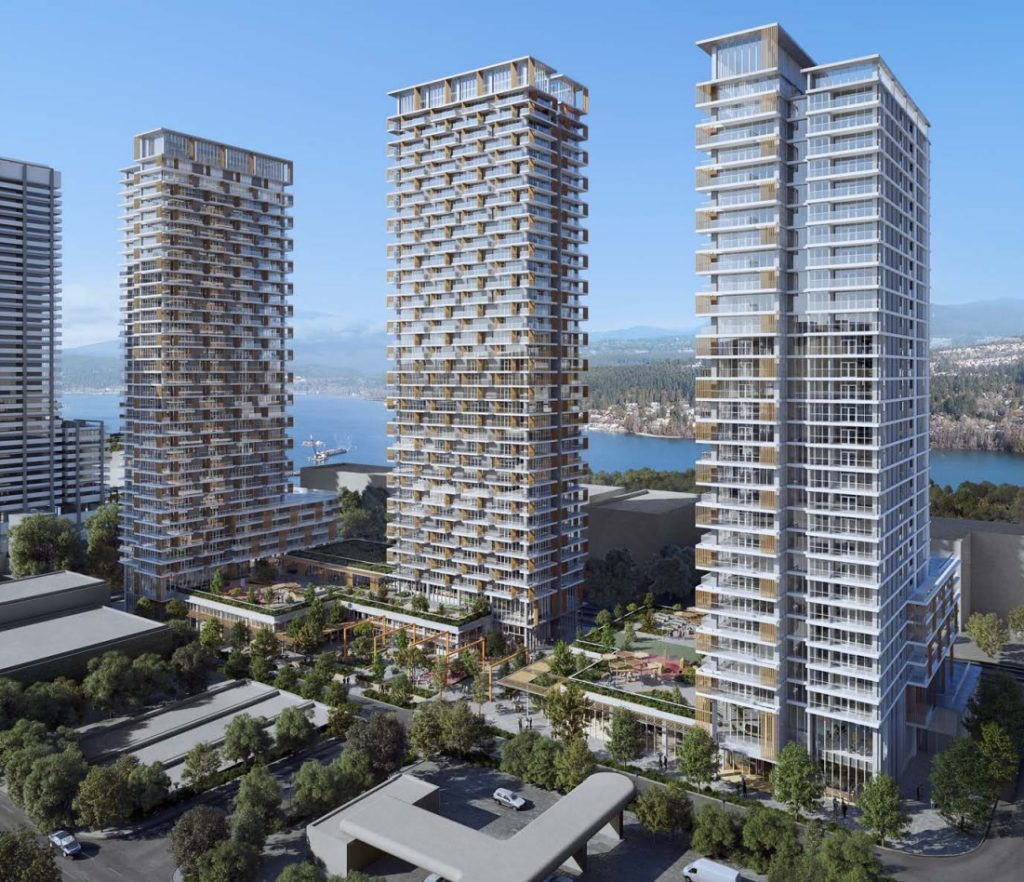
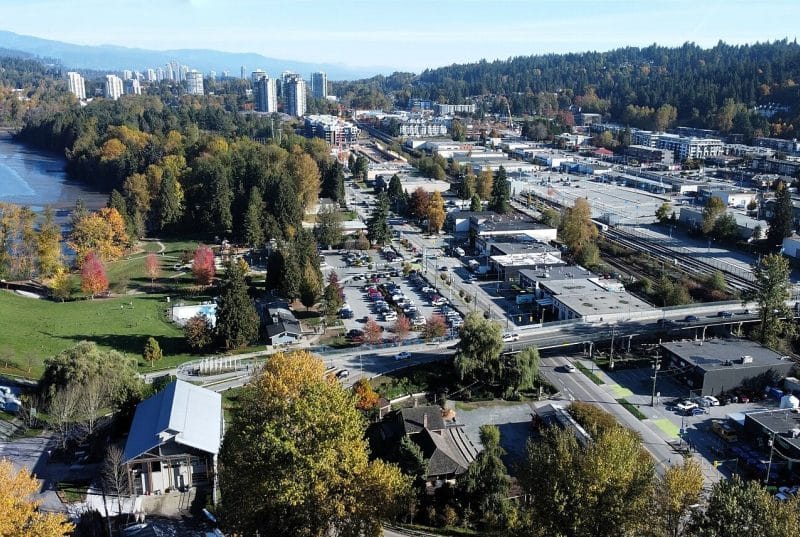
Port Moody council has unanimously approved changes to its official community plan (OCP) that reduce the allowable tower height in the Moody Centre core from 39 storeys back to 26 storeys, a move aimed at restoring the city’s ability to negotiate community amenities from developers.
But not before political opponents lambasted council’s decision-making, claiming they created the problem in the first place.
Coun. Haven Lurbiecki, who has repeatedly criticized planning tower heights far above what is mandated in provincial legislation, claimed the amendment confirms council made a “major mistake.”
Local news that matters to you
No one covers the Tri-Cities like we do. But we need your help to keep our community journalism sustainable.
“Why we’re really here this evening is because council weakened our city’s ability to negotiate on behalf of our residents,” she said. “Residents raised these concerns, I raised these concerns . . . the implications were there for anyone doing their due diligence.”
Following a public hearing on July 7, council voted adopt amendments to both the OCP and zoning bylaw that overhaul the city’s density bonusing program, ostensibly to comply with new provincial housing legislation.
The changes come just three months after council adopted the Port Moody 2050 Official Community Plan, reopening one of the city’s most divisive planning debates and reigniting criticism over the future of Moody Centre, where council has already approved several highrise developments under a guidance framework passed in 2023.
At the centre of the amendment is a significant procedural change rather than a reduction in the ultimate height envisioned for the neighbourhood.
Under the OCP adopted in April, buildings of up to 39 storeys were already contemplated in parts of Moody Centre. However, staff told council that because those heights were already embedded in the OCP, developers could pursue rezonings up to those limits without requiring an OCP amendment, limiting the city’s ability to negotiate additional community benefits beyond affordable housing under the province’s new development financing rules.
By lowering the baseline height back to 26 storeys, any proposal above that threshold will once again require an OCP amendment, restoring council’s discretionary authority to negotiate for additional amenities such as parks, childcare facilities, public spaces or creek restoration in exchange for additional height.
Existing approvals for Beedie Living and PCI Developments remain grandfathered.
Suzanne Smith, general manager of community development, said updating the density bonus program would ensure the city retains some control over projects, adding they trying to recover some of the negotiating leverage lost under provincial housing reforms.
She explained the change was prompted by legal advice received while staff were implementing the new density bonus framework, noting the OCP was completed as a standalone planning document before staff shifted their focus to developing the city’s density bonusing program and other transit-oriented area (TOA) financing tools.
“We determined through legal advice that the best way — the only way really — to implement the density bonus program was to be very clear about the heights in the OCP,” Smith said. “Without making this change, projects would only require rezoning, and the city would not be able to collect density bonusing for anything other than affordable housing.”
Under the new system, developments between 20 and 26 storeys in transit-oriented areas (TOA) would provide either affordable housing equal to five percent of the additional floor area or pay $390 per square foot into the city’s affordable housing reserve. Projects above 26 storeys would still be subject to those requirements while also requiring council approval through an OCP amendment, allowing negotiations over additional community amenities.
Although the bylaws ultimately passed unanimously, the meeting and public hearing rehashed sharp political divisions that are likely to carry into October’s municipal election.
Council’s political rivals called move an admission of failure.
Council candidate Mark Kunzli, running with the newly formed Port Moody Voice slate created by Coun. and mayoral candidate Haven Lurbiecki, accused council of wasting time and creating uncertainty after pausing work on the OCP for two years only to reopen it months after adoption.
He argued council should be maximizing public benefits rather than protecting development economics.
“We’re doing everything at different timelines. It’s a piecemeal approach,” Kunzli said. “It is not our job to maintain project viability and shortchange the community.”
Former councillor Steve Milani was even more critical, arguing council was portraying the amendments as a provincial requirement when they were actually an attempt to fix decisions it had previously made.
Milani argued the province requires only a minimum of 20 storeys near Moody Centre Station, while Port Moody’s own framework still envisions 14 towers reaching up to 39 storeys.
“This is not a technical compliance exercise. This is a choice,” he said. “It’s not Victoria dictating our skyline; it’s this mayor and council.”
Resident Patricia Perrone said she supports housing but questioned whether residents could trust the city’s planning process after the recently adopted OCP was already being amended.
She also questioned whether developers whose projects had already been approved would benefit differently than future applicants and urged council to ensure the public shares in the value created by increased development rights.
“So many residents like me felt the recent OCP process was already heavily weighted toward increased density,” Perrone said. “This is why the current amendments felt like a bait and switch.”
Several councillors rejected suggestions the amendments reflected poor planning.
Coun. Kyla Knowles said much of the criticism during the public hearing was based on misinformation, and the city was simply responding to evolving provincial legislation.
She said that its a very specific change that emerged from legal input as the policy was being developed following the passage of the OCP.
“I think it’s important that the conversation … focus on why we’re here tonight and not on larger issues that really aren’t part of the conversation here,” she said. “Affordable housing is either something you want to provide as a city or it isn’t.”
Coun. Samantha Agtarap stressed the amendments do not authorize additional density.
“We’re not granting more density with this bylaw,” she said, asking staff to clarify that developers would still require rezonings and, above 26 storeys, OCP amendments before receiving any additional height.
Smith confirmed no additional density is automatically granted and that all projects would still require council approval.
Agtarap also emphasized the city’s separate inclusionary housing policy remains in place, meaning affordable housing secured through density bonusing would be in addition to affordable housing sought through the city’s existing policy where financially viable.
While supporting the amendments, Lurbiecki said they simply corrected one consequence of what she called a flawed planning process.
She argued the broader vision for 14 towers around Moody Centre remains unchanged and suggested a future council could revisit the plan entirely.
Other councillors argued the new system gives residents more opportunities to weigh in on future highrise proposals.
Coun. Callan Morrison said reducing the OCP height back to 26 storeys means any taller proposal will require an amendment and therefore a public hearing.
He also rejected claims that the Moody Centre framework amounts to a wall of 40-storey towers.
“If the framework was fully built out and averaged out, it averages out to 32 storeys,” he said, noting only a handful of buildings would approach the maximum heights.
Coun. Amy Lubik said the framework was designed to concentrate growth around SkyTrain while preserving public space and delivering amenities including parks, daycare spaces, grocery stores, artist studios and employment opportunities.
“We’re trying to maximize the benefits that we’ve got for the city,” she said.
Coun. Diana Dilworth said rejecting the bylaws would have left the city temporarily unable to collect density bonus contributions while new provincial rules came into effect.
Staff confirmed the existing density bonus framework would effectively disappear until a replacement was adopted, creating a gap in the city’s ability to secure contributions from new developments.
Council also unanimously approved a temporary update to its Community Amenity Contributions policy, allowing the city to continue seeking voluntary contributions on development density up to the province’s new TOA minimums. The measure is intended to prevent a gap in amenity funding until Port Moody adopts its planned Amenity Cost Charges bylaw.
The bylaws passed unanimously following the public hearing, formally reducing the OCP’s default height limit in the Moody Centre core to 26 storeys while preserving council’s ability to consider taller buildings on a case-by-case basis in exchange for additional public benefits.
Author