Why allowable tower height for the Moody Centre TOD jumped from 26 to 40 storeys
This story has been amended to correct an error. Council voted 5-1 to support the policy, not 6-1.
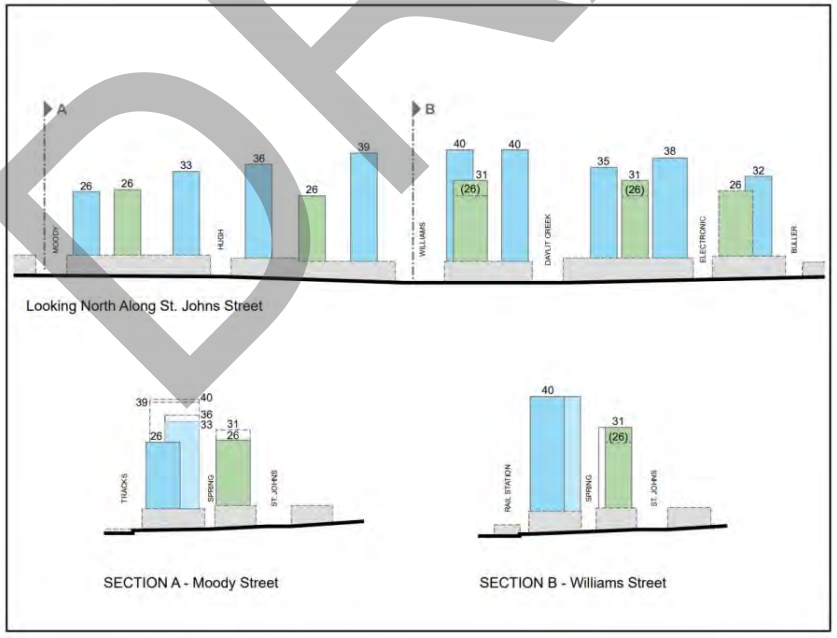
Twenty-six storey towers might be the maximum height for Moody Centre’s transit oriented development (TOD) area, but 40-storey towers are the new reality.
Despite the height prescribed in the official community plan (OCP), a new policy stated that additional height should be expected, depending on what developers gift the city off its wishlist.
Local news that matters to you
No one covers the Tri-Cities like we do. But we need your help to keep our community journalism sustainable.
That wishlist includes everything from housing to amenities to infrastructure to design.
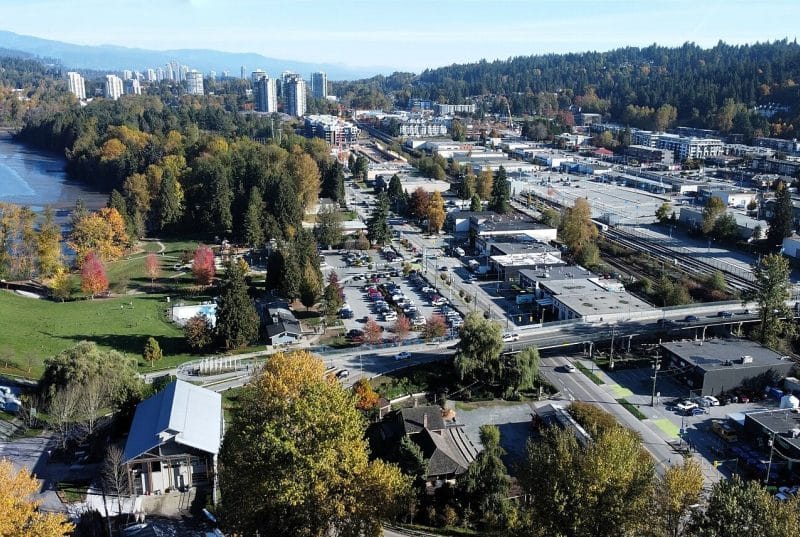
Graham Fligg, a consultant who worked on the policy, said Port Moody feels like a city without a centre, and the framework for the TOD area could remedy that.
“We want to avoid some of the mistakes that are being made in other communities.” Fligg said. “It’s not just about . . . towers and height and density. It’s about placemaking, and it’s about people places.”
The policy, described as a framework to help guide review of applications that request amendments, was introduced the same night as Port Moody’s first draft of the new OCP (Dec. 5). It adds flexibility to the city’s expectations around tower heights in the TOD area, while reducing the expected minimum distance between towers and increasing tower-floor plate size.
The policy was made necessary by the breakup of the consortium of developers spearheading development of the TOD area, according to staff.
Fligg described the consortium as a “dysfunctional family of companies” who couldn’t agree on how to move the masterplan forward.
The masterplan that the consortium had been collaborating on for years halted in 2022, and has now been scrapped. Consequently, the city has been left without broad vision for the neighbourhood as developers bring forward their applications individually.
He called the city’s new framework as a “stripped down version” of the developers’ plan.
Coun. Diana Dilworth said the city is trying to “put the puzzle pieces back together,” and staff need a framework to measure against upcoming proposals.
The first applications are already starting to come forward with OCP amendments.
PCI Developments were first, submitting an application for two 39-storey towers, followed by Beedie Living, submitting an application for three towers ranging between 32 and 38-storeys.
City Manager Tim Savoie said they require a separate framework ahead of the OCP to give the development community some indication as to what the city is expecting.
“Without it, I think staff are a little bit at a disadvantage. With it, I think we have the tools at least to to really focus on a number of things that are important,” he said.
The policy was approved by a vote of 5-1. Coun. Haven Lurbiecki voted against the policy. Coun. Samantha Agtarap recused herself due to operating a business in the area.
Framework
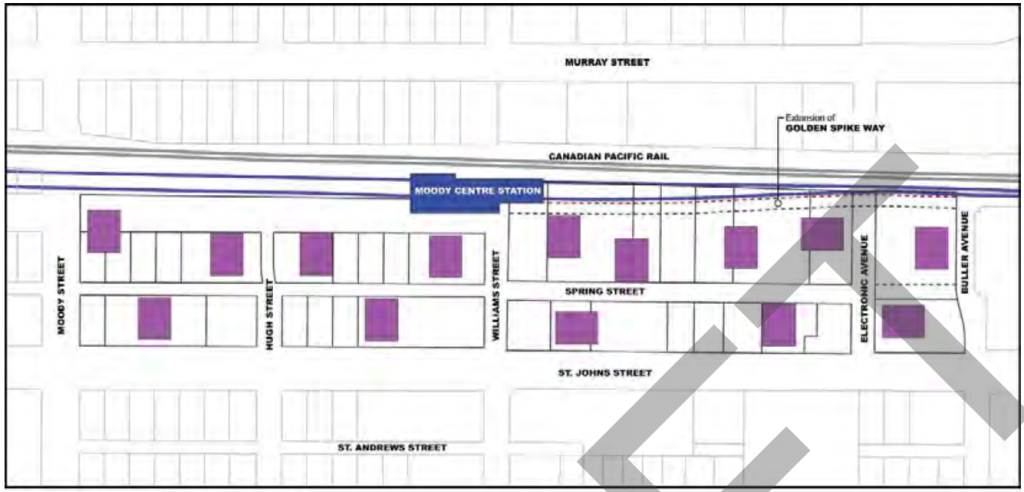
The framework states there is room for 14 towers in Moody Centre’s TOD area.
From the outset, planners did not want the Moody Centre TOD area to resemble Brentwood Town Centre, according to Jim McIntyre, a consultant working on the policy.
Burnaby’s 40-to-60-storey towers have come under recent criticism, similar to concerns raised by Port Moody residents about the TOD area.
Moody Centre’s towers will need to fulfill a number of different urban design criteria related to artistic form and creating livable spaces around them, according to Fligg.
“It should not be just a standalone tower. It should be anchored to the context of the community,” Fligg said.
The framework lays out the expectations for developers around density, building forms, green spaces, employment space, road and pedestrian networks and view corridors between towers, among others.
For instance, each tower is required to be anchored by a three-to-six storey podium, creating commercial space to encourage pedestrian activity at street level.
In order to create space for the towers, the minimum expectation for tower separation has been reduced by over half, from 197 to 93 feet.
The floor plate size has also been increased from 7,500 to 8,500 square feet.
The change would allow an additional five towers to be built south of Spring Street, and allow developers to add another unit to each floor, according to Fligg.
But not every councillor was happy about altering the city’s expectations.
Lurbiecki said the policy appears to be trying to squeeze as much density into the TOD area as possible, describing it as “a wall of towers.”
She questioned why the changes in the framework were necessary, and questioned why it was being adopted outside of the official OCP process.
“It seems to kind of supersede our OCP,” Lurbiecki said. “Why are we confident in going ahead with this without having the public engagement process?”
She said the new framework will have a significant impact on the city, and there is no mention of the cumulative effects of growth.
Lurbiecki was also skeptical over whether retail jobs would adequately replace jobs in the current industrial space.
Fligg said the changes were needed to make projects more economically feasible for developers.
If the city were to limit developments to 20 storeys, developers would try to maximize their unit counts and be unwilling to build podiums, according to Fligg. The podiums are key to animating community activity at the ground level, he added.
Fligg referenced the Brentwood towers, stating their location and design have isolated residents from their streetscapes.
He also noted that most other municipalities have much lower tower separations than Port Moody, where developers could fit much more than 14 towers.
When asked why 40 storeys high were necessary, Fligg said the 26-storey height limit would result in all the buildings being the same height, which would be “boring and mundane.”
“If we’re going to create art in the buildings, we should create variety in the skyline,” he said.
Other concerns
While the majority of council approved of adopting the new framework, some concerns were raised around design principles and the lack of a district energy system.
Coun. Callan Morrison had concerns as to how the design of individual developments would interconnect.
He said he wants the neighbourhood to have a contiguous community feel, and the framework doesn’t feel like it has plans to ensure the development have a cohesive appearance.
“This has to be done right. There’s no go back and redo,” Morrison said.
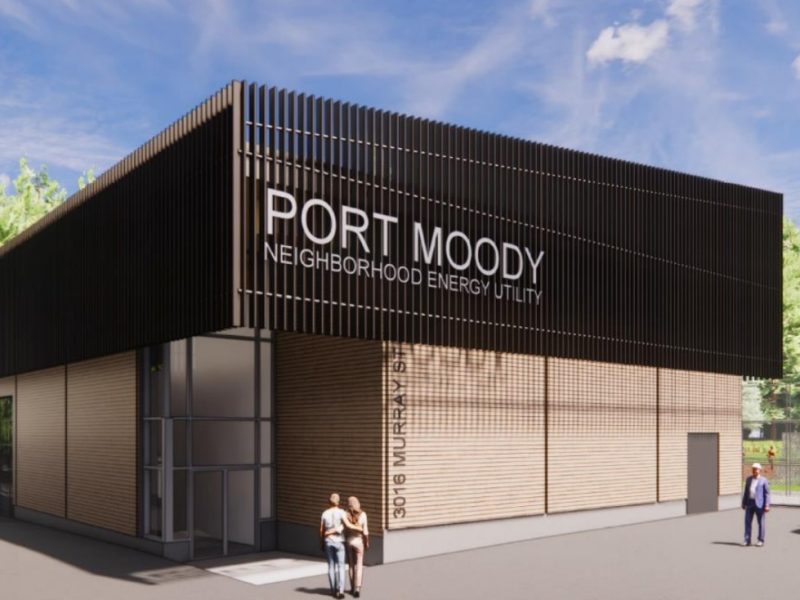
Mayor Meghan Lahti raised concerns about a lack of a centralized and shared energy production system, which was initially planned for by the consortium.
Fligg said PCI Developments have been less willing to pursue a district energy system, stating it would be a big contributor to the market-end price of the housing units.
Lahti was firm in stating the district system needs to be implemented across the TOD area.
“Now is the time to send that direction very clearly. That’s the expectation,” Lahti said. “I don’t want to see three developments come forward without it.”
Author