Letterbox: Coquitlam’s Urban Forest Strategy Falls Short Where It Matters Most
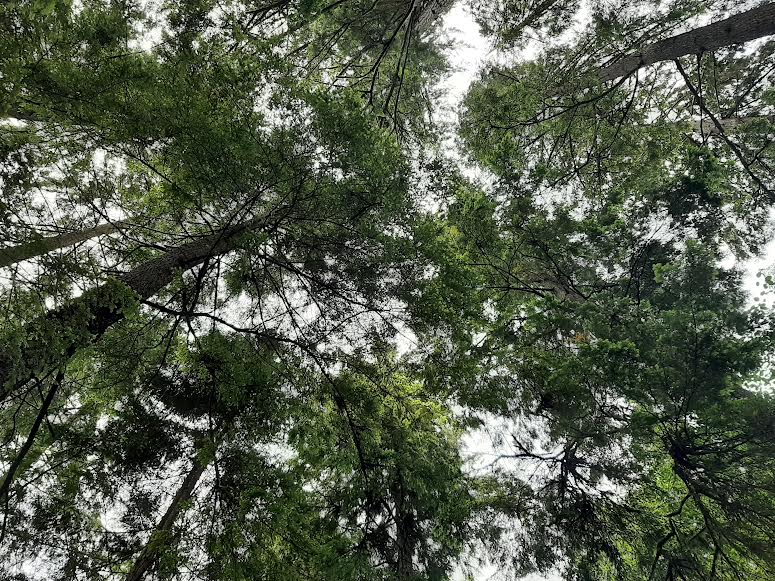
With Coquitlam’s Urban Forest Management Strategy set to go before council in May, some environmental advocates have criticized the city’s approach for a lack of specificity and rules around tree removal.
This letter outlines those concerns. We’ve also included a response from the city, contending Coquitlam has gotten better results from encouraging planting rather than drafting tougher rules around chopping down trees.
Dear editor,
Local news that matters to you
No one covers the Tri-Cities like we do. But we need your help to keep our community journalism sustainable.
After more than three years of community engagement, expert input, and advisory committee work, residents in Coquitlam are left asking a simple question: Why is the city choosing not to include the very measures needed to make its Urban Forest Management Strategy succeed?
The draft strategy presents a strong vision and highlights planting programs, volunteerism, and monitoring. These are positive steps. But they are not enough.
What is missing are the core elements that actually determine whether our urban forest survives and thrives over time.
There are no measurable canopy targets to tell us whether we are gaining or losing tree cover. There is no clear alignment with the bylaws that regulate tree removal and development. There is no defined pathway to update the Tree Management Bylaw, which has not been meaningfully revised since 2010.
At the same time, the strategy places heavy emphasis on planting new trees without adequately addressing the ongoing loss of mature trees.
This is a critical flaw.
Newly planted trees cannot replace the environmental, cooling, and health benefits of mature canopy for decades. A strategy that focuses on planting without equally prioritizing protection risks falling behind from the moment it is adopted.
Even more concerning is that these gaps are not new. They have been raised consistently by advisory committees, community groups, and subject matter experts for years. They are supported by established research and reflect standard practice in municipalities that take urban forest protection seriously.
Yet we are now being told these elements will not be included at this stage and may be considered at some undefined point in the future.
That is not a plan. It is a deferral.
And deferral has consequences.
As Coquitlam continues to grow and densify, tree loss is accelerating – particularly on private land and redevelopment sites. Without stronger protections and clear accountability, planting efforts will not keep pace.
The result will be less canopy, hotter neighbourhoods, and reduced resilience in the face of climate change.
Residents are not asking for the impossible. They are asking for a strategy that reflects the city’s own environmental commitments and includes the tools needed to deliver on them.
This is a pivotal moment.
Council still has the opportunity to strengthen the Strategy before it is finalized—to include measurable canopy tracking, align it with existing bylaws, and commit to updating outdated regulations.
If those steps are not taken now, it will be much harder to correct course later.
The urban forest is not just an amenity. It is essential infrastructure for a healthy, livable city.
We should treat it that way.
Click here to read the petition.
Sincerely,
Nancy Furness
Co-Chair, Tri-Cities Urban Forest Working Group
Kathleen Wallace-Deering
Co-Chair, Tri-Cities Urban Forest Working Group
Response from Coquitlam
The city is endeavouring to provide tree cover while delivering needed housing, according to the city’s director of parks Kathleen Reinheimer.
In terms of tree cover, Coquitlam is in the top third of Metro Vancouver communities, Reinheimer noted.
The city focuses on tree planting and “incentives rather than restrictions,” Reinheimer explained, adding the approach is based on long standing best management practices.
A restrictive bylaw can lead to the “unintended consequence of discouraging tree planting and care,” Reinheimer wrote.
While the city looks to retain trees amid development, there are times when mature trees can’t be kept, she stated.
“When property owners understand the many benefits of trees and the impact they have on livability of their community, without the fear of burdensome costs or negative impacts, they are far more likely to take good care of the trees on their property and even plant more,” Reinheimer wrote.
The city’s new urban forest strategy includes 47 actions including incentives for tree planting and tree care on private property.
The bylaw also aims to expand tree planting requirements for all development. When trees can’t be planted on site, the bylaw also levies a fee to cover the cost of tree planting in the neighbourhood.
The bylaw also includes annual reporting on key metrics to assess the strategy’s effectiveness.