‘Real betrayal’: Port Moody supportive housing project thrown into limbo after provincial funding deferred
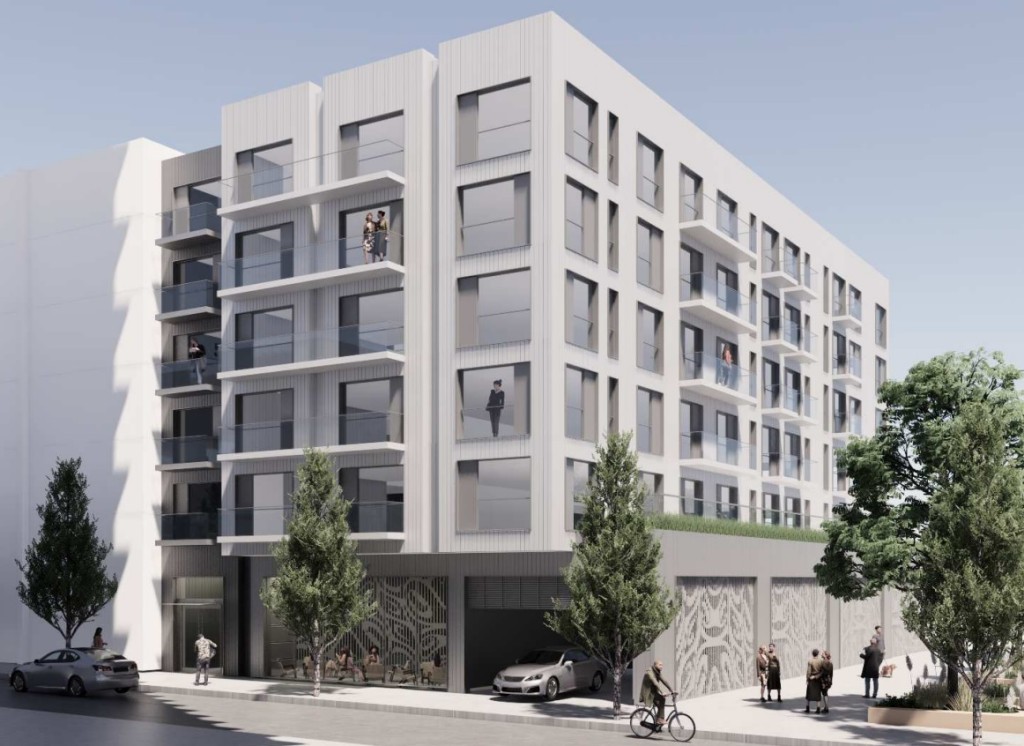
The rug has been pulled out from Port Moody’s most significant supportive housing project, according to its mayor.
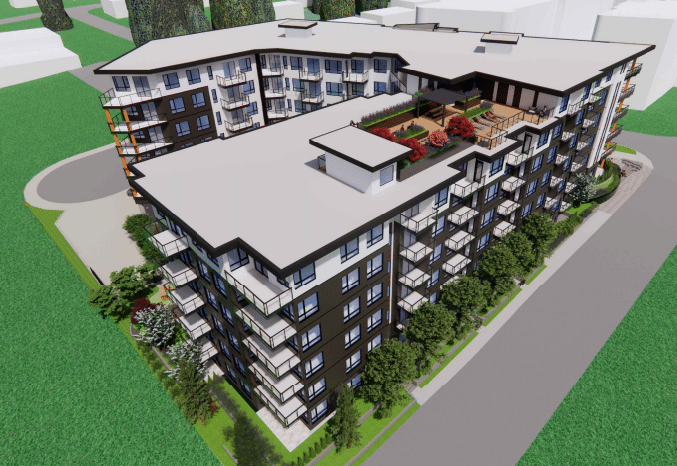
On May 8, B.C. Housing officially informed the city that funding has been deferred for a 60-unit women’s transition housing building tied to Beedie Living’s massive three-tower condo development in Moody Centre.
Mayor Meghan Lahti said the decision felt like a “real betrayal.”
Local news that matters to you
No one covers the Tri-Cities like we do. But we need your help to keep our community journalism sustainable.
“This is gut wrenching, because you have a developer who is ready and willing to do the work,” Lahti said. “It’s mind boggling.”
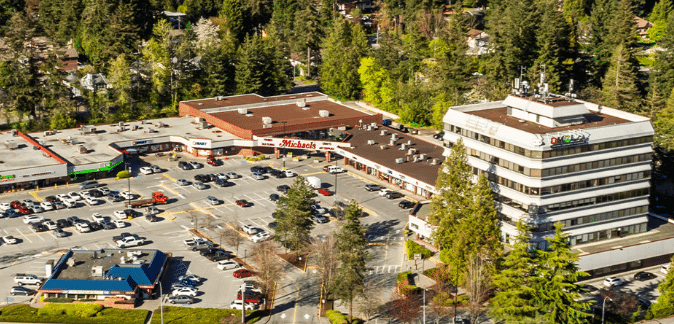
The six-storey building, intended to provide housing for women and children fleeing abuse, was a key component of Beedie’s megaproject approved by council in November 2025. The main site includes more than 1,000 market condominium units, making it one of the biggest developments in Port Moody’s history.
But a development agreement registered on title requires the women’s transition housing facility to be completed and ready for occupancy before occupancy permits can be issued for the primary condo development.
Now, that supportive housing component is in limbo.
The deferment is part of a broader slowdown in housing investments tied to British Columbia’s worsening fiscal outlook.
“There is no way we are going to meet our housing targets going forward – nobody is,” Lahti said. “When the province pulls funding for something like this, I mean what are we supposed to do?.”
Lahti said the developer had already invested heavily into advancing the supportive housing portion of the project, based on assurances the provincial funding would proceed.
She added Beedie is a “huge advocate” for this type of supportive housing, and has a foundation dedicated to delivering it.
“If there’s any partner out there, this is a partner that B.C. Housing can get a win with,” Lahti said. “We’re not talking about fly-by-night operations. We’re talking about a development company that has proven itself and has a passion for this type of work.”
Lahti said council’s next step is to try and get B.C. Housing to reconsider the decision.
The funding deferral is one of several recent housing pullbacks announced across British Columbia as the province grapples with a projected $13.3-billion deficit in Budget 2026.
The province has already suspended new applications to the Community Housing Fund, a flagship affordable housing program launched in 2018. In Surrey, Mayor Brenda Locke has publicly criticized the province after $421 million in funding was pulled or delayed for eight supportive and transitional housing projects totaling 954 units.
Other supportive housing projects have been frozen in Burnaby, Squamish, and Victoria.
Port Moody council first learned of the funding deferment after a letter sent to housing provider ACT 2 was leaked and circulated before the city received formal notice.
Several members reacted sharply online.
Coun. Callan Morrison called the decision “a complete and utter failure” by the provincial government in a lengthy social media post, arguing municipalities have spent years adapting to provincial housing mandates only to see the province retreat from funding commitments.
“If the province wants to try to mandate housing targets, dictate what type of units we deliver, tell us where we must put it . . . then they better be willing to step up and provide what they are required to provide,” Morrison said.
Coun. Kyla Knowles said she was “shocked” and “disgusted” by the news, linking the decision to broader concerns over the province’s deteriorating fiscal position.
“The most vulnerable of our citizens are being left out in the cold, quite literally,” Knowles said.
The issue also raises major questions around Port Moody’s provincially mandated housing targets under the Housing Supply Act.
The Beedie project alone would have allowed the city to effectively satisfy its five-year supportive housing target. Port Moody currently has no supportive rental units counted toward those provincial benchmarks.
Lahti said municipalities are being put in an impossible position.
“The province put a mandate on us to provide this type of housing,” she said. “It’s a provincial mandate, and it’s reliant on provincial funding, and now the province is pulling the funding. How ironic.”
She said Port Moody has spent years reallocating staff and resources to comply with provincial housing legislation, despite often disagreeing with the approach.
“Port Moody has been very loyal soldiers for the province,” Lahti said. “They’ve known about this for months and they haven’t communicated it with us in any way.”
In a statement Friday, B.C. Housing denied the project had been cancelled outright, saying timelines were instead being extended because of “fiscal constraints.”
“The planned Women’s Transition Housing Project in Port Moody, in partnership with Beedie Development, is one of these projects, and we needed to make the difficult decision to defer funding to a later date,” the agency stated.
B.C. Housing said more than 1,450 units funded through the Women’s Transition Housing Fund are already complete or underway provincewide, and the province remains committed to delivering all 3,000 promised units over a longer timeline.’’
Port Moody-Burquitlam MLA Rick Glumac similarly disputed characterizations of a funding “cut,” saying the province is instead adjusting the pace of some housing investments.
“There is no funding cut but timelines are being adjusted on some B.C. Housing projects,” Glumac said. “Given fiscal constraints, B.C. Housing has made the difficult decision to adjust the pace of some housing investments in order to ensure that limited funding is used most effectively and efficiently.”
Still, uncertainty remains over what happens next for the broader Moody Centre development if the transition housing component stalls indefinitely.
Lahti noted that any changes to the development agreement conditions would ultimately require council approval.
“At this point, the only people that are going to be building this type of housing are these private providers, and they’re still willing to be at the table to do it,” she said. “So I really hope that B.C. Housing works with Beedie to get something happening on that site.”
The funding slowdown comes as Metro Vancouver municipalities are already facing a growing affordable housing gap.
A regional affordable housing analysis presented earlier this year estimated Metro Vancouver needs between 29,250 and 54,500 new affordable rental units over the next five years, requiring between $10.1 billion and $19.3 billion in combined government investment.
Yet combined federal and provincial capital contributions over the previous five years totalled only about $1.2 billion.
“Prior to all these cancellations, we were told there was already an $11-billion deficit between what senior levels of government had spent versus what was needed,” Lahti said. “So now what are we looking at?”
A representative from Beedie Living confirmed the company was aware of the change.
“We recognize the critical need for affordable and supportive housing options in Port Moody and are collaborating with Port Moody to evaluate next steps,” stated Beedie’s executive vice president of residential development Curtis Neeser in a message to the Dispatch.
Author