Letterbox: Developer defends Pinnacle Ridge septic system plans
Dear editor,
In my last letter, I wrote about how the Pinnacle Ridge Hillside proposal has been shaped by the land and by the responsibility to build in a way that fits Anmore. With third reading now complete, the conversation moves into a new phase.
In recent weeks, the project has generated community interest across a range of topics, including density, transportation, servicing, and oversight. This level of engagement is a standard part of the process for any new proposal and reflects the strong commitment of residents to their community.
Local news that matters to you
No one covers the Tri-Cities like we do. But we need your help to keep our community journalism sustainable.
What has remained unchanged is the underlying foundation of the plan.
This land has long been designated for residential use. Anmore’s Housing Needs Assessment identifies a need for 756 new homes over the next 20 years, reflecting provincial expectations that communities plan for future growth. The question has never really been whether or not this land will be developed, but how it is approached.
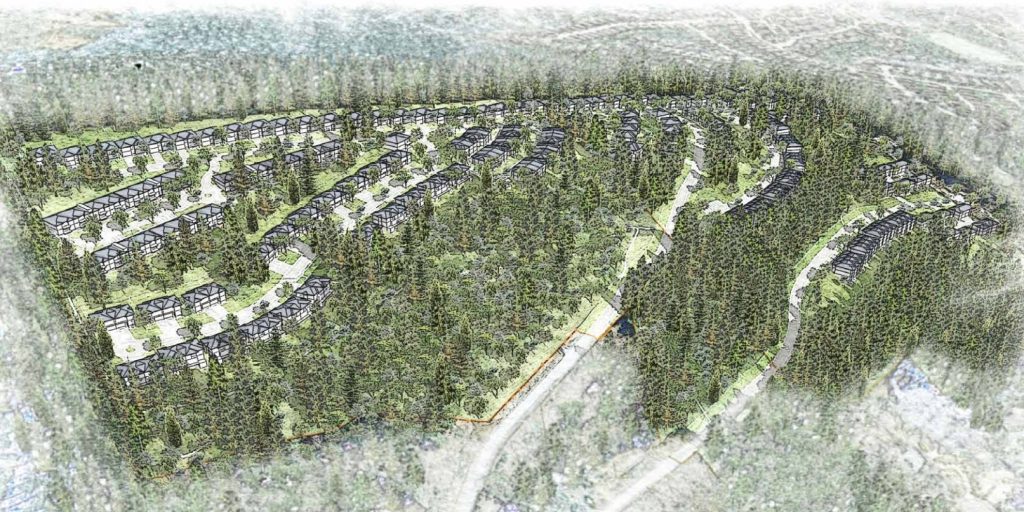
The current proposal remains consistent with its original concept: a mix of single-family homes, semi-detached homes, and townhomes, to be developed in phases over a ten-year period. It does not include high-rise buildings or introduce levels of urban density that would be inconsistent with the surrounding community.
It also reflects something that continues to come up in conversations with residents. People want to stay in Anmore, but lack options and choice when it comes to housing.
Families looking to remain close to one another. Elderly residents who have lived here for years and want to downsize without leaving the community behind. Young families looking for a home to raise their kids. Right now, their options in our community are limited, and that pressure will only increase over time if we don’t take planning seriously now.
At the same time, how the site is serviced and managed is important for the viability of the site for future generations. Given that this is a semi-rural community, connections to regional sewer systems are not available, and on-site wastewater systems are therefore required.
The proposed systems are not conventional septic fields; rather, they are Type 3 treatment systems the highest standard approved by Fraser Health. These are engineered systems that utilize controlled dosing and require professional maintenance, designed specifically for conditions such as these. Similar systems are already in use in comparable hillside and rural locations throughout British Columbia.
Environmental protection of the hillside has been a core and guiding principle of this work from its very beginning. The site is bedrock-controlled and underlain by dense glacial soils, providing strong natural stability. Detailed geotechnical and hydrological studies by professional engineers have informed how water is managed across the site, including systems to control runoff and protect downstream areas like Mossom Creek.
More than 23 acres of the property will remain as green space, with new trails and a park that connects into the existing landscape and trails our community enjoys. The intent continues to be the same: to work with the hillside, not against it.
As the project advances, it will proceed through several additional stages of review and refinement as required by the Village. This phased approach is standard for developments of this nature, ensuring that each stage is completed to the required standard. We remain committed to working closely with the Village as a dedicated partner throughout this process.
What matters now is following through on what has been presented and planned for. That means doing the work the right way, and making sure it shows in what actually gets built.
One aspect that is equally important – and often less visible – is the collaboration between multiple landowners within the hillside. This is not a single-owner project, but a coordinated effort among neighbouring properties working together toward a unified plan.
Bringing different landowners into alignment requires cooperation, transparency, and a shared commitment to long-term outcomes. When done properly, it allows infrastructure, access, servicing, and open space to be planned comprehensively rather than in isolation.
This kind of coordinated approach ultimately leads to a more cohesive, better-serviced, and more resilient community – one where roads connect properly, services are efficiently delivered, and green spaces are thoughtfully integrated across property lines.
It also ensures fairness and clarity among the parties involved, so that responsibilities and benefits are shared in a way that supports the viability of the entire hillside over time.
Our village will continue to evolve over time. The choice has never been whether that happens, but how.
The Pinnacle Ridge Hillside proposal reflects an approach that has been thoroughly studied, refined, and tailored to the specific conditions of the site, as well as the needs of those who wish to remain part of the community.
That work does not end at third reading. In many ways, it marks the beginning of the next stage of the process.
Tony Barone
Anmore resident, Christen Luxury Homes Ltd.