Coquitlam OKs new urban forest strategy
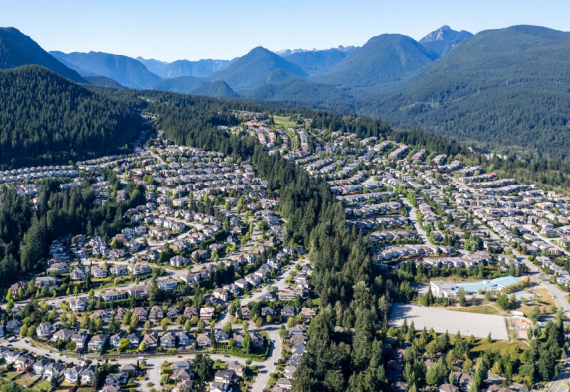
While there are some concerns the city isn’t getting to the root of the problem, Coquitlam is embarking on a new tree strategy designed to boost canopy cover, following a unanimous vote from city council on Monday.
Getting trees to grow amid Coquitlam’s concrete urban core will be a challenge, acknowledged Mayor Richard Stewart, who noted the broad parking lots in Burquitlam, Sunwood Square, and around Coquitlam Centre.
“All of those places will be redeveloped and they will have more trees on them by far than they have today.”
Local news that matters to you
No one covers the Tri-Cities like we do. But we need your help to keep our community journalism sustainable.
Buoyed by dense forest at Pinecone Burke Provincial Park, Coquitlam’s overall canopy cover is about 52 percent. However, that numbers drops to 33 percent inside the urban containment boundary.
With staff planting between 5,000 and 7,000 trees each year, the new strategy calls for the city to boost that canopy cover to 50 percent across the city.
Prior to Monday’s meeting, environmentalists criticized the strategy for its emphasis on planting new tree rather than working to keep mature trees.
“This is a critical flaw,” wrote Tri-Cities Urban Forest Working Group co-chairs Nancy Furness and Kathleen Wallace-Deering. “Newly planted trees cannot replace the environmental, cooling, and health benefits of mature canopy for decades.”
Coquitlam is not pursuing a stricter approach on tree removal, noted Coun. Matt Djonlic.
“We want to make sure that they feel that they can comfortably plant a tree and if it doesn’t work out, they can take it out,” he said.
However, through the city’s volunteer tree ambassador program, homeowners can ask questions about trees on their property to decide if those trees need to be chopped. There could also be professional consultations with homeowners, added Coquitlam’s director of parks Kathleen Reinheimer.
Coun. Robert Mazzarolo likened the situation to drunk driving, where the decline was due to societal education rather than punitive measures.
“The more the public learns to value their tree canopy in their environment, the more they’re going to protect it themselves,” he said.
While there could be situations where a developer offers the city cash-in-lieu of tree replacement, both Couns. Mazzarolo and Dennis Marsden were emphatic the city take on replanting rather than storing up that cash. When possible, new trees should be planted in the neighbourhood that lost the old trees, Mazzarolo added.
While she thanked residents who reached out for meaningful conversations, Coun. Trish Mandewo noted some residents sent copy-and-pasted emails to council.
“It’s actually disruptive. It doesn’t help,” she said.
The Urban Forest Management Strategy targets include ensuring 90 percent of trees survive five years after being planted.
There are also goals to increase volunteer hours and perform restoration planting over 3,000 square metres.
Coquitlam’s urban forest is estimated to provide $161-million in ecological value, by storing carbon, reducing pollution, and managing stormwater.
The budget for development of the strategy was $115,000.
Author