Streaming service: A look at how the region’s water works
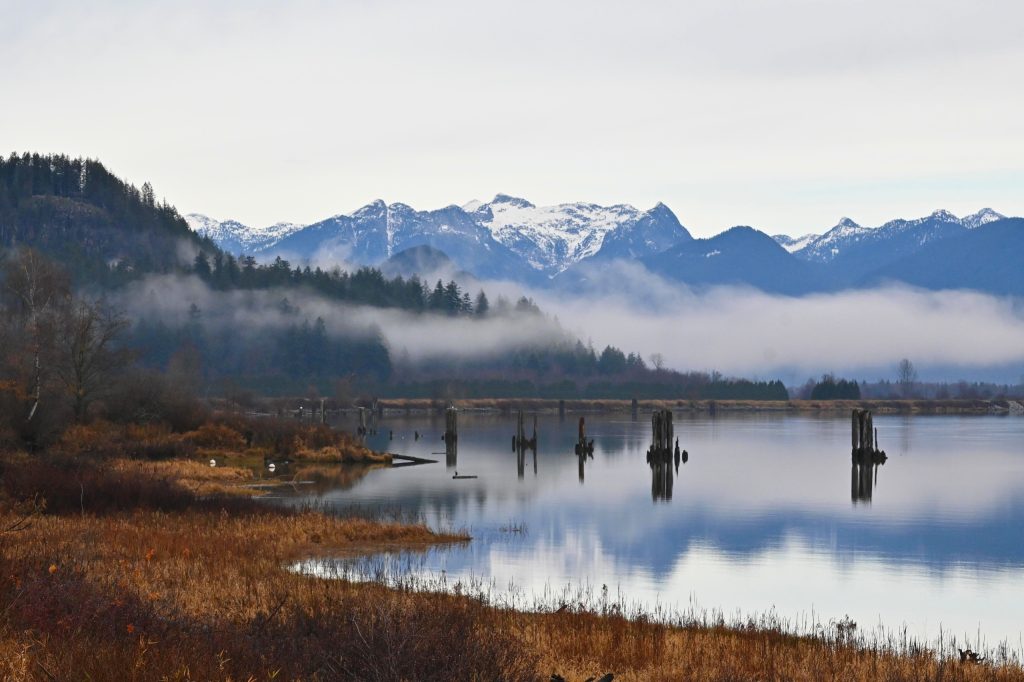
It starts in the mountains.
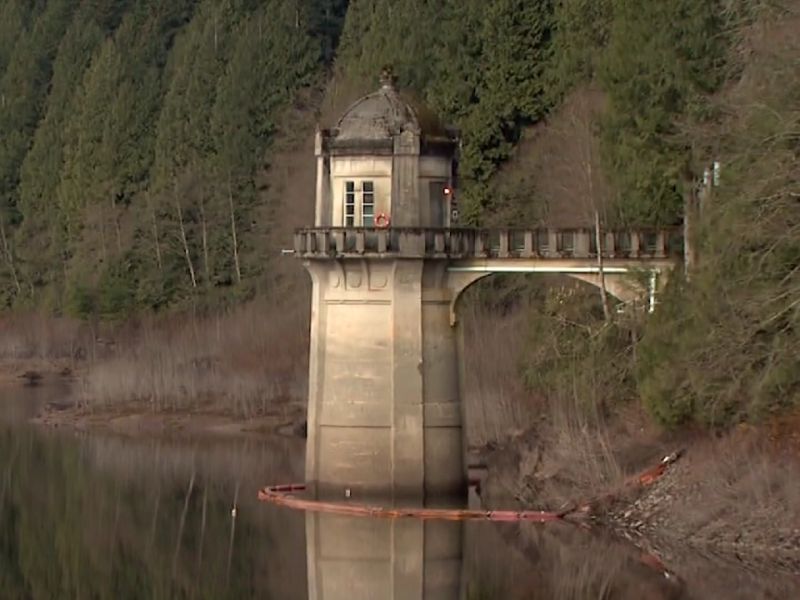
Rain mingles with snowmelt and streaks downhill, swelling creeks and streams on the way to the Capilano, Seymour and Coquitlam reservoirs.
In the Tri-Cities, about 85 percent of our drinking water comes from Coquitlam with the rest flowing in from Seymour and Capilano. Port Coquitlam gets all its water from the Coquitlam Lake, and Anmore gets all its water from Port Moody.
Local news that matters to you
No one covers the Tri-Cities like we do. But we need your help to keep our community journalism sustainable.
Someone washes dishes on the 3000-block of Murray Street and water flows from pipes around Dewdney Trunk or Guildford Way through Port Moody’s approximately $25-million network of water mains and pipes.
Before it gets to the dishes, the water is tested according to chemical and radiological parameters but, generally, the water tends to be naturally clean, according to Metro Vancouver.
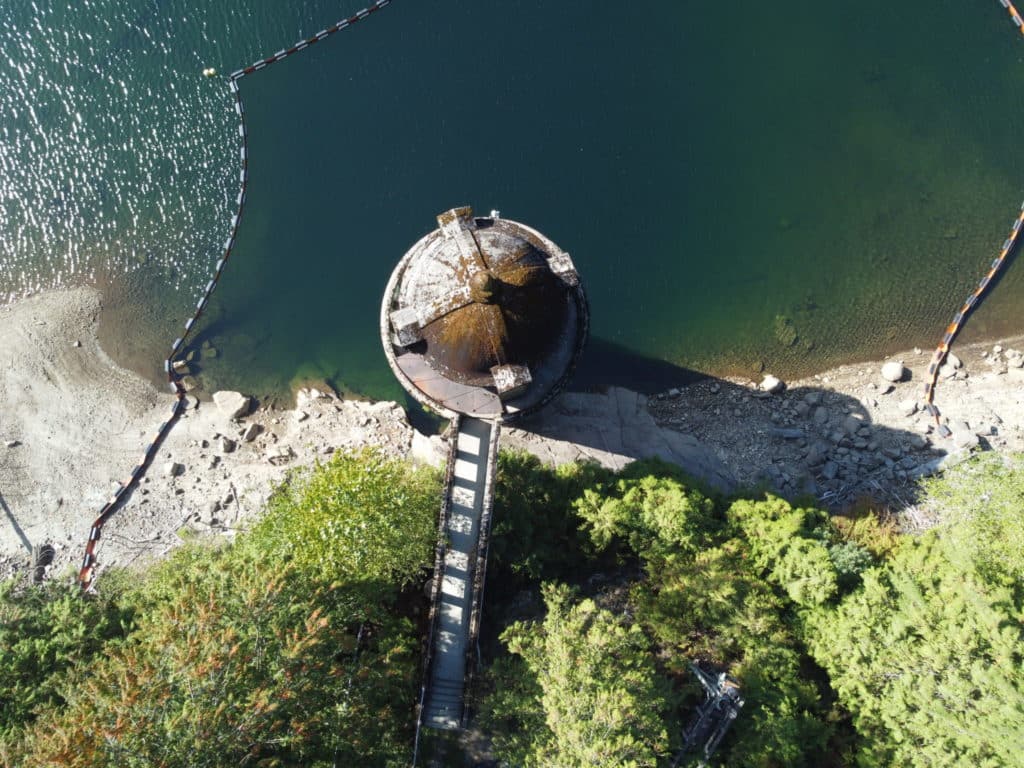
The Coquitlam Water Treatment Plant handles between 350 to 700 million litres of drinking water each day, with the main treatments being ozonation, UV light, and chlorine.
Filtration is intended to scoop out particulates including micro-organisms. However, if some of those micro-organisms slip past the filter, UV light inactivates them. The filtration system also means that less chlorine is needed to maintain water quality. That chlorine generally breaks down as water flows through the distribution system.
While the steeper Seymour and Capilano watersheds tend to need filtration after heavy rain washes soil into the reservoir, water in Coquitlam’s watershed tends to be clear even after a downpour.
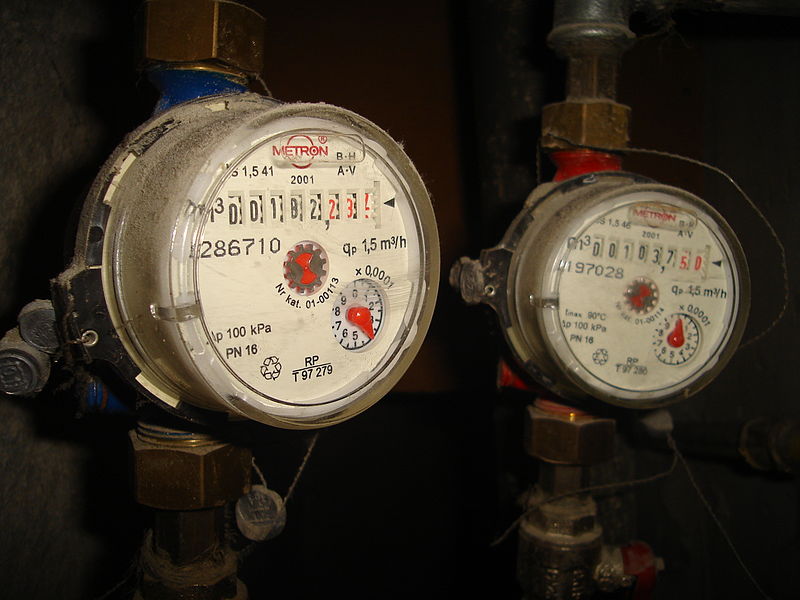
On the meter
Looking over water use in the city, Coquitlam staffers found something alarming: when the reservoir sinks to its lowest point, water consumption hits the ceiling.
Overall, summer water consumption is about 55 percent higher than winter rates, according to the city.
In an effort to allow for population growth without increasing summer water use, Coquitlam switched to a seasonal metered water rate in 2023.
Instead of charging a flat rate, metered residents now pay about 50 percent more from June 1 to Sept. 30 and lower prices the rest of the year.
Port Coquitlam and Port Moody do not have water metering for single-family homes.
While the decision rests with the municipality, Metro Vancouver generally supports water metering as a way to take the guesswork out of water management.
“Until this actual water use data is available, Metro Vancouver must continue to use assumptions to make critical decisions about future water use and system growth,” a Metro Vancouver official stated in an email to the Dispatch.
In the dog days of midsummer, Metro Vancouver often taps alpine lakes at Burwell, Palisade and Loch Lomond.
How much we use and what it costs
Compared to the rest of the region, the Tri-Cities are fairly careful with their water.
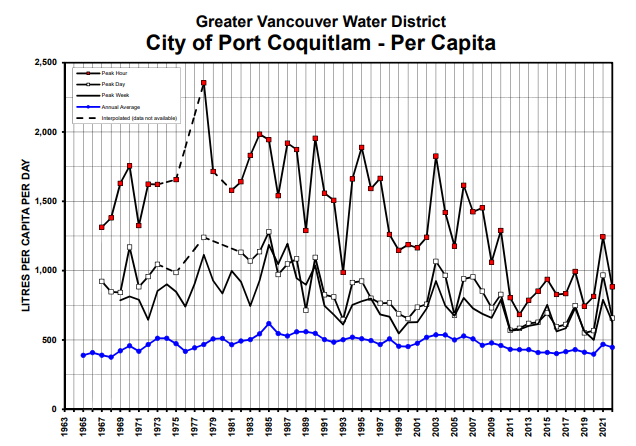
Overall, Metro Vancouver residents use about 394 litres per day, according to Metro Vancouver’s 2022 water consumption report.

Coquitlam and Port Coquitlam use 336 and 342 litres per day, respectively. On average, Port Coquitlam residents use 447 litres each day.
The difference is attributable to Port Coquitlam’s large commercial businesses, according to the city’s director of engineering and public works Joshua Frederick.
The worst water wasters in the region are Delta and Pitt Meadows, which both ran the taps for more than 500 litres a day. New Westminster residents were the most responsible, recording 275 litres per day.
Hustle and flow
Coquitlam’s water charge was $672 in 2024 for single-family homes. That rate dropped to $403 for multi-family and $269 for secondary suites, as those residents tend to use less water.
According to an analysis conducted by the Vancouver Sun, Belcarra had the region’s highest flat rate, at $1,286 for a single-family household.
At the other end of the spectrum, Port Coquitlam charges $485 for water. Under the city’s new variable utility rates, single-family homeowners will pay a little more while residents who live in multi-family housing will pay a little less.
Port Moody charges $598 for single-family, $560 for townhouses and $375 for condos.
The main thing
In recent years, Port Moody has socked away $1.7 million each year to replace water mains water mains based on age, priority, and available capital, according to the city’s manager of operations.
Coquitlam handles 520 km of municipal water mains and another 250 km of water service connections in addition to 10 reservoirs, 11 water pump stations, and more than 27,000 water service connections, explained the city’s water superintendent Kyle McBeth.
Each year, Coquitlam gets more than 20 million cubic metres of water from Metro Vancouver. Slightly more than half of water utility fees to go Metro Vancouver for buying water and running the regional supply system.
On average, about 80 million litres of water come to Coquitlam each day.
A Maillardville residents flips on the shower, and water slides from the Coquitlam Water Treatment Plant down a 900-millimetre watermain built in 1959 along Brunette Avenue. The water streams into a valve station that reduces the water pressure and sends the torrent down a cast iron pipe built in 1964 from Jackson Street before hanging a right at Bernatchey Street, continuing across Lougheed Highway before eventually meeting up with a service connection on Gauthier Street.
A resident at the northern tip of Westwood Plateau waters his plants and the water is dispatched from the Coquitlam treatment plant, up two Metro Vancouver water mains dating back to 1959 and 1983 before connecting to a municipal water main.
From there, the water heads to the Pipeline Road Pump Station where it rebounds up Robson Drive in an iron pipe built in 1988, eventually hitting the Hoy Creek Reservoir and heading to another pump station before heading west along Johnson Street to Panorama Drive. From there, it hangs a right by the Coquitlam Crunch and flows along a service road to the Scott Creek Reservoir.
The water gets pumped to the Noon’s Creek Reservoir and eventually it hits Parkway Boulevard and heads east toward Westwood Plateau golf course, drops in at another pump station and hits a connection just before the intersection of Parkway and Plateau boulevards.
Then the plants get watered.
Coquitlam tests water quality at sample stations through the city’s distribution system about 2,000 times per year. In wetter months, Coquitlam conducts uni-directional flushing by sending a torrent through the pipes to clean out sediment and mineral buildup.
Tolls and patrols
During 2023’s water restrictions, Metro Vancouver residents were hit with a total of $166,000 in municipal fines, according to reporting from CBC.
With the exception of Vancouver’s 168 fines, Coquitlam was quickest with a ticket, handing out 154 fines for $250 each during the prolonged drought.
Those tickets, along with “an extensive education and awareness campaign,” helped change behaviour, according to the city’s communications manager Elise Duncan.
“Coquitlam saw an 18 percent reduction in water consumption during Stage 2 compared to consumption during Stage 1,” Duncan wrote in an email to the Dispatch.
In the event Metro Vancouver calls for Stage 2 water restrictions this year, Coquitlam will likely use the same enforcement approach.
Port Coquitlam handed out eight tickets in 2023, one in Stage 1 and the rest during Stage 2 restrictions.
Besides running Port Coquitlam’s Golden Lawns contest again this year, the city plans to have ambassadors educate residents regarding water rules, according to the city’s director of engineering and public works Joshua Frederick.
Port Moody handed out 13 fines for $100 each.
Issuing some fines seemed effective, according to Port Moody’s general manager of community development Kate Zanon.
“The fines issued were effective as we did not have repeat offenders,” Zanon stated in an email to the Dispatch.
Since 2022, the city has taken part in a Metro Vancouver program that involves “enhanced water conservation patrols in neighbourhoods.” There are plans to expand the program all areas of Port Moody in 2024.
“These patrols help us to promote the regional water restrictions and to provide the city’s bylaw enforcement staff with information about properties where there may be non-compliance,” Zanon stated.
Bring on the waterworks

To keep up with the region’s growing population, the 12-kilometre Coquitlam water main is needed to: “avoid impacting delivery of water to the southern and eastern areas of the region,” according to a Metro Vancouver staff report.
The project is “vitally important” for getting drinking water to Coquitlam, Port Coquitlam, Port Moody, and the eastern and southern areas of the region, explained Metro Vancouver media relations officer Niki Reitmayer.
The Robson-to-Guildford section of the project is set to be complete by 2026. The entire 12-kilometre project, which stretches from the north end of Pipeline Road to Mariner Way at Riverview Crescent, is set to be finished by 2029.

With the population growing and the climate changing, the regional utility provider is looking at expanding current water sources.
One of those projects involves taking a lot more water from Coquitlam Lake, which currently supplies a little less than one-third of the region’s drinking water.
While still in the design phase, project would entail a new water intake, tunnel, and water treatment facilities. Metro Vancouver is targeting the late-2030s for completion.
Author