Port Moody approves sixth Moody Centre tower
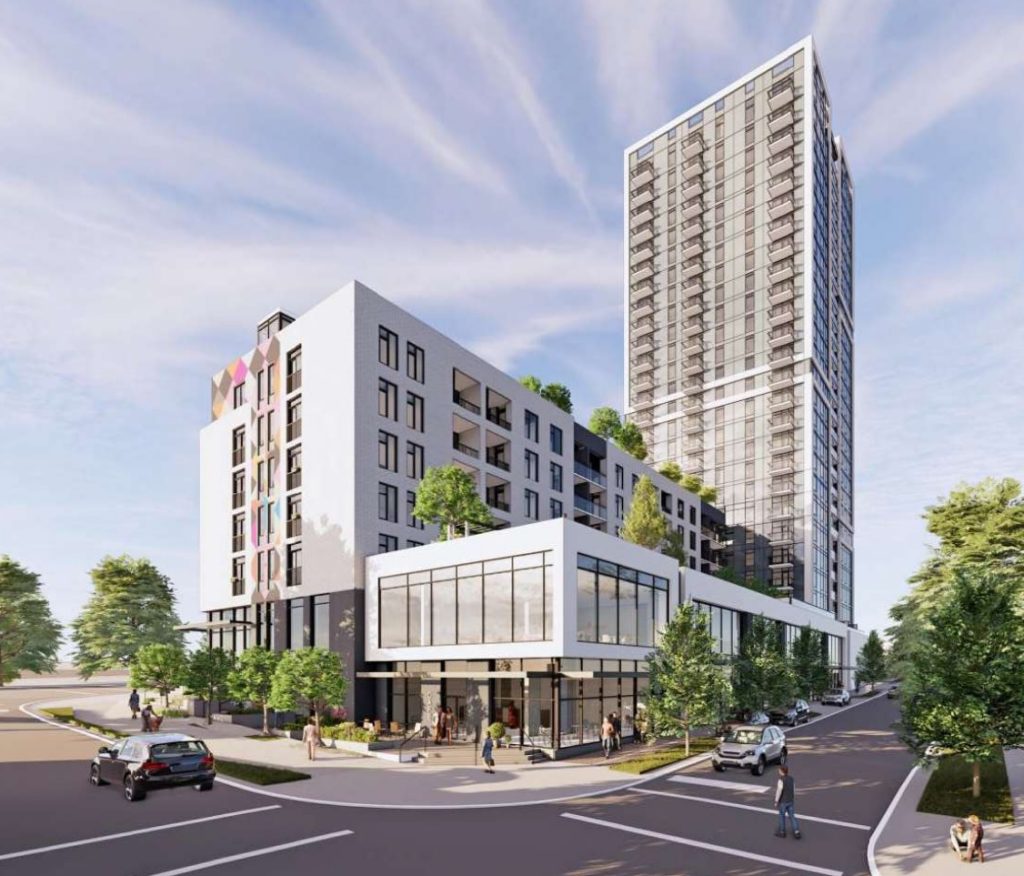
Port Moody council has approved a sixth tower for the Moody Centre Transit-Oriented Development (TOD) area.
On April 14, council voted 6-1 in favour of Anthem Properties 26-storey mixed-use rental development covering properties along St. Johns, Williams, and Spring streets, granting all three readings for the rezoning application.
Council’s approval comes after an initial delay earlier this year, with revisions for larger three-bedroom units, design changes and adjustments to the building massing.
Local news that matters to you
No one covers the Tri-Cities like we do. But we need your help to keep our community journalism sustainable.
“I was happy to see this come back,” said Coun. Samantha Agtarap. “Very obviously, the applicant has been listening to the feedback that had been provided, and worked with staff to address that input.”
The proposal features 321 market rental units in the tower, along with roughly 31,800 sq. ft. in a two-storey commercial podium, and a six-storey building. Amenities include a publicly accessible pedestrian connection between St. Johns and Spring streets, a gym, rooftop spaces and community gardens.
Staff noted the proposal remains compliant with the city’s official community plan (OCP), and therefore, a public hearing is not permitted under new provincial housing legislation.
As part of the approval, the developer will provide a package of financial contributions and amenities, including a $4.8 million density bonus, $653,000 in community amenity contributions, and a public art budget of $672,00
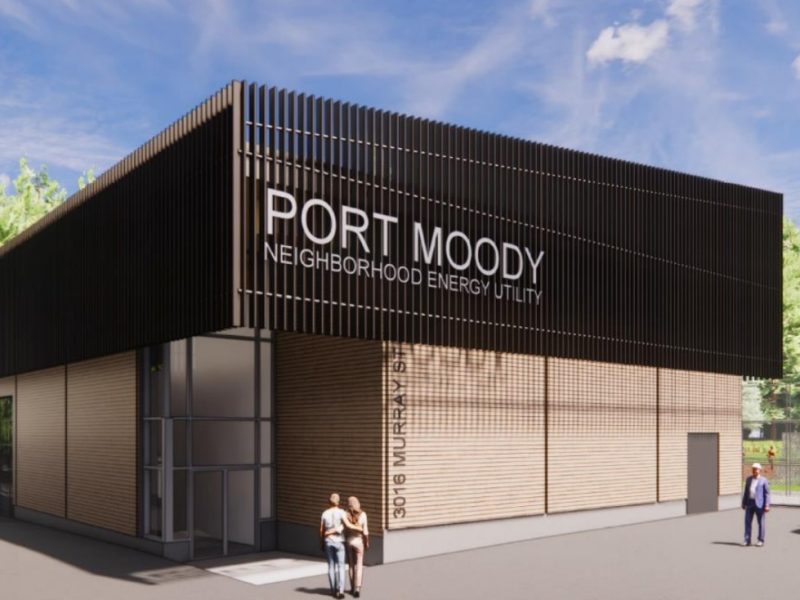
The project will also be secured as rental housing for the life of the building and designed to connect to a future neighbourhood energy system if implemented.
Design changes and amenities highlighted
Several councillors pointed to improvements made since the project’s initial review in January.
Coun. Amy Lubik said the updated design addressed key concerns, highlighting the addition of public art, expanded green space and a 33 percent tree canopy – well above the city’s 20 percent target.
“I really appreciated the step back as well . . . and the increased climate friendly colours,” she said, adding the revised unit sizes meeting BC Housing guidelines were “really beneficial to the community.”
Coun. Callan Morrison also pointed to environmental gains, including the planting of 79 trees and the long-term potential to improve tree cover in an area he described as currently lacking greenery.
He said council’s earlier direction to help secure larger three-bedroom units would become the standard for future builds.
“I think it does set us at a very good number going forward,” Morrison said. “We don’t have to lead on everything, but this is something that I’m happy that we are going to be moving forward with in perpetuity.”
While Morrison’s request for reduced podium height was not offered, he noted the city had no policy in place at the time, and council had to be fair to applicants. However, he added he would be pushing for changes in the future.
Agtarap highlighted features such as bike maintenance areas and access to car share vehicles, arguing the development supports more flexible, car-light lifestyles.
Dissent over density, timing and process
Coun. Haven Lurbiecki, the lone dissenting vote, raised broader concerns about the scale and pace of development in Moody Centre, framing the project as part of a larger 14-tower plan that she said lacks clear public support.
She questioned the decision to grant three readings in a single meeting, and criticized the unit mix and affordability, noting the project is entirely market rental and dominated by smaller units.
“Approving projects that are not meeting needs, not affordable, not supported by a majority of the community, and may not get built is not solving a housing crisis,” Lurbiecki said. “It is creating a credibility crisis.”.
Staff said bringing forward three readings at once is typical in cases when a project is fully vetted and a development agreement is being offered, noting there was little benefit to delaying approvals once council has sufficient information.
Regarding the unit mix, Agtarap said the project could help address changing housing needs, such as downsizing seniors, noting that 2021 census data shows a growing share of one- and two-person households in Port Moody.
Mayor Meghan Lahti pushed back more directly on concerns about timing and demand, arguing the city has an obligation to move forward on housing that meets policy requirements.
“We are in a housing crisis right now. It is not for lack of demand for housing. It is because it is not viable or financially feasible to build,” she said, rejecting suggestions that slowing approvals would improve outcomes.
“For us to sit here and talk about how we shouldn’t be proceeding with this because somehow someone else can’t make their project viable. That is just wrong headed, and it’s very problematic to be thinking that way.”
Lahti said the applicant had responded to council’s earlier feedback and that the project meets the city’s expectations under its current planning framework.
Author