Port Moody’s walkability praised by Metro Vancouver planners
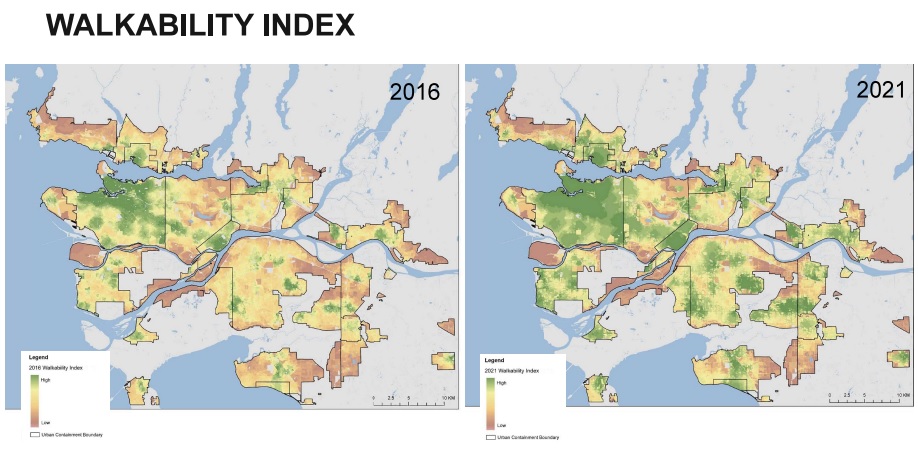
Walkability in Port Moody received high marks from Metro Vancouver.
A delegation to council on April 8 regarding Metro Vancouver’s Walkability Index said the city’s rating improved significantly from 2016 to 2021.
“Port Moody, especially the city centre, stood out in the region for its walkability,” said Laurel Cowan, Metro Vancouver’s division manager for regional land use policy. “That’s really great to see, especially for a smaller community.”
Local news that matters to you
No one covers the Tri-Cities like we do. But we need your help to keep our community journalism sustainable.
Over the last 20 years, the index has been measuring how walkable regional municipalities are on the basis of density, commercial space, balance of land use mix, intersection lengths and routes, and sidewalk coverage.
The metrics are a part of Metro Vancouver’s 2050 Regional Growth Strategy, with an overarching goal of improving and supporting sustainable transportation, and densification around urban centres and transit development areas.
Port Moody was ranked as a “moderately walkable” city – the second highest rating.
While specific stats about Port Moody were not shared, on average, residents in moderately walkable cities travel seven minutes a day using active forms of transportation (walking, cycling), and it accounts for 19 percent of their trips.
According to TranLink’s 2023 Trip Diary, walking trips in Metro Vancouver have jumped 40 percent since 2017, cycling trips have increased 55 percent, and carpooling has increased 15 percent.
Meanwhile, driving trips have fallen 1.6 percent.
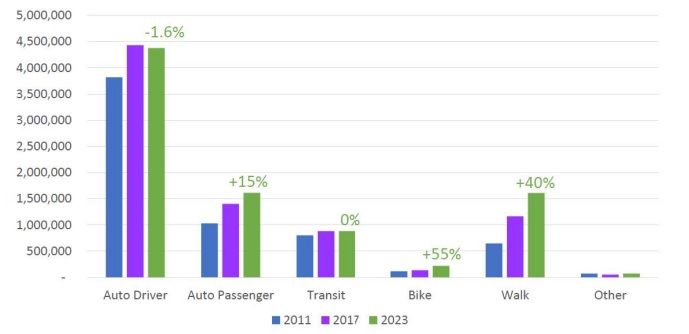
Jonathan Cote, Metro Vancouver’s deputy general manager of regional planning and housing development, said these figures are even more impressive considering the regional population growth.
Transportation behaviours typically “don’t change overnight and don’t change dramatically,” he said.
“For many decades in the region, that number was slowly increasing,” Cote said. “So something big is happening in our region, and it’s really about the connection between land use and how we’ve been designing our communities.”
Improved walkability can also significantly improve health outcomes, according to Metro Vancouver. Moderately walkable cities, for instance, decrease risk of disabilities by 27 percent, and improve sense of community by 24 percent.
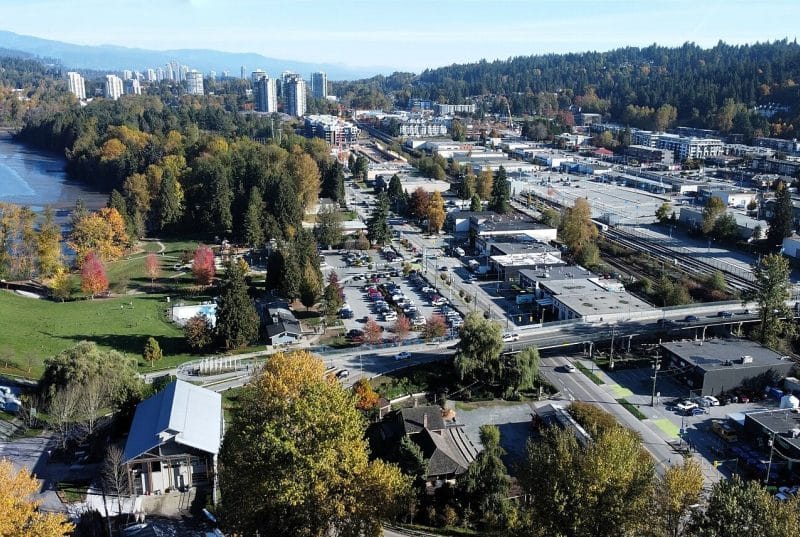
Port Moody’s development around Inlet Centre and Moody Centre were highlighted as regional walkability hotspots due to higher commercial floor area and land use mix around transit, the delegates said.
They added walkability levels in the city are associated with intersection and residential density.
Cowan said one of the shortcomings of the index is it does not consider trail networks, which are extensive in Port Moody and add to the pedestrian network.
“Things that you’ll see are done quite well in Port Moody if you look at the city as a whole,” she said.
Author