In the heart of Coquitlam, volunteers revitalize an urban waterway to help salmon populations
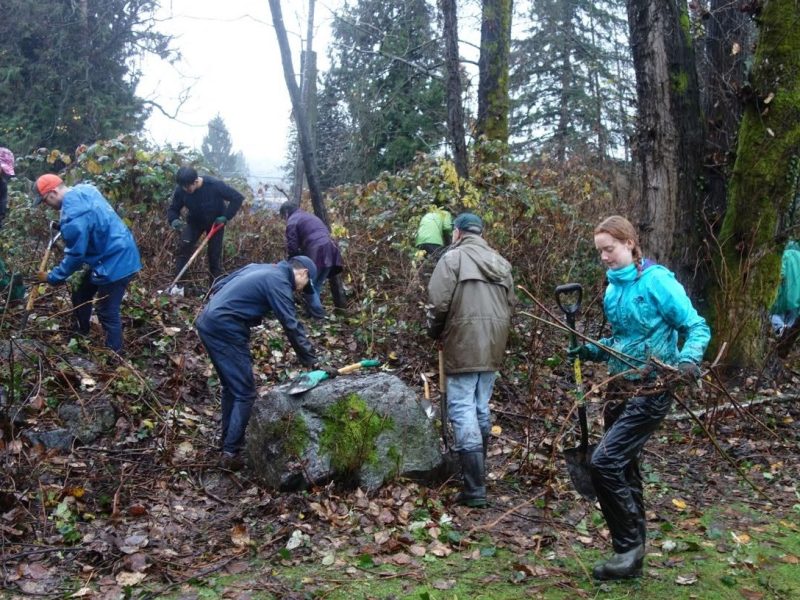
With an excavator, shovels, breaking bars and their bare hands, volunteers dig out concrete from the ground.
They’re tearing out a U-shaped structure, about 20 centimetres wide and 10 to 12 metres long. It leads from one of Hoy Creek Hatchery’s ponds to the creek, near Douglas College and Pinetree Secondary School.
With nearly a century’s weathering, it’s high time to replace it.
Local news that matters to you
No one covers the Tri-Cities like we do. But we need your help to keep our community journalism sustainable.
“It was broken, separated and collapsing on itself,” said Tyler Storgaard, the vice president of the Hoy Scott Creek Watershed Society, the group that manages the Hoy Creek Hatchery.
The structure was also narrow, and, with low water flow, it was difficult for adult salmon to traverse. They might have swam up into the pond when water levels were high, then have difficulty leaving.
“If they realize that there’s no [water] flow here or this isn’t where they want to spawn, they would kind of get stuck within the pond,” said Storgaard.
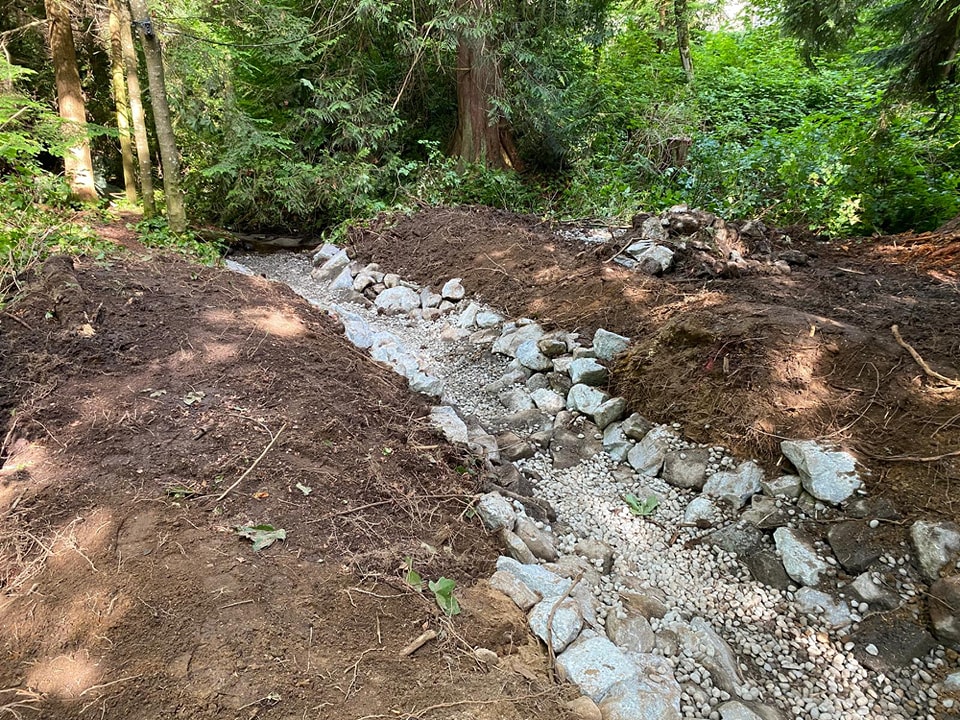
In its place, volunteers then built a nature-like stream. They graded and sloped a creek bed, then laid down ‘rip-wrap’ — angular rock that armours and stabilizes banks — and gravel.
At the end of the month, they plan to refill the pond and stream with water (which they had to salvage fish and invertebrates and then drain before starting the project).
The real success, Storgaard says, will be this fall when adult salmon return: whether or not they see fish moving in and out of the pond.
“I think life has taught all of us a lot over the last century,” he said. “It’s to remove … man-made structures that don’t belong in the watershed.”
Hoy Creek is a tributary of Scott Creek, and Scott Creek is the largest tributary of the Coquitlam River. And this volunteer-run, grassroots project is an important piece of maintaining salmon habitat within the Coquitlam watershed.
How the Hoy Creek Hatchery works
Decades ago, what is now the hatchery was a couple of man-made trout-rearing ponds on the Frederick Brewer Property.
In 1995, governments and local groups restored them to raise coho salmon and boost population numbers. In 2002, the Hoy-Scott Watershed Society formed, with the additional goals of revitalizing watersheds and raising awareness about caring for the creek and its habitat. In 2015, they started raising chum salmon, too.
Today, they manage two ponds: a rearing pond that they raise the salmon in, and the lower pond that adult salmon sometimes swim up into to spawn. Water flows from the rearing pond to the lower pond, and then out of it to Hoy Creek — once via the old concrete structure but soon in the new stream bed.
The society is run by a group of dedicated volunteers, from students to retirees to people with regular day jobs — like Storgaard, who works in construction management.
“We do what we can in our spare time, or a free minute,” he said.
Currently, they are rearing around 5000 coho fry, which need about 16 to 18 months in freshwater. Storgaard said that this means the health of local waterways are even more important, since “They’ll overwinter and summer in all our local creeks.”
Indeed, the hatchery has room for 15,000 fry, but prolonged dry periods, warmer water temperatures and human-caused pollution events stop them from rearing that many.
These challenges are seen in many urban creeks and streams, according to Jim Shinkewski, the director of the Pacific Salmon Foundation (PSF) Community Salmon Program, the organization that funded the project.
Creeks face numerous competing pressures, from urban use, agriculture, to maintaining enough flow for fish to swim in. Urban development also often strips away riparian areas, which are critical for stream health. Many urban creeks in the Greater Vancouver area have also been converted into culverts.
But despite the fact there is a decline in salmon populations year over year, Shinkewski is still optimistic.
And this is because if the salmon stewardship community — such as the Hoy Scott Creek Watershed Society — weren’t making the interventions, there would otherwise be extirpation, or localized extinction, of salmon in all of Greater Vancouver watersheds.
“There are 1000s of unique salmon runs throughout B.C.,” Shinkewski said.
“And without interventions in habitat and enhancement, many of those would disappear forever.”