Port Moody likely to achieve 2030 emissions targets, but ‘significant sustained reductions’ needed for carbon neutrality by 2050
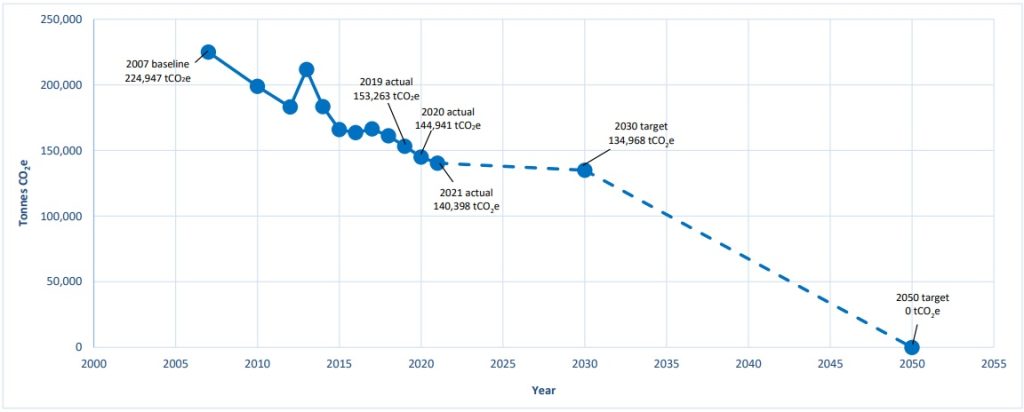
Port Moody is well on its way to meeting its 2030 emission-reductions targets, but achieving carbon neutrality by 2050 will require “significant sustained reductions,” according to staff.
The annual progress report for implementation of Port Moody’s Climate Action Plan (CAP) was delivered to council on May 14, showing the latest data on community emissions.
“Port Moody fancies itself a leader in climate change, and I think we’re coming through that way,” said Coun. Kyla Knowles. “There’s a lot to be proud of here.”
Local news that matters to you
No one covers the Tri-Cities like we do. But we need your help to keep our community journalism sustainable.
The 2020 CAP committed to reducing community-wide emissions (from 2007) by 40 percent by 2030. Emissions have already decreased 38 percent according to 2021 figures released by the province.
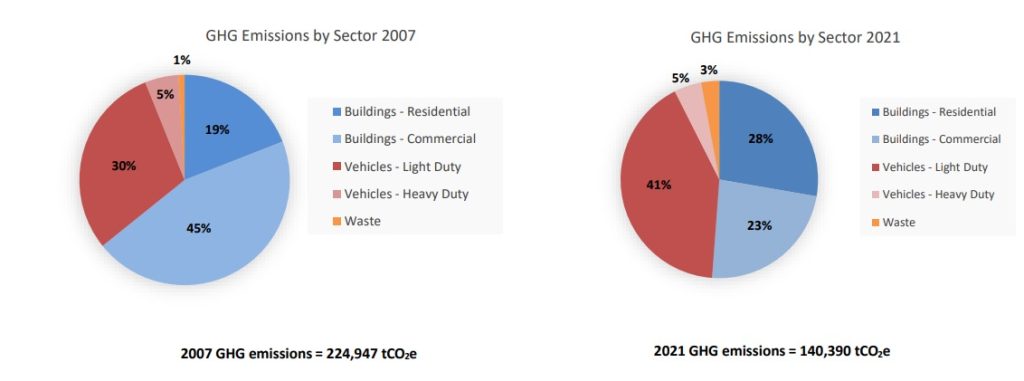
Transportation and building operations remain the biggest culprits in terms of Port Moody’s total emissions, with more significant strides being made in the latter category.
While fossil-fuel use in buildings is still the largest source of emissions in the community, total building emissions have been halved since 2007.
This is largely due the decommissioning of large industrial sources, such as Burrard Thermal and the Flavelle Mill, though increased efficiency standards though the BC Building Code and home retrofit rebates have also contributed, according to staff.
Transportation emissions in the community have decreased 18 percent from 2007, though the number of registered electric and hybrid vehicles have increased by 81 and 53 percent, respectively.
Since 2007, the share of Port Moody’s emissions coming from buildings has fallen from 64 to 51 percent, while the share of emissions from vehicles has increase 35 percent to 46 percent.
Chris Brown, Port Moody’s senior sustainability and energy coordinator, said the next few years will largely focus on actions to reduce the use of transportation fuels and natural gas.
“We’ve made good progress from 2007. . . . We are probably due to meet our 2030 target,” Brown said. “There’s still plenty of work to do to get to that 2050 target of carbon neutrality.”
Though the city is only directly responsible for between 1 and 2 percent of Port Moody’s emissions, staff said progress has been made in reducing the carbon footprint of its civic facilities and vehicle fleet.
Emissions from municipal-owned buildings have decreased by 18 percent between 2017 and 2023. Fleet emissions have increased 9 percent since 2007, however, staff said that’s a small spike considering the current fleet is much larger.
Waste reduction emissions, meanwhile, increased 15 percent from 2017 to 2023, but staff said this is the result of population increases. Staff note solid waste emissions only account for 3 percent of the city’s total, and Port Moody’s diversion rate still beat provincial targets set in 2020.
Another positive statistic from 2023 stat was 5,350 square metres of natural environment being restored, including the planting of 1,118 trees.
Port Moody’s 10-year CAP is divided into five phases, with staff working to implement 65 actions identified for the first two phases (52 of which have begun).
The progress report stated that 22 actions from phase one are around 64 percent complete, while 43 actions from phase two are “modestly behind schedule,” at approximately 21 percent complete.
Staff said staffing changes in 2023 resulted in some delay, but added they expect “more significant progress” in 2024 and to move on to phase three actions in 2025.
Port Moody is waiting on the province to publish more recent results from data collection and analysis, which has been delayed two years. The report noted that staff expect greater emissions reductions in future years after CAP actions have been implemented.
Author