Judge orders guarantors to pay $15 million in Coquitlam development loan dispute

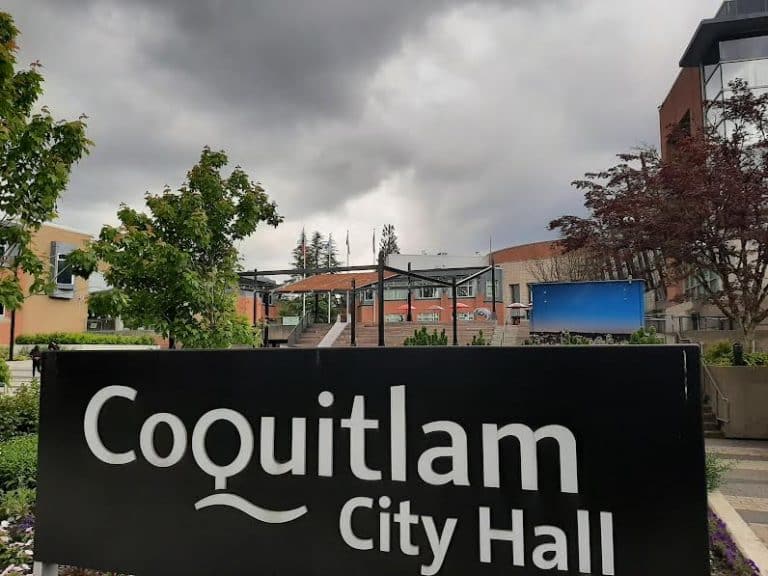
A BC Supreme Court judge has granted judgment against two guarantors of a $15-million loan tied to a real estate development project involving two vacant properties in Coquitlam.
In a Sept. 16 decision, Justice Sandra Wilkinson ruled in favour of lenders seeking to enforce guarantees connected to the loan after the borrowers defaulted. The foreclosure proceeding concerns a development project secured in part by a mortgage over two vacant development properties in Coquitlam.
“The law cannot and does not permit individuals to avoid their contractual obligations through the serial avoidance of any effort to independently understand the legal documents they are signing,” Wilkinson said.
Local news that matters to you
No one covers the Tri-Cities like we do. But we need your help to keep our community journalism sustainable.
The case stems from a May 2023 financing agreement under which the lenders advanced $15 million to Vanhome Ventures 2 Holdings Ltd. and Vanhome Ventures 2 Limited Partnership.
The loan was backed by several forms of security, including the mortgage on the Coquitlam properties and guarantees from a number of individuals and companies.
The borrowers and guarantors later defaulted, and foreclosure proceedings began in August 2025. A temporary court order was granted that October, when the court declared $16.38 million was owing to the lenders.
The latest court fight centred on guarantors Suli Lou and 1128072 B.C. Ltd., whose sole director, Hong Zhang, is Lou’s husband.
Lou and Zhang argued they had understood their liability under the guarantees would be limited to a portion of the debt corresponding to their investment in the development.
Both said their ability to understand English was limited and that they relied on explanations from others about the documents they were signing. Lou said she had been told she would be responsible for, at most, five percent of the debt.
Lou said she signed the documents at a Richmond law office in May 2023 after being repeatedly pressed by people involved in the project. According to her evidence, the lawyer went through the documents and showed her where to sign but did not explain the guarantee or tell her she could potentially be personally liable for a large amount if the loan was not repaid.
Zhang gave similar evidence about signing documents on behalf of 1128072 B.C. Ltd. during a video conference while he was in China.
The guarantors tried to rely on a legal defence which can allow someone to escape an agreement if the document they signed was fundamentally different from what they believed they were signing.
Wilkinson rejected that argument.
She found Lou and Zhang knew they were signing guarantees and understood they could be liable for at least some of the loan. Their alleged misunderstanding concerned how much they could owe, rather than the fundamental nature of the documents.
“The instrument they signed was of the precise nature they understood they were signing,” Wilkinson said, finding that, even taking their evidence at its highest, they had misunderstood only the scope or amount of their liability.
The judge also found the guarantors had opportunities to better understand the documents before signing them.
“Nothing prevented Ms. Lou or Mr. Zhang from asking Mr. Xu to explain it, going to another lawyer, or having the instrument translated,” Wilkinson wrote.
Wilkinson found there was no evidence the lenders knew Lou and Zhang were reluctant to sign the guarantees or that they had allegedly been told their liability would be limited.
The judge concluded the dispute could be decided without sending it to trial and granted judgment in favour of the lenders. The decision leaves the issue of legal costs unresolved if the parties cannot reach an agreement.
Author