Three land-use scenarios pitched for Anmore South development
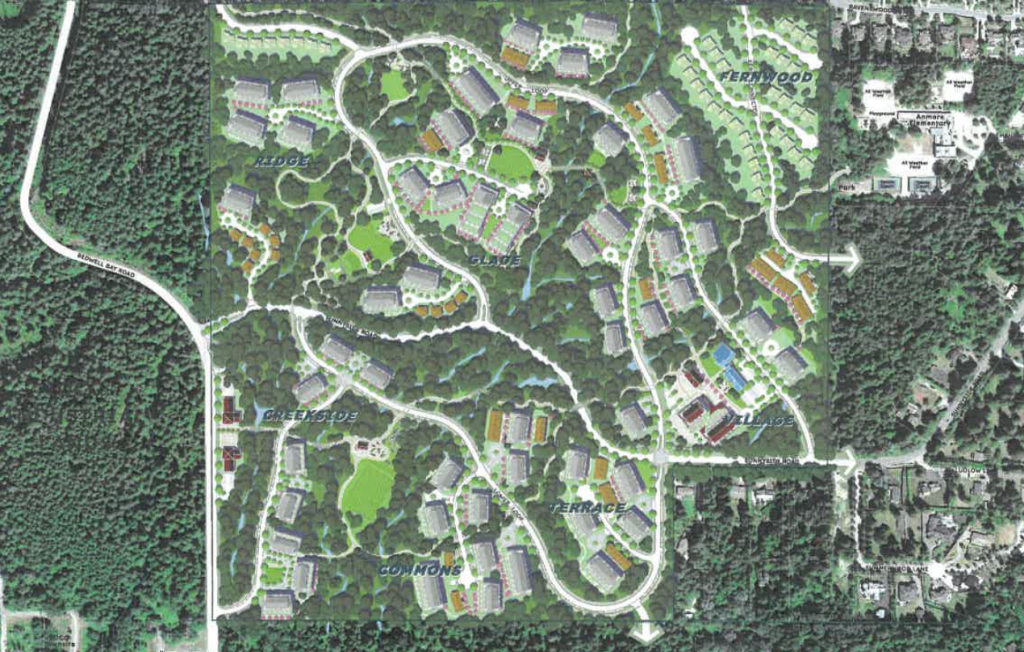
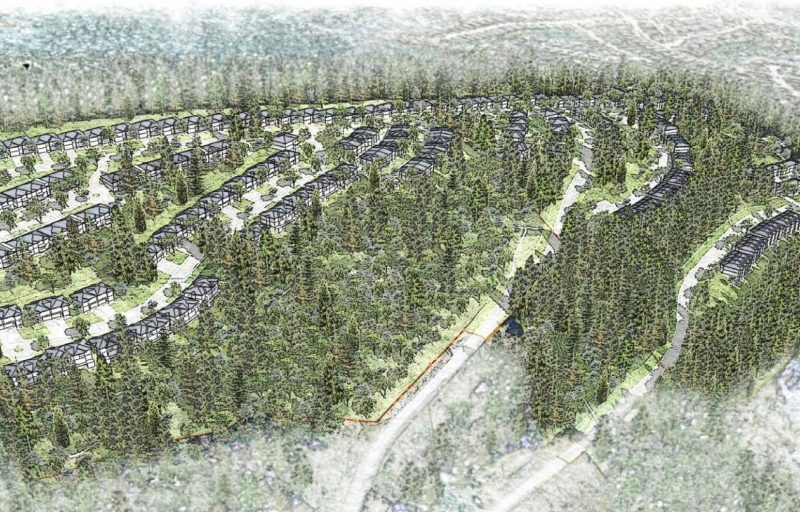
Three preliminary land-use scenarios have been pitched for the 152-acre Anmore South development, leaving the municipality with a choice: more density or less parkland and natural areas, amenities, and commercial space.
Anmore’s council unanimously voted on Oct. 14, to move the debate to a future committee meeting (Oct. 29), where they will provide input on where they would want to steer the biggest development in village history.
“We can certainly tweak any one of those proposals,” said Mayor John McEwen. “I think the key thing is, what we’re trying to lay out here, is a process in regards to going through community engagement.”
Local news that matters to you
No one covers the Tri-Cities like we do. But we need your help to keep our community journalism sustainable.
Icona Properties has pitched building up to 3,500 units on Anmore’s southwest border with Port Moody, which requires amendments to Anmore’s official community plan (OCP), the creation of a neighbourhood plan, and a terms of reference set by the municipality.
The proposed land-use scenarios, part of the neighbourhood plan, have been guided by input received through a series of open houses, workshops, and online feedback last spring.
So far, there has been little consensus on what the community wants to see, but most recognize the area will be developed.
Some residents have been outright opposed to changing the land-use designation from rural to urban, while others have been supportive of smaller and more affordable units in an area dominated by large and expensive single-family properties.
The proposed options reflect the split opinion throughout the community, though all contain a variety of mixed-use housing forms (including non-market units); dedicated parks, natural spaces and trails; shops, services and community facilities; and transportation and traffic considerations.
Staff said a major design driver behind all the land-use scenarios are constraints related to the topography and environmental sensitive areas, as the property is intersected by Doctor’s Creek, Schoolhouse Creek and their tributaries.
“All the land-use scenarios have a lot of similarities,” said Chris Boit, manager of development services.
When the land-use scenarios are discussed at committee in two weeks, council does not have to choose between the three options, but can draw on aspects they like and “mold those together into a final preferred option,” Boit said. He added the final report will be subject to further analysis and public input.
Option one
The first land-use scenario is closest to what Icona Properties proposed during the first reading of the OCP amendment in December, 2023.
It is the highest-density option, proposing 3,500 homes be built, including 3,000 apartments, four to six-storey buildings; 400 units would be townhomes; and 100 single family homes and duplexes – bringing in an estimated 6,390 new residents to Anmore.
This option provides the most amenities, affordable housing (105 units), dedicated parkland (10.7 acres), amenities, commercial spaces and a large public recreational facility.
It would also have the smallest residential footprint and conserve the largest natural conservation area at 61 acres (40 percent).
Anmore could expect a $700,000 increase to its tax base annually.
Notably, option one is the only scenario where a transportation connection from Anmore South to Crystal Creek Drive is proposed.
McEwen said the Crystal Creek connector is one of his biggest concerns. “I think it’s really important that that’s part of any scenario that comes forward,” he said.
Option two
The second option, dubbed the “balanced plan,” would shift the project’s density to more ground-oriented townhomes and single-family homes.
A total of 2,450 homes would be built, able to accommodate 4,830 new residents in 1,650 apartments, 745 townhomes, and 55 single-family homes. Icona has proposed 75 below-market units.
Slightly less land for a neighbourhood park would be provided at 8.7 acres, as well as less land dedicated as a natural conservation areas at 55 acres.
Smaller commercial zones, and a publicly or privately funded recreation centre are proposed.
The village could expect a $500,000 increase to its tax base.
Option three
The lowest-density scenario would build 1,990 homes in mostly ground-oriented housing. A total of 1,180 apartments would be built, 730 townhomes, and 80 single family homes, projecting a 4,060 population increase. A total of 59 below-market units are proposed.
Boit said it’s the lowest feasible amount of density that would allow servicing of the project.
A 5.6 acre neighbourhood park would be dedicated to the village, along with 52 acres of natural conservation area.
Just one commercial zone would be built, and a recreational facility would be offered as a private club for Anmore South residents.
Around $400,000 is expected in new taxes.
Council comments
The only councillor who was hesitant about referring the land-use scenarios back to committee was Coun. Doug Richardson, who said he had “a lot of concerns.”
He raised issues related to tax revenues versus the servicing costs of the development, and the amount of parkland being dedicated, suggesting council send the options back to Icona for a rework.
“Cypress Village on the North Shore in West Vancouver is getting 70 percent of the land in parkland in order to allow increased density,” Richardson said. “There’s absolutely no reason that Anmore can’t do the same thing.”
While McEwen said Richardson’s concerns were valid, he said questions were better saved for the committee meeting where Icona representatives will be present.
Coun. Kim Trowbridge agreed he would rather save the conversation, though he added the only way to achieve that much dedicated parkland was though higher density, specifically towers.
“We’ve been told that over and over by our community, they do not want towers,” he said.
Coun. Paul Weverink said council could outright reject all proposals if they chose to, but said there was probably a middle ground that could be found.
“For me, I’m not just looking at numbers. I’m looking at the future of this village,” he said. “You’re considering it for new people coming into your community.”
Author