Staying on septic poses growing risks as development expands in Anmore, mayor warns
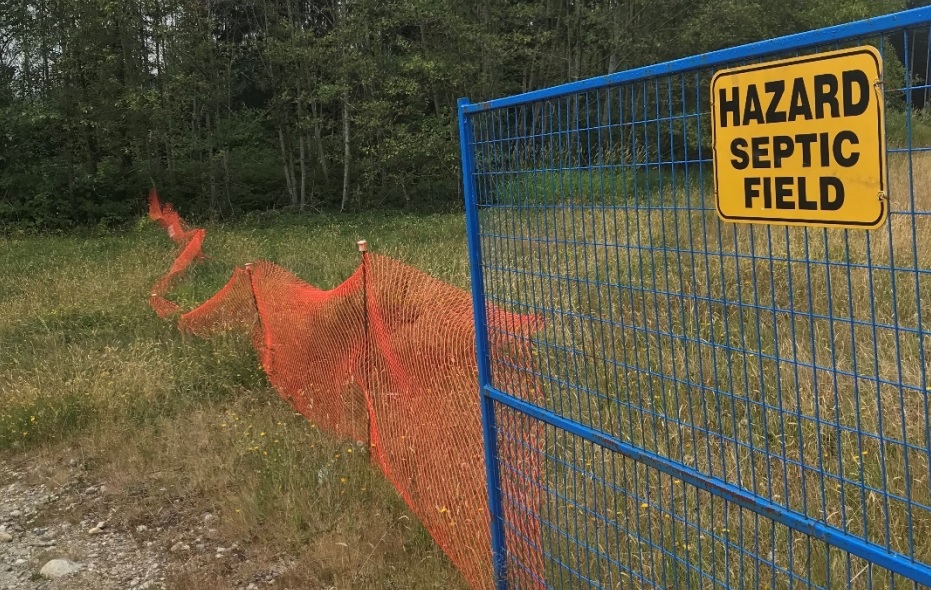
Anmore’s mayor smells a problem.
With no connection to Metro Vancouver’s sewer network on the horizon, Mayor John McEwen warns that old septic fields, mounting development pressures, and limited provincial oversight are leaving the community vulnerable to another foul mess.
“Septic systems used to make sense for Anmore, but today they’re fraught with issues and failings,” McEwen said. “All it would take is Mossom Creek Hatchery to detect coliform and there’d be a big problem.”
Local news that matters to you
No one covers the Tri-Cities like we do. But we need your help to keep our community journalism sustainable.
Most homes and stratas in Anmore rely on either individual or communal septic systems. McEwen said many are decades old, undersized for modern housing, and beyond the village’s jurisdiction. Oversight instead falls to provincial ministries and Fraser Health.
The risks are both environmental and financial, according to the mayor. A single failure can contaminate waterways and force residents into costly repairs.
Troubling signs
Those risks are already on display. In 2025 alone, two stratas received serious warnings from the Ministry of Environment (MOE).
- In June, inspectors cited Crystal Creek Estates, a 35-home subdivision, for 12 environmental violations. The system exceeded effluent limits on 16 occasions—some nearly double the allowable concentrations—while also failing to submit mandatory studies, emergency plans, and monitoring records. The facility had been warned previously in 2018 for similar problems.
- In January, inspectors flagged Countryside Village, a 92-lot strata, for exceeding maximum daily flow limits more than 90 times throughout 2024. The system also lacked required permits under the Municipal Wastewater Regulation. Countryside had already been cited twice, in 2018 and 2019.
The province relies on a “professional reliance” model, where engineers and certified operators are responsible for design and compliance. The Ministry of Environment (MOE) oversees large systems discharging more than 22,700 litres a day, while Fraser Health regulates smaller systems.
Unlike building elevators or boilers, septic systems face no annual inspection requirement. Instead, audits and site visits are complaint-driven or triggered by compliance failures. Larger and riskier facilities receive more attention, while small or low-profile systems may go longer without review.
That worries McEwen.
“It’s remarkable that if you have an elevator it gets inspected every year, but a septic system does not,” he said. “There’s no compliance, no ongoing monitoring. The province doesn’t have the staff to track every system.”
The mayor noted that while the village approves building permits, it has no authority to monitor or enforce septic performance.
Shortly hearing of the Crystal Creek infractions, the village issued a press release reiterating that septic systems are outside its jurisdiction.
“When a house gets built, an engineer designs the septic system and signs off on it. We take that as part of the building application, and that’s the end of our involvement,” he said. “Everything after that is overseen by Fraser Health or the Ministry of Environment. We don’t police any of it.”
The mayor said Anmore regularly receives complaints about neighbours’ septic systems – roughly ten in the past two years – including instances of illegal discharges into neighbouring empty lots and makeshift rerouting into ditches.
The MOE, however, reported only two complaints in Anmore over the same period, calling the number “minimal.” Fraser Health said it had three since 2021, with only one referred to the ministry, and none resulting in fines.
McEwen disputes those figures. He said the village invited MOE staff to speak to council in 2018, where they admitted “manpower issues” prevent follow-up on many files.
“I don’t think the ministry is being forthright,” McEwen said.
The strain will be compounded by Bill 44, new provincial housing legislation requiring municipalities to allow secondary suites. McEwen said the mandate risks overwhelming existing systems.
“Because we’re rural and don’t have sewer infrastructure, the province is essentially forcing extra units onto septic fields that were never designed for that capacity,” he said. “We try and tell them they have to redesign their septic fields, but we can’t force them.”
The ongoing issues at Countryside Village illustrate the pressures facing Anmore’s septic-based infrastructure, McEwen said. Originally built as a mobile-home park with a single washroom and laundry per unit, the site was converted in 2009 into a bare land strata.
Lots were individually sold off, with the new owners knocking down the manufactured units and replacing them with 3,000–4,000 sq. ft. houses, each with multiple bathrooms.
So far, 42 of 92 lots are built out, many during a surge of construction between 2016 and 2019.
“I guarantee you there are three washrooms in each one of those homes,” McEwen said. “When you’re putting this much more density there, where’s the expansion of their septic system? It’s just not there.
“I’ve heard they’re already pumping out their system monthly just to keep up, and we’re not even halfway through the build.”
A well-designed and properly functioning septic system should only need pumping every three to five years, according to the U.S. Environmental Protection Agency.
McEwen said the village tried to freeze building permits but was legally required to allow them because the strata’s consultant had already signed off on the designs.
He said the village now attaches disclaimers to building permits noting it has no jurisdiction over septic infrastructure.
Cautionary tale of Anmore Green Estates
The most dramatic septic failure came at Anmore Green Estates, a 51-home subdivision whose system failed in 2017, contaminating Eagle Mountain Middle School’s playing fields with E. coli and fecal coliform.
Soil testing detected high contamination at multiple sites, leading to the province to issue a pollution abatement order. For nearly five years, students were barred from using the field while the strata fought through jurisdictional quagmires, legal fights, and costly engineering and regulatory hurdles.
Former Anmore Green Estates president, Rob Boies, said the families ended up “being put through the ringer” after being stuck with a $1.2 million bill for abatement costs, and up to $1 million in connection costs.
New construction of the middle school, which broke ground in 2012 and opened in 2015, caused an already struggling septic system to contaminate the property, according to Boies.
A 2017 engineering report commissioned by the strata states that while system was over capacity and regularly failed to meet permitting standards, the school’s construction cut into the hillside septic field exacerbated the failures.
“(School District 43) knew when they cut our hillside by 20 feet, there was going to be problems,” Boies said. “I alerted them at public meetings, before they even built the schools.”
Similar to Countryside Village, the strata had been a mobile-home park, and had since undergone a significant subdivision while remaining on a septic system installed in 1997. The developer had put $300,000 into upgrades, but system still needed to be pumped out on monthly basis, Boies said.
The province ultimately ordered the strata to connect to Port Moody’s sewer system – just 50 metres away – after years of resistance from both the Village of Anmore and the school district.
McEwen acknowledged he initially opposed the connection due to the high growth levies Metro Vancouver imposes on members, but said he eventually negotiated a deal limiting fees to only the affected homes.
However, he said the episode changed his outlook when it comes to getting Anmore off septic systems.
“It showed us that the province can simply order a connection. . . . We were quite shocked,” McEwen said. “The ministry just said get it done. They didn’t care who paid for it.”
Anmore Green Estates residents were “very lucky” because the connection was only a short distance away, according to the mayor. If Countryside or Crystal Creek were to fail, a hookup to Metro’s network could cost tens of millions of dollars as no nearby pipes exist.
McEwen also noted that Countryside Village is sandwiched between Buntzen Lake and public parkland, and a failure there could be far worse for the environment.
New pressures
And new even larger subdivisions development projects continue to advance.
The Pinnacle Ridge Hillside development, now before council, proposes 261 homes across 75 acres of steep terrain – potentially 369 units under Bill 44.
While no final plans are in place, McEwen said it appears the development intends to rely on small communal septic systems of four to five units.
“I’m going to be very hard-pressed to support that,” he said. “This is a very steep hill with a ton of water flow.”
The collapse of the Anmore South proposal earlier dashed what McEwen and many of his fellow councillors saw as a potential solution.
The developer had offered to spend $67-million on an pricey infrastructure hookup connecting the southwest corner of the village to Port Moody’s sewer system.
But some residents fiercely opposed the plan, threatening legal action and accusing the council of fast-tracking approvals. Port Moody also raised concerns, saying no serious discussions had taken place about alignment or corridor space.
“I thought it could have been a long-term solution,” McEwan said. “The houses get bigger and bigger, so the septics need to get bigger and bigger, and the usable ground becomes a challenge.”
Although Boies was often at odds with McEwan during Anmore Green Estates’ septic debacle, he agreed the village’s septic systems will being a challenge for future growth in the community.
“It’s going to continue to be an issue,” Boies said. “It’s too bad the Anmore South project didn’t go forward. I don’t think (council) handled it very well, you can’t force these things on people, but there’s lots of reasons why those should not be on septic.”
Author