Port Moody council backs additional funding for expanded Kyle Centre redevelopment, despite project costs concerns
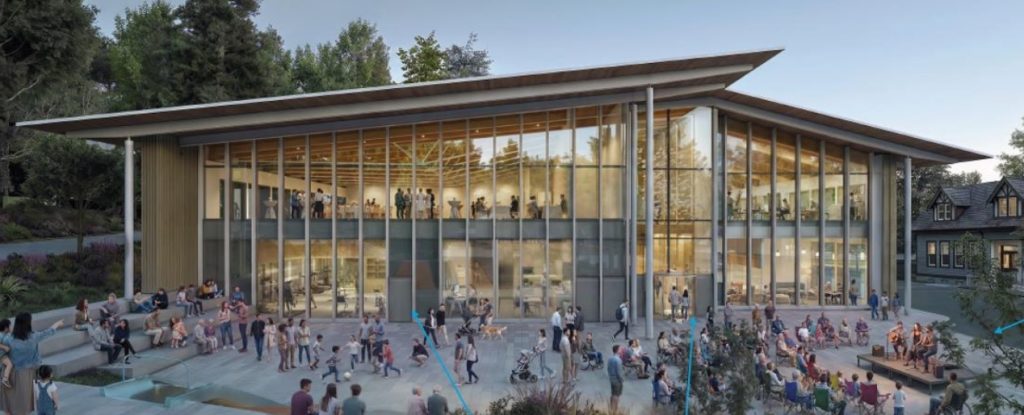
Port Moody has endorsed the next phase of planning for a significantly expanded Kyle Centre redevelopment, approving an additional $148,000 to advance design work despite some concerns around the potential costs.
On July 28, council voted 6-1 to approve the additional funding from the city’s community amenity contribution reserve, which will cover work required after the project’s scope grew during the conceptual design phase, including traffic studies, archaeological assessments and design work associated with increasing the proposed facility from 30,000 to 39,000 square feet.
“I appreciate that this is an investment in our community. But even if we were to try to patch up the current Kyle Center right now, functionally, it doesn’t meet our needs,” said Coun. Amy Lubik. “There’s a lot of different programming that we need for seniors, for arts, for gymnasium spaces.”
Local news that matters to you
No one covers the Tri-Cities like we do. But we need your help to keep our community journalism sustainable.
The conceptual design envisions a two-storey community centre featuring a gymnasium, weight room, youth and seniors lounge, games room, flexible programming spaces, underground parking, a public plaza and expanded park space. It also includes closing a section of Kyle Street to create a pedestrian-oriented plaza linking the new building with Kyle Park.
Coun. Kyla Knowles said the design had improved considerably through public consultation, pointing to features such as improved parking, an exterior-accessible public washroom, additional shade planning and a proposed community garden.
She said the expanded scope is a direct result of the engagement process, which “brought up issues that hadn’t been thought of before.”
“This is a design that has evolved over time,” Knowles said. “This community centre is going to be meeting the needs not just now but in the future.”
The design received largely positive feedback, however, residents identified property taxes and operating costs as a concern, alongside parking capacity and traffic safety. Community groups also urged the city to minimize construction impacts and ensure the new facility remains affordable and accessible for existing users.
Knowles acknowledged some residents have questioned whether the project should proceed before the election or suggested simply repairing the existing building, but argued the project should move forward now. She added that maintaining budget discipline during construction would be essential.
Several councillors agreed that the expanded design better reflects future community needs.
Coun. Diana Dilworth called the redevelopment one of council’s long-standing priorities, saying it would transform the 47-year-old facility into the centrepiece of a revitalized Kyle district with expanded park space and gathering areas.
“I cannot wait to have the community at the ribbon cutting,” she said, adding she believes the facility will serve residents for decades.
Coun. Amy Lubik said the project responds to longstanding demand for additional recreation space while incorporating safety and accessibility improvements identified through public engagement.
She noted recreation surveys have consistently shown residents want more programmable space, adding the existing building no longer meets the community’s needs even if it were repaired.
Lubik also said advancing the design would strengthen the city’s position when applying for senior government infrastructure grants, particularly programs requiring “shovel-ready” projects.
Mayor Meghan Lahti echoed that point, saying detailed design is necessary both to establish reliable cost estimates and to compete for federal funding opportunities.
“The only way to find out what the cost is, is to get to that detailed design place,” she said.
Lahti also proposed the amendment directing staff to report on the feasibility of dedicating one of the upper-floor multipurpose rooms to expanded Port Moody Arts Centre programming, saying the arts centre has long struggled with space constraints.
That amendment passed unanimously.
Coun. Haven Lurbiecki was the lone vote against approving the additional funding. She argued council lacked a public mandate to spend additional money on planning such a significant capital project just months before October’s election.
She stressed her concerns were not about the design itself, which she described as thoughtful, but about the timing and financial uncertainty surrounding the project.
“I think there needs to be a mandate from the public,” she said, arguing many residents remain concerned about the eventual cost and how it will be funded.
Lurbiecki also questioned whether the level of public participation to date demonstrated broad community support, noting relatively modest attendance during the second round of engagement.
Other councillors disagreed.
Coun. Samantha Agtarap noted council had received 29 pages of public comments and said references to cost represented only a small portion of the feedback. She said many residents also requested an even larger facility, illustrating the balancing act between meeting future needs and managing affordability.
Coun. Callan Morrison also acknowledged cost concerns but said the expanded building reflects the demand for recreation, seniors, youth and arts programming while serving the rapidly growing Moody Centre area.
He said future discussions should focus on partnerships, grants and cost efficiencies as the project advances.
Staff expect to return to council this fall with a final conceptual design, Class D capital cost estimates and potential funding strategies before seeking approval to begin detailed design through the city’s annual capital budget process.
Author