Port Coquitlam’s heritage society employees need a raise to meet living wage
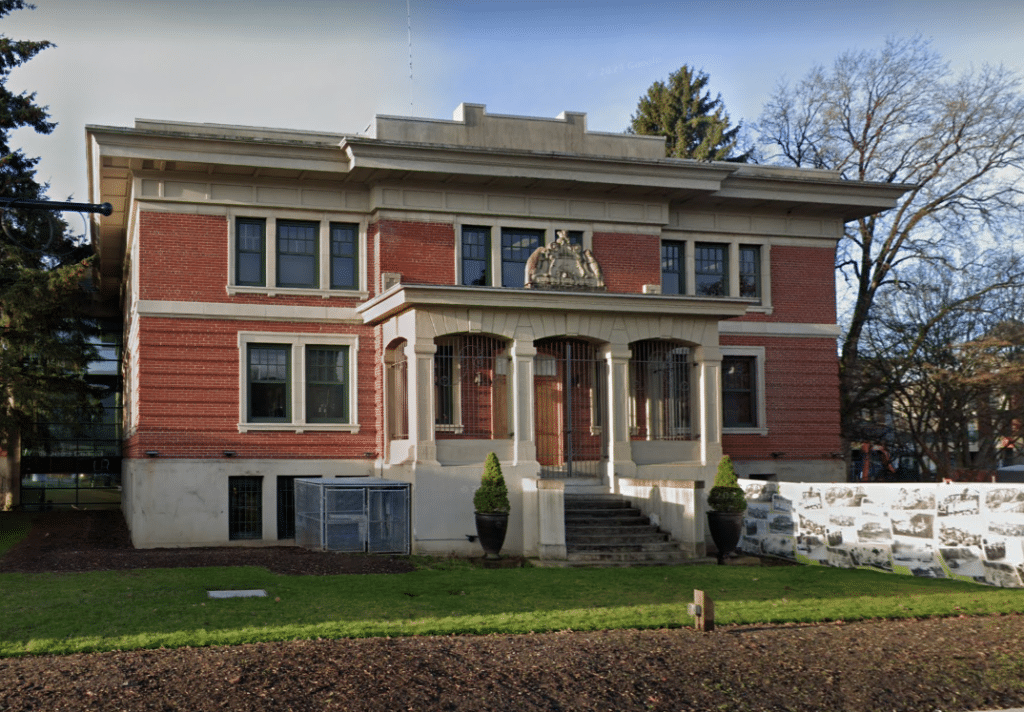
The Port Coquitlam Heritage and Cultural Society (PCHCS) is asking the city for more money to pay their highly educated employees a living wage.
The organization has employees with master’s degrees who are earning less than B.C.’s living wage, calculated at $24 dollars an hour, said Jack Choules, PCHCS’s president.
Choules was part of a delegation to council on behalf of PCHCS on Sept. 26, asking for a $7,000 increase to their annual operating budget of $55,000.
Local news that matters to you
No one covers the Tri-Cities like we do. But we need your help to keep our community journalism sustainable.
“That is a prudent and necessary step,” Choules said. “Approving this increase will allow PoCo Heritage to continue to attract and retain well-qualified museum professionals, people with master’s degrees, and enable us to continue to maintain service levels without disruption.”
The PCHCS was founded in 1988, and is responsible for preserving the city’s heritage and historical collections, acquiring, cataloging, digitizing records and artifacts, along with holding exhibits.
While the organization has had a successful rebound from COVID-19 regarding attendance levels, volunteer hours and project grants, there isn’t enough money to pay adequate labour costs for their 1.6 full-time positions.
The living wage is defined as the minimum amount of income to allow employees to meet their basic needs.
A surprised Coun. Paige Petriw asked Choules to clarify that someone with a master’s degree was making only $20 an hour, and he confirmed that is correct.
“Wow. That’s shocking. I just took note of that for, I think, all of us, knowing there is an affordability crisis,” Petrw said.
“Not all is perfect in our little world,” Choules said, adding that working museum professionals in the Lower Mainland are generally younger people, who don’t own homes and are suffering increasing rent hikes.
The work of their employees has been helped by nearly 23 volunteers who have donated over 3,000 hours, roughly 130 hours per person, assisting with storage care and artifact descriptions.
Although PCHCS was able to take in nearly $73,000 in grants and donations last year in addition to their operating revenues, the money can’t go towards their labour costs.
“Grants are very project specific,” Choules said. “We apply to do a certain body of work. It’s not for our operational day-to-day, keeping the doors open kind of thing.”
The current wage being paid, in fact, violates the licensing and partnership arrangement the PCHCS signed with the city in 2022, according to Choules.
The agreement set the annual operating for PCHCS, but also required them to pay their employees a living wage.
Port Coquitlam was one of the first cities in the country to introduce a living wage policy in 2017.
Coun. Darrell Penner agreed the current wage was not acceptable and agreed with implementing the small raise.
However, he asked when PCHCS would become self-sustaining, noting when the city supplied The Outlet art gallery to the organization in 2007, it was expected they would no longer need financial support in three to five years.
PCHCS’s board is hard at work creating a sustainability plan to achieve that goal, Choules said, but added it was difficult to say when it would happen.
Choules said the organization is frequently looking for other sources of funding outside the municipality, but nobody is willing to pay operational costs, so far.
“We haven’t found anything that’s not project specific,” Choules said. “We need to find a source of revenue that isn’t deadlocked, that pays for the base of our operations, because there’s certain costs associated with that, to keep the lights on, to buy computers, to do all of those sorts of things.”
PCHCS’s current funding agreement with the city last until 2025.
Author