By the numbers: A look at housing in Port Moody
What’s there isn’t cheap and what’s cheap isn’t there
Approximately 20 percent of Port Moody residents are spending more than 30 percent of their income on housing.
That’s one of the key findings in a staff report that paints a picture of housing where potential residents are often left choosing between buying something unaffordable or trying to rent something that’s unavailable.
Approximately 1,340 Port Moody households – 10.9 percent households in the city – are in “core housing need,” meaning their homes are either unaffordable or inadequate. Half of those households are renters.
There are also 675 Port Moody households in “extreme core need,” meaning more than half of every paycheque goes toward keeping a roof over their heads. That figure represents an 80 percent increase from 2006, when 375 households were considered “extreme core need.”
Local news that matters to you
No one covers the Tri-Cities like we do. But we need your help to keep our community journalism sustainable.
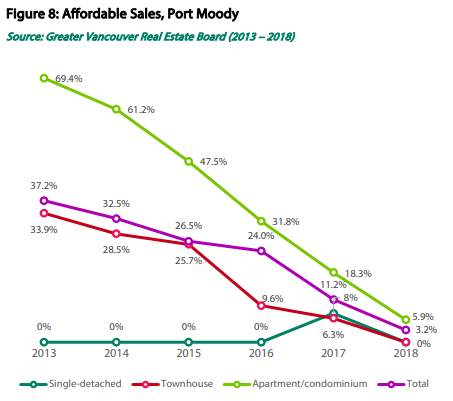
The report documents a real estate boom that saw the price of both Port Moody’s single-family homes and townhouses nearly double since 2013.
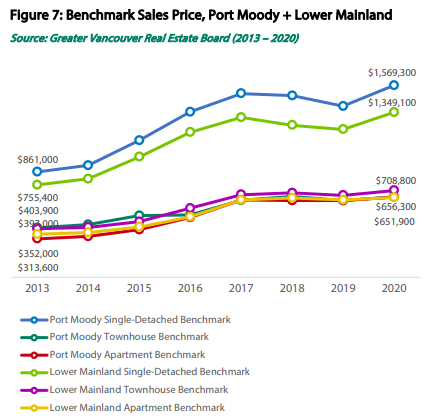
That stratospheric rise coincides with an even sharper decline in affordability.
In 2013, 37.2 percent of all house sales were considered affordable for households making the median income. By 2018, that figure had plunged to 3.2 percent.
Median rents have also risen, going from $1,100 in 2008 to $1,600 between 2008 and 2018. Rents in newer buildings typically start at $1,800.
Zero percent
While the cost of homeownership have pushed some families to consider renting, the options are extremely limited. The vacancy rate for apartments with three or more bedrooms has fallen to zero percent for the Tri-Cities.
Overall, Port Moody’s vacancy rate has fluctuated between 0.5 and 1.9 percent over the past five years. A healthy vacancy rate ranges from 1 to 3 percent, according to the report.
The people facing the brunt of the city’s housing market tend to be low-income households, new immigrants, seniors, and people with disabilities.
The report noted a need for more wheelchair accessible units and seniors housing.
While the report concluded that there is “little evidence” an emergency shelter was needed, the report also allowed that the city’s homeless population “has the potential to rise in the coming years.”
Excess, or just enough?
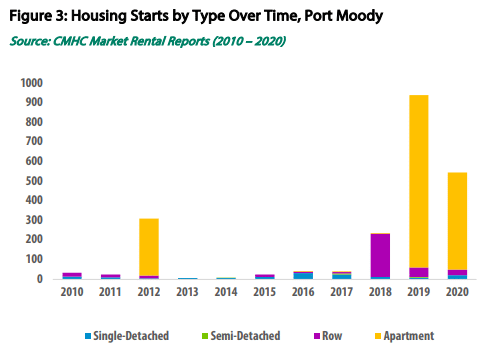
Currently, the city is keeping pace with demand as opposed to overbuilding, according to the report. Given the units already under construction, the city is on course to meet a previously established target of 2,795 new housing units by 2026. That figure is in according with Metro Vancouver’s regional growth strategy.
Difficult waters ahead: The report notes that “there does not appear to be a common consensus in the community about how growth (specifically housing) should evolve.”
Author