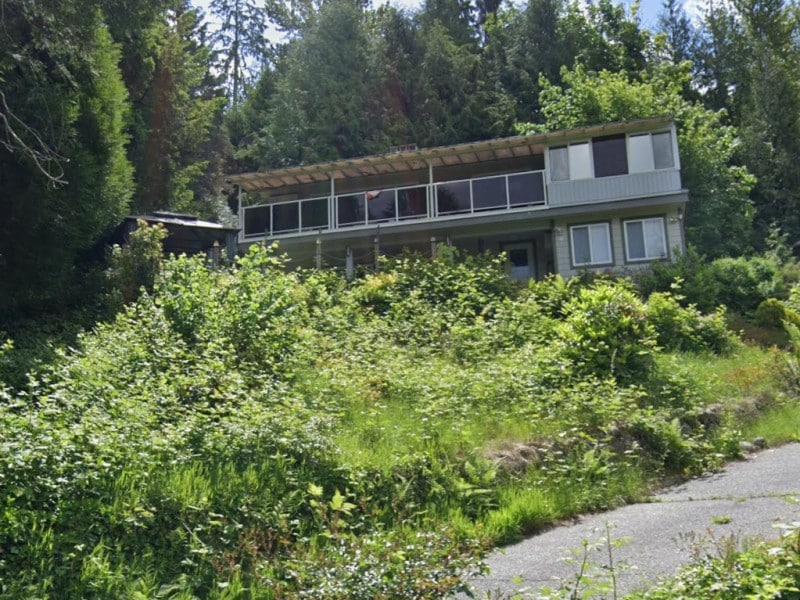
Coquitlam strata owners ordered to share repair costs after years-long legal fight

A dispute over who should pay for major repairs at a mixed-use strata complex in Coquitlam has been resolved by the B.C. Supreme Court, with a judge ruling all owners must contribute.
In a decision released Feb. 4, Justice John Walker declared the strata is responsible for maintaining and repairing the building envelope and other common property at 918 Roderick Ave.
The ruling ends years of deadlock between the complex’s residential section and several commercial owners who had argued they should not have to pay for repairs to a building they claimed provided them little direct benefit.
Local news that matters to you
No one covers the Tri-Cities like we do. But we need your help to keep our community journalism sustainable.
“Expenses for repair and maintenance of common property that does not relate solely to one of the sections is required to be borne by the strata corporation and not by either of the individual sections,” Walker said.
The strata includes 41 lots in total, made up of six commercial units and 35 residential units. While most of the residential lots and two of the commercial lots are located within the five-storey building on Roderick Avenue, four commercial units are stand-alone properties with separate addresses and no common property attached to them.
That layout helped fuel the conflict.
From roughly 2009 until 2018, the strata corporation effectively ceased functioning, with no council in place and no coordinated governance.
During that period, the residential section managed its own expenses and repeatedly sought reimbursement from the commercial section for shared costs, requests that were often refused based on how commercial owners interpreted the strata bylaws.
When a functioning strata council was finally restored in 2018, the dispute only intensified. Commercial owners held a majority of the voting power within the corporation, allowing them to block special levies and any resolutions requiring 75 percent approval – including votes needed to fund major repairs.
The conflict came to a head after a 2017 engineering report identified serious deterioration in the building envelope, warning the flat roof membrane was past its service life, perimeter flashings were in poor condition, and leaks were already occurring.
The report estimated repair costs ranging from approximately $535,000 to nearly $2.9 million, depending on the scope of work undertaken.
Despite those warnings, little was done, as commercial owners – particularly L-259 Holdings and Woods Sports Pub – refused to contribute to the repairs, arguing it was unfair to charge owners whose units were not located inside the building.
Residential owners countered that the envelope was common property relied upon by everyone in the strata and that failure to repair it would continue to expose the entire complex to deterioration.
In a detailed analysis of the strata bylaws and the Strata Property Act, the court sided with the residential section.
The judge ruled that the building envelope is common property and that expenses related to common property that do not relate solely to one section of a strata must be paid by the entire strata corporation.
Attempts by commercial owners to use the bylaws to shift those responsibilities were found to be inconsistent with provincial legislation, which requires common property to be maintained collectively.
Even if certain owners make less use of the building than others, the court found they still benefit from the envelope’s protection, including shelter for electrical rooms, parking areas, and other shared infrastructure.
The judge also pointed to earlier B.C. cases where owners of parking lots and other peripheral units were still required to pay for building envelope repairs, even when they argued they received minimal direct benefit.
As a result, the court declared that the strata corporation must carry out the repairs and that all owners must fund them according to unit entitlement.
The judge declined, however, to rule on every specific expense raised by the residential section – such as balconies, HVAC systems, janitorial services and other components – saying those matters should instead be determined through the strata plan and existing bylaws.
Commercial owners have also filed a counterclaim alleging that forcing them to pay for the repairs is significantly unfair under the Strata Property Act, but that issue was not addressed in this decision and remains before the court.
For now, the ruling breaks a stalemate that has stalled critical maintenance for nearly a decade, clearing the way for long-delayed building envelope repairs that could involve special levies.
Author