B.C. Supreme Court dismisses nearly $2 million lawsuit over Belcarra property sale after seven-year delay
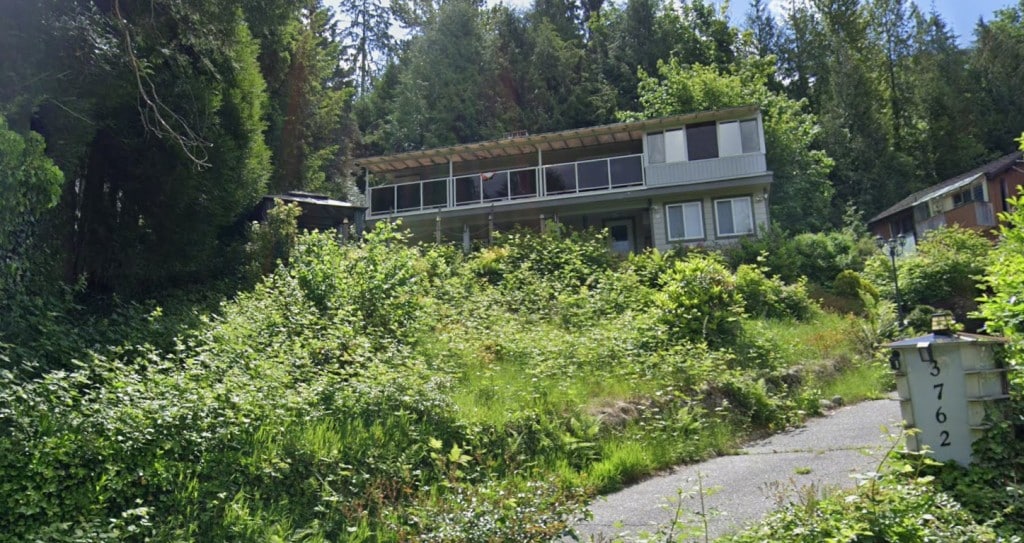
A nearly eight-year legal battle over the sale of a Belcarra home involving allegations of real estate fraud, disputed waterfront access and multiple lawsuits against local authorities has come to an end after a B.C. Supreme Court judge dismissed the case for excessive delays.
In an Oct. 2 decision, Alison Justice Latimer dismissed a lawsuit brought by Esmail Shoolestani over his 2016 purchase of a residential property at 3762 Marine Ave. in the Village of Belcarra.
Shoolestani alleged the property’s sellers and real estate agents had misrepresented several important features of the home, including its waterfront access, municipal services, parking and physical condition.
Local news that matters to you
No one covers the Tri-Cities like we do. But we need your help to keep our community journalism sustainable.
He also claimed he had been manipulated into paying an inflated purchase price through fraudulent conduct involving the real estate agents.
In March 2026, Shoolestani sought a summary judgment awarding him $1.97 million in damages for alleged fraudulent misrepresentation.
However, the court found that Shoolestani had failed to advance his lawsuit for more than seven years and had not provided sufficient justification for the delay.
“The delay is inordinate,” Latimer said, later concluding that it was also inexcusable.
The case originated from Shoolestani’s purchase of the Marine Avenue property from Phay Pich and Ponn Suos.
The property was listed through Sutton Group-West Coast Realty, with Stella Price designated as the sellers’ agent. Shoolestani submitted his offer through real estate agent Angela Cheng on March 7, 2016, and the parties entered into a purchase agreement three days later.
Shoolestani subsequently alleged that Cheng had withheld an offer from the sellers, misrepresented her role as his agent and fabricated a higher offer to pressure him into paying more for the property.
He also accused the sellers and real estate professionals of making false or misleading representations about the property’s characteristics.
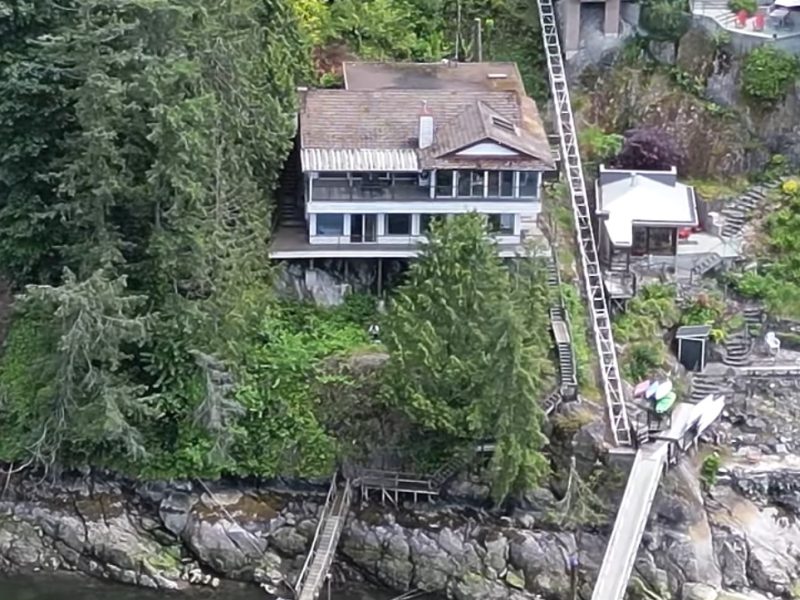
One of the central disputes concerned the property’s proximity to the waterfront and whether the purchase included ocean access, which Shoolestani claimed had been advertised.
According to the judgment, Shoolestani spent years attempting to restore or establish property features he claimed had been promised, including waterfront access and stairs leading to the ocean.
Those efforts eventually involved the Village of Belcarra, the Vancouver Fraser Port Authority, and multiple levels of government.
In December 2017, Shoolestani launched a separate lawsuit against the Village of Belcarra and Drew’s Wharfage Association, seeking relief concerning a wharf and stairway leading to the beach.
He discontinued the action against the village in May 2021 and against Drew’s Wharfage Association in April 2024.
Shoolestani also initiated a judicial review against the village, the wharfage association and the Vancouver Fraser Port Authority in July 2020, but discontinued that proceeding two months later.
He argued that his efforts to resolve the waterfront issues and determine the legal status of the property explained why his original lawsuit had not progressed.
Latimer disagreed, finding that the separate proceedings did not prevent him from advancing his other claims.
The judge also questioned whether the original real estate advertising supported Shoolestani’s interpretation of the waterfront access.
“Nowhere in the materials relied upon by the plaintiff is it represented that there are stairs or steps down to the ocean,” Latimer said.
Instead, the marketing language referred to being able to “step across the street to ocean access,” the judge note
The lawsuit also raised concerns about how the property had been described in real estate documents, including its municipal location and water supply.
Shoolestani alleged that references to the property as being in Port Moody, rather than Belcarra, and descriptions of its water service were misleading.
The court acknowledged that some representations concerning the municipality, water supply and property taxes were potentially incorrect.
However, Latimer found little evidence that the sellers or real estate agents had knowingly made false statements.
The judgment noted that an authorization letter supplied by the sellers correctly identified the property as being in the Village of Belcarra.
A March 2016 property disclosure statement also identified the address as Belcarra and indicated that the water system was not connected.
The court further noted that Shoolestani’s own submissions appeared to acknowledge that municipal water would become available once a connection sought by the village was completed.
Shoolestani filed his original lawsuit in March 2018, but the court found that virtually no steps had been taken to advance it after August of that year.
By the time the sellers applied to have the lawsuit dismissed in October 2025, more than seven years had passed without meaningful progress.
No examinations for discovery had been conducted, no trial date had been scheduled and the litigation had not progressed beyond its early stages.
Shoolestani offered several explanations for the delay, including serious health problems, his efforts to pursue other legal proceedings and difficulties scheduling court hearings.
Latimer accepted that Shoolestani had experienced significant medical issues, including a major heart attack in January 2018, hospitalization for heart failure in January 2022 and heart surgery in July 2023.
The judge also acknowledged that the COVID-19 pandemic could excuse approximately one year of delay.
However, the court found that these circumstances did not adequately explain why the lawsuit had remained inactive for so long.
Latimer noted that Shoolestani had simultaneously described spending thousands of hours researching and pursuing other legal proceedings related to the property.
The judge concluded that the passage of time could prejudice the defendants, particularly because allegations of fraud depended heavily on witness recollections and credibility.
Although the case was dismissed because of delays rather than following a trial, Latimer also conducted a preliminary assessment of the underlying claims.
The judge concluded that the merits of the lawsuit appeared weak, and found little evidence that the real estate agents or sellers had knowingly or recklessly made false representations about the property.
Latimer also questioned whether Shoolestani had established significant financial losses from the transaction.
According to the judgment, a March 2016 appraisal valued the property at $1.34 million, approximately $8,000 below its $1.348-million purchase price.
The judge found little evidence of the property’s objective value beyond that appraisal or of expenses that could support the nearly $2-million claim.
The allegations of fraud were not determined through a trial, and the dismissal does not constitute a finding that fraud occurred.
Ultimately, Latimer concluded that allowing the case to continue after such an extended period would not serve the interests of justice.
“It is not in the interest of justice that the action proceed in the face of the excessive and mostly inexcusable delay,” she said.
The court dismissed the lawsuit and ordered Shoolestani to pay legal costs to the sellers and Cheng.
Author