From Vimy to the caves of Arras and back to Ioco, part 1: ‘We were young’
The morning was cold and the stove was warm.
Out the window of the $25-a-month Port Moody hotel, the bull gang could look over the newly-barren landscape before their shift started.
The air smelled like oil and coffee. One worker wolfed down six fried eggs with fried potatoes and a steak to start his day. Tankers steamed up from South America to stock up with crude.
Local news that matters to you
No one covers the Tri-Cities like we do. But we need your help to keep our community journalism sustainable.
It was Ioco in the first days of what would later be called the First World War.
Hugh Kernighan wrote of his experiences in a handwritten memoir: Ioco As I Saw It. He finished the manuscript 50 years after he arrived as a teenager joining the first wave of workers who arrived at the Imperial Oil Co. refinery after hundreds of labourers and teams of horses reshaped the land.
It wasn’t nearly a townsite yet, Kernighan recalled. Some workers stayed in the hotel while married couples literally shacked up along the shore.
Kernighan was part of a crew that unloaded construction equipment to be hauled to the refinery.
“It was hard, wearing labour, but we were young,” he writes.
Wages were $2.50 a day.
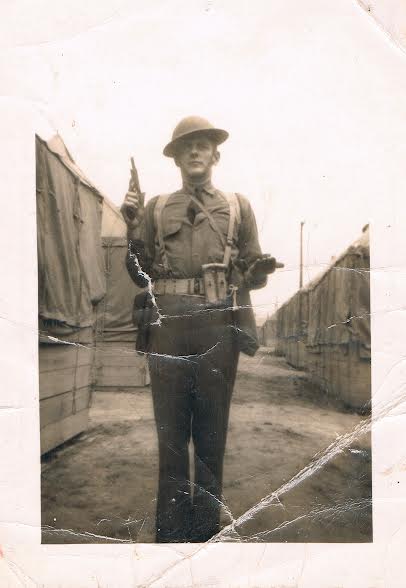
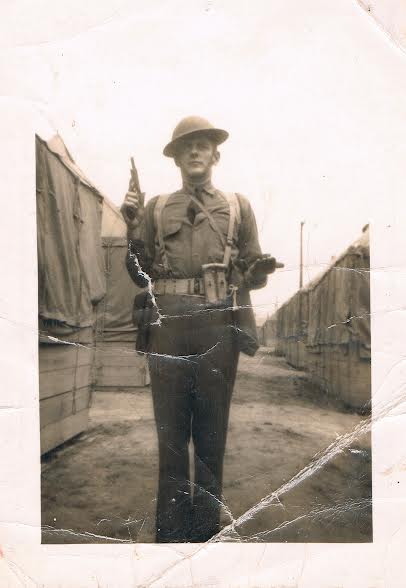
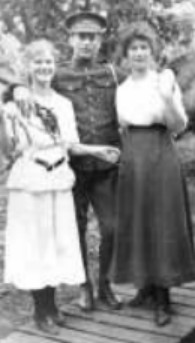
Kernighan was 19 when he opted to leave Ioco and join the armed forces; a decision about which he’s somewhat coy in his 1930-account: A Sapper in the Great War.
“The most spectacular and snappy uniform have a lot of influence over a 19-year-old,” he recalls. “The girls must be considered.”
He immediately ruled out the infantry.
“I had an idea that discipline and I were going to have a lot of grief,” he writes.
He eventually settled on the engineers. His decision to join was less about doing something for his country than a feeling of fairness, of doing his share.
“It was not a patriotic impulse that moved me, the King meant nothing in my young life,” he writes. “I could not see why a man should enlist, give up home and opportunities in life for the chance of getting blown to bits for the sake of a country we or at least I had never seen.”
However, he writes about developing a “broader outlook.”
“I decided that I could not stay home while other men were suffering and dying that I could carry on my daily life in security.”
He eventually took a day off and went to a recruiting depot in Vancouver. That spot, he notes, is now the site of the Cenotaph.
He soon found out there were no atheists in uniform, no matter whether they wanted to be atheists or not.
“If when the question of religious persuasion is asked and the answer is ‘none’ They do not argue, the clerk merely writes down [Church of England],” he reports. “From then on you have a church and you attend their services. Forcibly if necessary.”
After taking the oath from a colonel nicknamed “Pink Tea Charlie,” Kernighan headed on the ferry to North Vancouver.
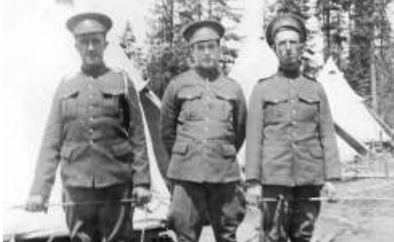
“They told us: ‘You men are in the army now.’ We never got fresh milk or butter after we left there.”
While it may not have been a fair trade, there was some small compensation for the loss of fresh dairy, Kernighan notes.
“Two axioms we learned from the old soldiers. That it was a soldier’s privilege to grouse and never to volunteer.”
Kernighan remembers listening to thunderstorms at night while they slept eight men to a tent. There was hot sun each day as they “drilled drilled drilled,” toting Ross rifles and full packs.
The food was bad and there was “no second helping,” he noted.
Following a stopover in Quebec City, Que., Kernighan was on a crew shipped to England.
He recalls using a lifejacket as a pillow and engineering a way around the below-deck smoking ban.
“We only had to shut our door and open the ventilators and smoke was whipped out of the room as fast as we made it. They tried to catch us but never did,” he writes.
At night, there were no lights on the deck.
“Cigarettes were taboo after dark.”
They arrived in Liverpool in the summer of 1916.
‘No girl of any character would be seen out after dark when the Canadians came’
While he enjoyed the foreign delicacy of tea with a scone, the English drill sergeants took some getting used to, Kernighan writes.
“These birds were man eaters.”
He writes of 20-mile marches under the watchful eye of a major on horseback as the Canadian troops were told: “We tame lions here.”
For Kernighan, more surprising than the lion-taming officers was England’s class system.
“Here for the first time we encountered that peculiar English idea that private soldiers were not on the same plane as civilians and officers . . . certain restaurants would not permit a private to enter.”
The ban allowed the pubs to do a “roaring business,” he notes.
“How there public houses ever made a living except in war time, was beyond me.”
Besides the restaurateurs, certain people were also wary of the newcomers from across the ocean, Kernighan found.
“Before we arrived, the Anglican Minister warned his congregation to have nothing to do with us, and said no girl of any character would be seen out after dark, when the Canadians came,” he writes. “Of course we heard all this and naturally felt proud of our reputation.”
While it took quite a while, Kernighan reports that Canadians were eventually seen as ordinary humans and treated better.
They were bound for France. But before they got there, Kernighan had a Christmas encounter with literary royalty.
Several soldiers were invited to a “below stairs evening” at the home of Sherlock Holmes author Arthur Conan Doyle, Kernighan writes.
They spent the night with the governess, two of Doyle’s children and a redheaded housemaid who wanted to go to Canada. Reading the memoir, it’s difficult to tell if Kernighan was unimpressed with Doyle, or if it was the other way around.
“At midnight Sir Arthur and Lady Conan Doyle came home and we had to go,” he writes. “We drank his wine and ate his cakes, nuts and candies so that was something.”
The next stop was champagne and cognac in France. It was where Kernighan would make the transition from young man to old timer.
Author