From Vimy to the caves of Arras and back to Ioco, part 2: Old timers
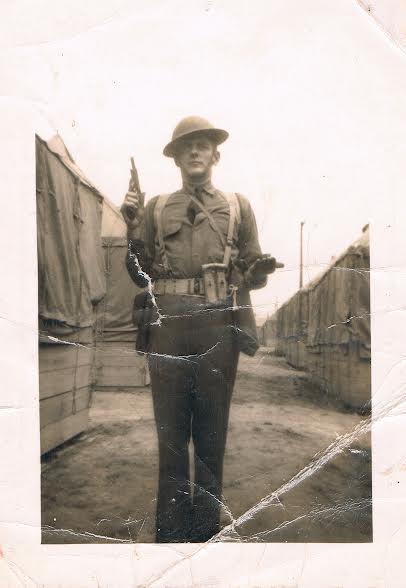
Age is relative in wartime.
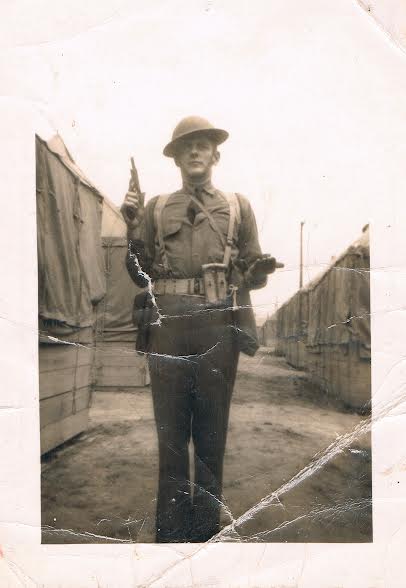
Upon arriving in France, former Ioco resident Hugh Kernighan marched over cobblestone streets, “and Lord they were hard,” before finally arriving in camp.
Local news that matters to you
No one covers the Tri-Cities like we do. But we need your help to keep our community journalism sustainable.
There were 21 of them, he writes, heading to their destination like sheep to a slaughterhouse.
“And we were just as dumb as sheep as far as knowing where we were going was concerned.”
Despite their training, Kernighan remembers a feeling of inexperience, particularly as they learned what was in store for them from soldiers who’d been at the front.
“There is something about the old timer that makes new men feel green,” he writes.
The old timers “high-hatted” Kernighan and the other new men, regaling them with stories of numerous battles, including one stretch in Ypres that would come to be known as Hellfire Corner.
A green man’s opinion on anything military “was not to be considered at all.”
“The old timers had filled me pretty full of the horrors of war,” he writes. “Of course, we had no experiences to relate at all. But all this was to change, we were to go forward to the artillery.”
Soon enough, they too would grow old.
“In time the new man is an old timer and looks at the new man as he imagines they looked at him when he arrived.”
‘We only suspected the milk’
In France, they were initially under the watchful eye of a Welsh Sgt. Major who expounded on the difficulties of dealing with Canadians.
“He told us he had some Canadians there before us and he was never so glad to see the last of anyone as them,” Kernighan writes.
The Sgt. Major, known for hollering “Hell’s fire and black thunder,” was in charge of handing out evening passes to the troops. The Canadians were flatly denied those passes.
“Colonials,” according to the Sgt. Major, “could not conduct themselves properly out of camp.”
They eventually found a Canadian lieutenant to plead their case. Besides calling the higher-ups, the Lieutenant called the Sgt. Major “everything he could think of,” Kernighan writes.
“We had no more difficulty getting our evening passes after that.”
Writing about France, Kernighan recalls red and white wines, champagne and cognac. But despite the change in location, army food was still army food.
Breakfast was “so-called” porridge with milk and sugar. They could taste the sugar, Kernighan confirms. “We only suspected the milk.”
“All army porridge was made that way,” he writes. “But the amount was what hurt – about two large spoonfuls.”
They also got about half a rasher of bacon, half a cup of a tea, and half a slice of bread.
“And breakfast was the best meal of all.”
Perhaps it’s not surprising mealtimes were ripe for conflict.
Kernighan recalls a run-in with a military policeman over the washing of mess tins.
Exactly what profanity Kernighan hurled at the fastidious military policeman is not recorded in his memoir. But whatever he said, it seemed to get the point across.
“He was so surprised at being sworn at by a private that he could do no more than sputter,” he writes of the incident.
The incident underscored a mistaken assumption about Canadian troops, Kernighan explains.
“They seemed to think they had to treat us as rough, which was of course, the wrong thing to do, it just made trouble.”
“They thought we were 10 min. eggs,” he writes. “[We were] every bit as hard boiled as Canadians ever were.”
Heading to headquarters at Bouvigny they saw flares popping against the night sky. Later, Kernighan would estimate they were about 1.5 miles from the frontlines.
At the time, he notes, it only seemed much closer.
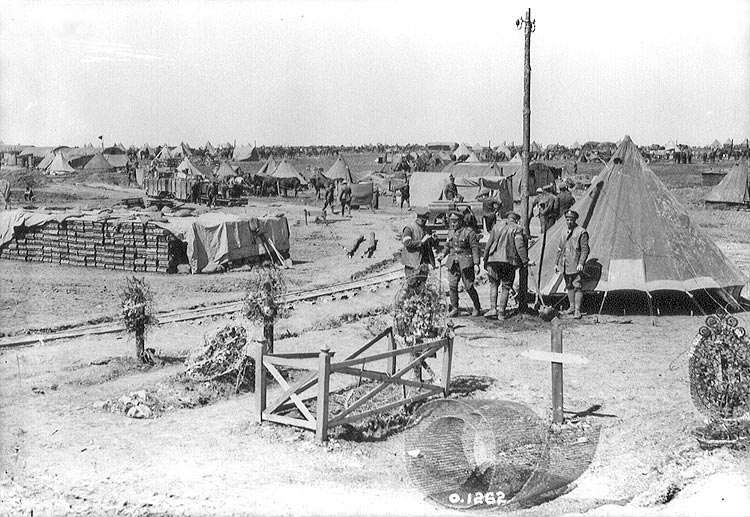
Weary with long days, short rations, and relentless lice, their units was moved to a series of huts in Hersin-Coupigny, about two miles from German trenches.
Around this time, Kernighan describes the troops as tough but tired.
“We were tired, so we slept, war or no war.”
As they marched across northern France, lice hitched a ride with the troops following a stay at barn loft that had slept hundreds before they got there.
“Lice were everywhere. Baths and changes of clothes were no use, the very ground seemed to have them,” he writes. “I found by not wearing underwear I could keep them in check.”
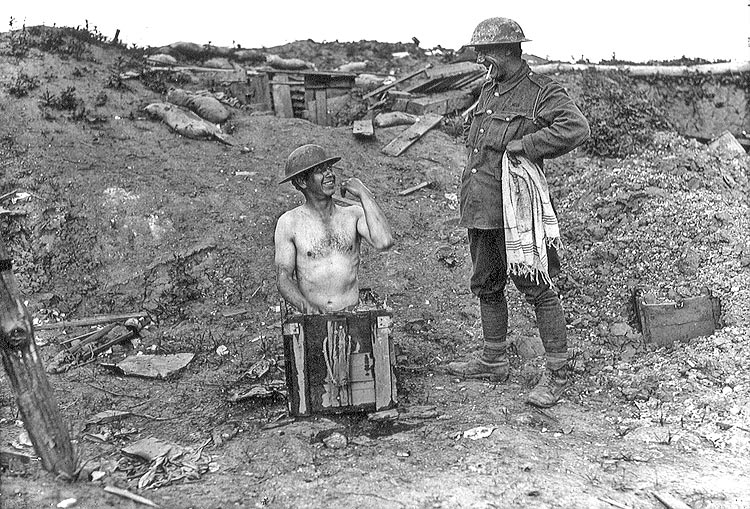
The lice eventually became a minor inconvenience.
“After a few weeks of it at the front, lice are a very small part of a man’s worries.”
Kernighan records death with the matter-of-fact manner of someone who’s seen too much of it.
He recalls meeting their sergeant in Hersin-Coupigny.
“He seemed a nice sort of fellow, but I never got well acquainted with him, he was killed a month or so after.”
He met a Vancouver soldier they called Jock the Scottie. The two planned to meet up on Granville Street once the war was over.
“A couple days later he was dead. A stray bullet blew up their billet and Jock with it. He never did see the line. Poor Jock.”
When it came to dying, every soldier had their own “bugbear,” Kernighan writes.
“Mine was a direct hit. I didn’t like the idea of being blown to bits. Why I don’t know, as it’s an easier death than some of the boys had.”
In the woods
One of Kernighan’s first tasks was building deep dugouts for artillery outside Vimy Ridge in the Thelus Woods.
It had once been forested, he notes. “But now it was only stubs of trees, a most desolate looking place.”
While there were no shells dropping when they arrived, an officer told them the area was: “a hot cup of tea.”
Between attacks by “whiz bangs,” Kernighan oversaw the digging of two shafts that met up in an underground chamber.
They worked between bursts until the bombardment intensified to the point where there were two shells landing and another three in the air.
“We couldn’t get our heads up let alone work,” he writes. “Two of us decided the hole we were in was as good as any so we stayed there.”
For four hours they dug in as German artillery “pounded around us.”
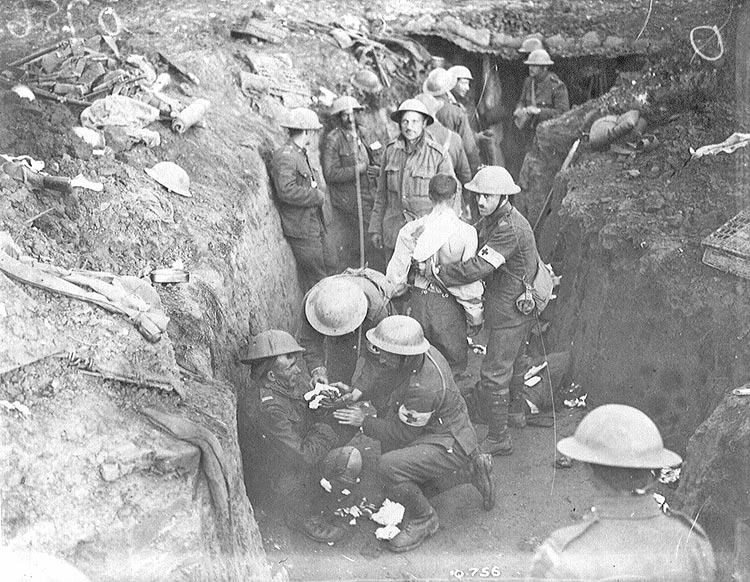
“All our guns quit firing and everyone took cover,” he writes. “One man was killed in the gun pit, by a piece of shell.”
“I was glad to get out of that hole believe me.”
Kernighan was there for about six weeks, digging trenches, rigging shelters, running lines of barb wire, and learning a lot about war and artillery.
“I began to get the viewpoint of every man who had been in France long, live for today for tomorrow you may be dead.”
‘Never had much use for you Canadians’
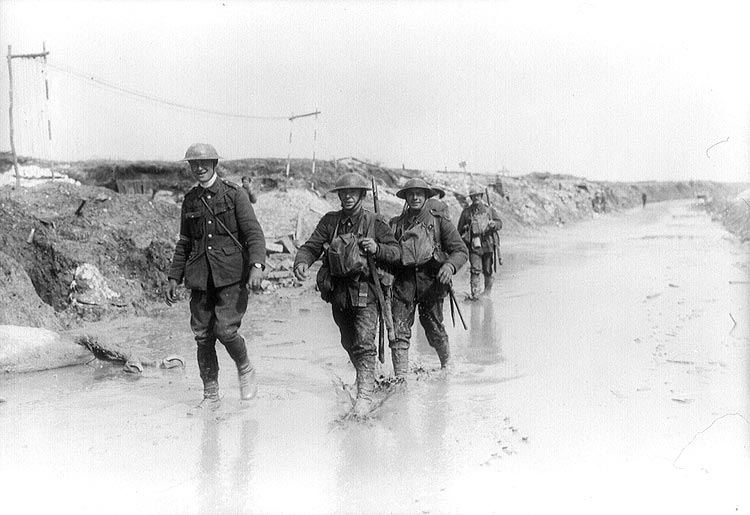
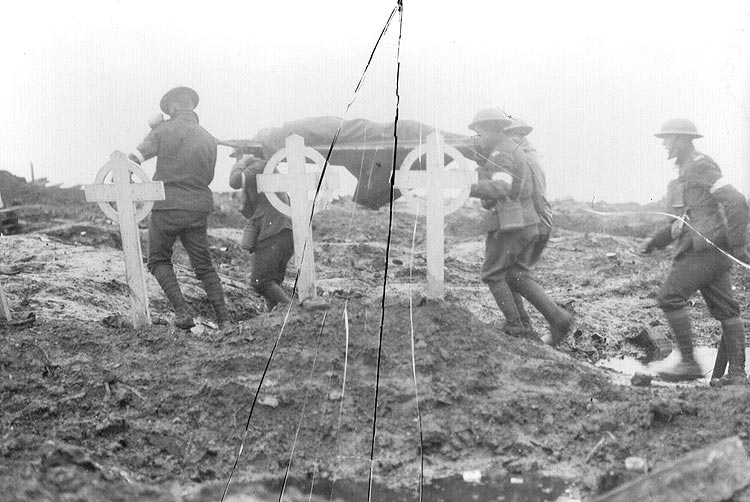
The road through Ypres was marked with shells.
“The roads were full of troops and timbers and guns going forward and wounded coming back.”
A truck would roll by and the soldiers would be splashed with mud.
When the moon came out, German planes appeared overhead, bombing, “up and down the road and among the batteries for what seemed liked hours.”
Sometimes the shells landed on the road. For a while, traffic would stop as broken timbers and dead horses were pulled into ditches.
“The stream of traffic would go on again.”
A Salvation Army canteen man was on the road. He mistakenly thought they’d come from the front lines.
“I guess we looked it,” Kernighan writes. “He gave us hot tea and biscuits and asked how things were up forward. We drank the tea, ate the biscuits and told him it was Hell forward and went on.”
They marched beyond where they were supposed to Kernighan recalls.
“The Passchendaele push was on and everything was mixed up.”
On their way there, Kernighan recalls talking to an Australian about what lay ahead of them.
“One Aussie said to us, ‘I never had much use for you Canadians but if your outfit take Passchendaele I’ll never say anything about them again.’”
Author