From Vimy to the caves of Arras and back to Ioco, part 3: No glory in war
The work was hard but mundane. The terror was overwhelming.
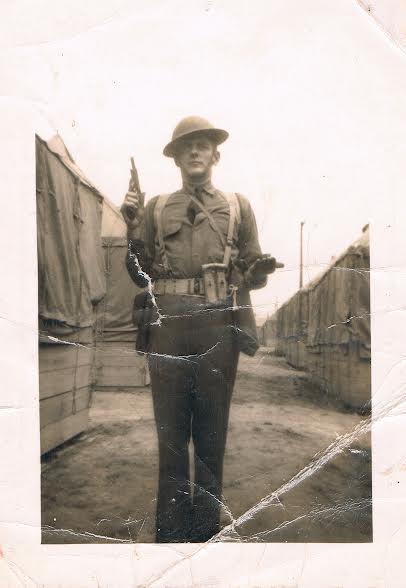
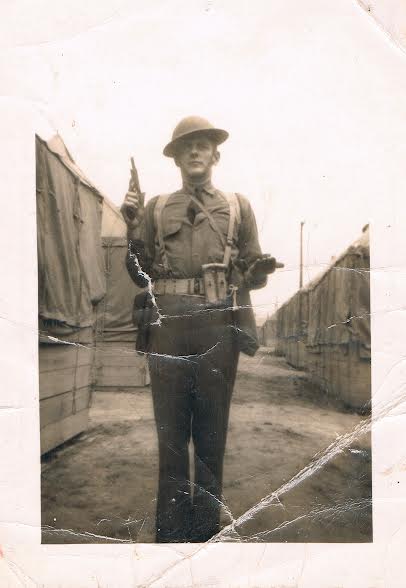
Hugh Kernighan was one of a team of engineers building a camp for troops near Ypres, Belgium.
“Fairly dangerous but not spectacular,” Kernighan writes.
Local news that matters to you
No one covers the Tri-Cities like we do. But we need your help to keep our community journalism sustainable.
Every afternoon, usually around 3 p.m., Gotha bomber planes flew overhead, looking like giants as they swooped in a circle, dropping “all the bombs they wanted” for about 15 minutes.
“It was the longest 15 minutes I ever put in.”
There was no place to go, Kernighan recalls. The ground was too swampy to run and even if it wasn’t there was still no place to take cover.
“We just lay on the ground and watched them sail over us and hoped they had not let one go in line for us,” he writes.
“What our fighting planes were doing I don’t know.”
When it was over they surveyed the holes in the ground.
There was one 60-pound bomb that left a hole in the ground where an anti-aircraft gun and its crew had been.
When he got a chance to take a leave, Kernighan jumped at it.
“It did not take me long to decide what to do,” he writes. “I didn’t want to be buried in Flanders.”
Into the caves
After some time in Bordeaux and Paris, Kernighan was recalled and dispatched to Arras, France, and faced new dangers.
“I had never heard machine gun bullets at close range before,” he writes.
Kernighan was part of a group of engineers fixing leaks in the water lines that ran from the caves of Arras down a roadway to the troops.
The water system was supported by reservoirs made of tarps stretched over timber frames.
The engineers slept in caves. When it was time to work they usually found men on the road.
“The wounded were taken away but the dead were merely carried out of the way and buried later.”
He was on that roadway when a shell exploded in the trees.
“The concussion knocked me on my knees, and the air was full of little white chips.”
There was confusion in the street. He saw two dead horses. One man lost his leg. Another was disfigured. Four died and another six or seven were wounded.
Kernighan’s group, he notes, didn’t suffer a scratch.
Another man insisted he’d been hit in the leg. They examined him and found nothing but a bruise.
“We assured him he wasn’t hurt and he began to cry,” Kernighan writes. “Shell shock. They took him away in an ambulance. It was the relief at finding he wasn’t hurt that finished him.”
Poker game
Between the horrors of war, Kernighan also saw another side; things that were so close to horror they became oddly funny.
He describes a “regular hard boiled” Irishman named Moore who woke up to the sound of German and almost surrendered. Then he realized the Germans were prisoners.
One of Kernighan’s most memorable anecdotes was about a poker game where everyone won.
Six soldiers sat around a stump, trading bluffs and winning hands until it was dinner.
“Five minutes after they came in for dinner, the stump went up,” he writes.
There are other stories of those days, but they stayed with Kernighan, who described them as: “not quite suitable.”
Peace in the wind
In the fall of 1918 the German troops were retreating.
“The guns were moving forward so fast there was no time to dig in and camouflage,” he writes. “They just stood out in the open and banged away.”
After an age of war, the talk of peace seemed like gossip to Kernighan.
“There were so many rumours it was hard to discredit them all. Something was in the wind,” he writes. “But after a couple of years of this life it’s hard to visualize yourself doing anything else.”
On the evening of Nov. 10, Kernighan was told hostilities would cease at 11 a.m. in what would come to be known as Armistice Day and then Remembrance Day.
“We didn’t believe it of course.”
But sure enough, the streets filled with flags and bunting, as well as “a lot of bunkum about love and friendship.”
There were three planes that were smashed that morning by men who didn’t want to fly, according to Kernighan.
“I didn’t blame them then and I don’t now.”
Christmas in Germany
Following the trail of the German retreat, Kernighan writes about seeing destruction at Valenciennes, France.
About one month before the Armistice, the German army had made a stand in Valenciennes, flooding the area around the city.
A Canadian offensive eventually pushed the German army out of the city. By the time the fighting ended, 80 Canadian soldiers and 800 German troops died.
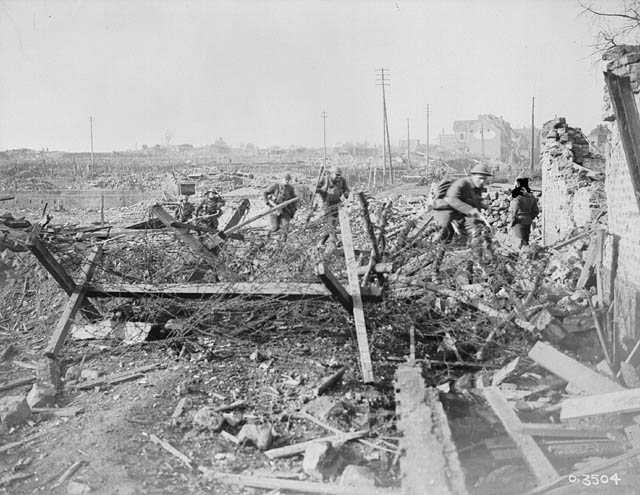
“I went into house after house and everything was destroyed – pictures and bits of crockery pulled off the walls and dishes broken,” Kernighan writes. “Just a total wreck, for no reason that I could see except deviltry or hate. Even fruit trees in the little gardens cut down with an axe.”
Moving into Belgium, Kernighan found a celebratory spirit.
In Namur, the people flocked around the Canadian troops with so much cheering and singing, “the trucks could hardly proceed.”
He remembers seeing a piano and chairs being tossed out a window and crashing to the sidewalk as the residents of Namur cleaned house of some German sympathizers.
“The first chance they had to do it in four years.”
He writes about how girls who had been intimate with German soldiers had their hair cropped.
“This was common all over Belgium,” he writes. “It was supposed to be a mark of shame. Not for what they had done, oh no, but because they fraternized with the Germans.
“We didn’t take it very seriously though. People can’t live four years with an enemy without some liking of friendship cropping out, and there must have been some pretty decent Germans. It was treated as a joke as far as we were concerned.”
He spent that Christmas in Bonn, Germany.
“I was never in a town of better looking women,” he recalls.
There were two weeks of “great fun” until the military police showed up.
Enlisted men were arrested: “for such petty crimes as overstaying leave, not having a tunic buttoned, no belt on and forty more paltry things.”
There were no turkeys that Christmas. “However the whiskey and wine and beer arrived OK.”
Kernighan describes pouring all the booze into one bowl. The resulting mix was called “rainbow cocktail.”
“It was wicked,” he writes.
The Christmas party broke up in disorder with several near fights and several fights.
”But a great success for all that.”
After the Armistice and after the rainbow cocktail, Kernighan got a good look at the desperation left behind.
He recalls spending one night at a train station. All through the night “poor devils” near starvation hung around all night, “trying to steal what they could.”
Grabbing “any part” of a soldier’s gear could mean a few francs and the difference between eating and starving.
“I gave them what food I carried, bully (canned corned beef) and biscuits, I could always get more and they didn’t bother me that night,” he writes. “I wouldn’t have given much for a fellow’s chances around some parts of that town then.”
Kernighan slept that night on his rifle and other equipment with his boots tucked under his head.
Larceny wasn’t confined to civilians, according to Kernighan.
There was one duo of troops who would sell a team of horses to a farmer for a few francs, and then inform the military police about the location of the stolen horse.
They sold the same team of horses 10 times before they were caught, Kernighan writes.
Romantic interlude
Kernighan’s account of love and marriage are scarce.
However, at some point he met a woman named Alice. To marry Alice, he had to get leave and take a medical exam.
“It was the shortest I ever had,” he recounts. “I walked in to the doctor and he said, ‘Want to get married, eh? Are you lousy? I said, ‘Not now.” So he signed my voucher.”
Home again
In July of 1919, Kernighan and Alice sailed to Canada.
It wasn’t long before Kernighan was back in Port Moody, and back at the Imperial Oil Co.
The company kept their jobs open. Their seniority was respected.
“There was a little different feeling. The old free and easy days of before the war had vanished.”
Kernighan also found a union had been formed in his absence.
Jobs were harder to get. Employment became a permanent rather than a temporary condition.
He spent some time at a pulp mill before getting a job at Ioco.
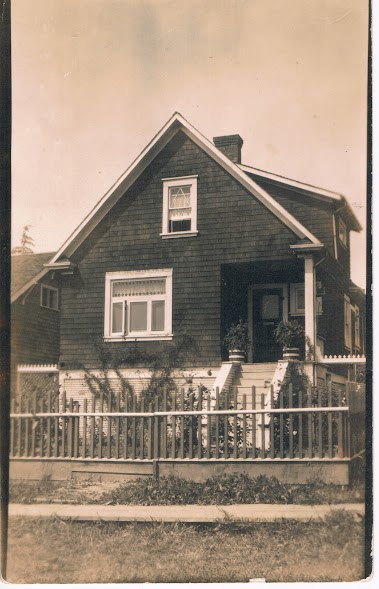
“By this time the townsite was a going concern.”
Workers could snap up a lot for $275 and take out a 20-year mortgage with around $4,000 borrowed from the townsite company.
There was also a certain discount on some of the construction costs, Kernighan recalls, noting that some building supplies migrated from the company to what become known as “Ioco Villa.”
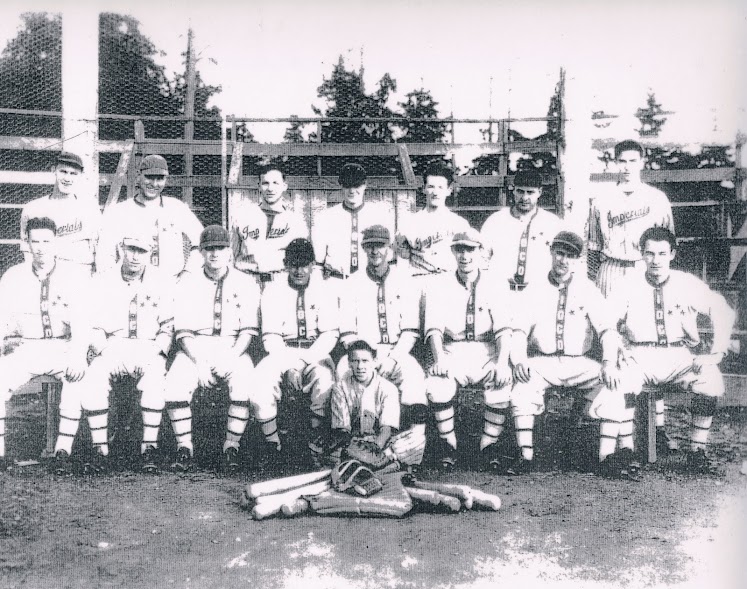
He worked with people who went by names like The Bull Moose and The Chipmunk. There was one worker who was pretty certain the Earth was flat and got pretty steamed at any argument.
“He also thought X-ray was just a racket of the doctors,” Kernighan writes. However, after seeing X rays of his own broken bones following a car accident, he softened his position on that one.
There was a dry era in Ioco, Kernighan recalls. At the time, B.C. had banned the sale of hard alcohol, with the exception of liquor sold by druggists for medicinal purposes.
However, the fledgling community soon found a way around the new rules.
“The smell of the brewing on the townsite almost overcame the oil smell from the refinery.”
On some nights, the neighbourhood was serenaded by a worker who would stand on a plank at the edge of town and practise his opera.
It’s that era of oil, wine and song where Kernighan sounds happiest.
In the decades that followed the people he’d grown up with moved away.
“Now the place is full of strangers who move in and out at will and have no ties there.”
For tomorrow . . .
Getting back to Ioco, Kernighan found tension between the workers who had gone oversees and those who’d stayed home.
Most troops wanted to get back to work and be left alone.
“But of course there were some who expected the country at their feet when they came home. And to be treated so casually was hard.”
Comradeship between veterans also felt diminished.
“Men who had lived together and dodged death together for months, met casually on the street and parted.”
For some, it was impossible to settle down to an ordinary life.
“But most of us had to and did however hard it was and is,” he writes. “It’s impossible to shut out three or four years of ones life and never open those pages again. And now there is a new generation who know nothing of these things, and what is more, don’t want to know, and we are hard put to keep up, which is as it should be after all.”
There is no glory in war, Kernighan writes.
“Nothing but dirt and death and disillusion. No sword waving and gloriously rushing out to rescue or kill, just a job of work, that is all. There are no heroes, just men, some with more nerve than another in one respect, perhaps less in another respect. But just men after all.
“There are no heroes, or else, they are all heroes,” he writes. “Therefore, eat drink and be merry today, for tomorrow God knows”
Author