Water quality monitoring now mandatory at Coquitlam construction sites
What started in one creek is sweeping the city.
In a bid to protect Coquitlam’s waterways, the municipality now requires real-time water monitoring at all major development sites, following a unanimous council vote earlier this month.
While council was enthusiastic about the new rules, Coun. Matt Djonlic raised a concern of already-approved City Centre projects with: “considerable groundwater issues.”
Local news that matters to you
No one covers the Tri-Cities like we do. But we need your help to keep our community journalism sustainable.
Djonlic urged city staff to have “very strong conversations” with those developers about implementing water quality monitoring.
“It’s a small expense and it’s going to save a lot of money should something go awry,” he said.
The new rules were spurred after streamkeepers urged the city to protect Stoney Creek following a series of spills including fish kills.
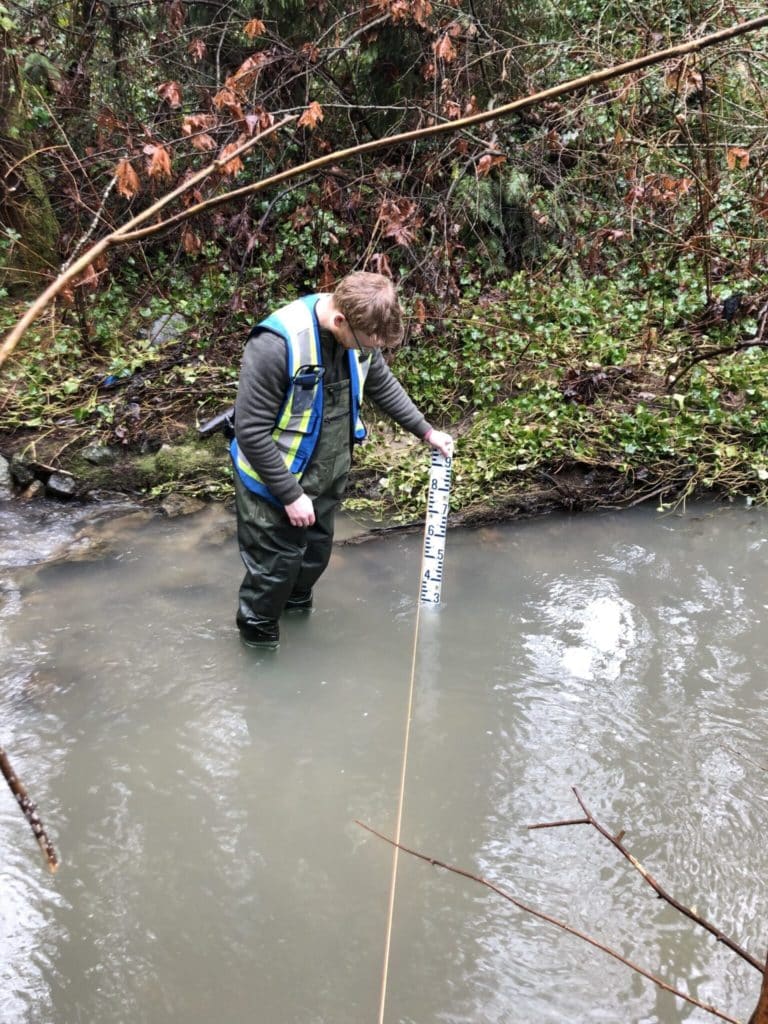
The monitoring program, which was initially limited to construction sites around Stoney Creek, involves testing discharged water for pH and turbidity. The mechanism sends clean water down the drain and reroutes, recirculates and possibly mandates the treatment of sludgy, cloudy or otherwise polluted water while supplying real time data to the city.
Over one year, the 11 monitoring systems around Stoney Creek stopped 2,300 spills and diverted nearly 4.7 million gallons of wastewater that otherwise would’ve ended up in the creek, according to a city staff report.
“Those numbers absolutely blew me away. I had no idea,” said Coun. Teri Towner.
Towner emphasized the need to protect streams while continuing to build more housing.
At a cost of about $4,500 per month, the system is required at any stage of construction involving “excavation and soil disturbance,” the report stated.
While expanding the program on substantial developments is a “no brainer,” Coun. Steve Kim asked if the monitoring could be implemented on smaller-scale developments.
Depending on property size and proximity to transit, new provincial housing legislation allows single-family lots to have between three and six units.
The city’s approach takes into account a builder’s ability to pay, explained the city’s planning manager Andrew Merrill.
While the $4,500 monthly charge is generally “a rounding error” on a $300-million project, it could represent a significant financial hit for someone building a single-family house, Merrill said.
Merrill added that developments with underground parking tend to cause a lot more disturbance to the soil compared to a single-family house with a half-basement.
Keeping up with the neighbours
The system is also used in Burnaby and in Port Moody on any development site larger than 2,000 square metres, approximately 21,525 square feet.
The uniform approach should make the water standards: “clearer and more consistent for developers,” the staff report stated.
Author