Port Moody will move ahead with new amenity charges but delay a decision on developer infrastructure fees
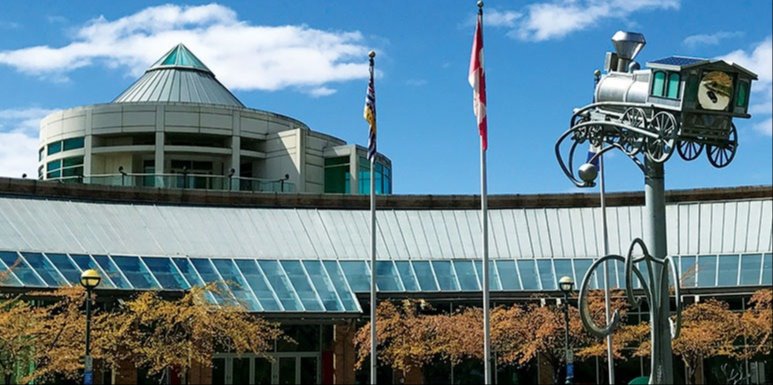
Port Moody council advanced a new framework for collecting developer-funded amenities on March 31, but sent a parallel update for major infrastructure fees back to staff for further review.
Many on council thought the sharp increase in infrastructure charges proposed could make development financially unviable, sparking a debate over how growth pays for growth.
Council unanimously sent a draft of the new draft amenity cost charges (ACC) rates forward to public consultation, while the decision on new development cost charges (DCC) was referred back for further analysis.
Local news that matters to you
No one covers the Tri-Cities like we do. But we need your help to keep our community journalism sustainable.
Mayor Meghan Lahti said the city had little choice but to proceed with the ACC program, which replaces the longstanding community amenity contribution (CAC) system under new provincial housing legislation.
However, she said council needs to “revisit the methodology” regarding DCCs.
“I’m not prepared at this point to even consider the DCC rates,” Lahti said. “I think more work needs to be done.”
The proposed ACC program would help fund roughly $280 million in community amenities over 25 years – including a new recreation centre, aquatic facilities and library – with about $116 million expected to be recovered from development fees and the remaining $164 million from other sources.
The new ACC model represents a fundamental shift from negotiated, project-by-project contributions to a standardized, per-unit or per-square-metre fee structure tied to long-term growth projections.
Council heard those fees would not be tied to rigid spending timelines, giving municipalities flexibility to adjust projects as needs evolve.
The DCC program – which funds core infrastructure such as roads, water, sewer and parkland – proved far more contentious.
“There’s no legal constraint on when you should be spending the money,” staff told council, adding the intent is to align spending broadly with growth over time.
Coun. Samantha Agtarap supported moving forward with ACCs but raised concerns about how infrastructure costs – particularly parkland acquisition – are structured under the DCC program.
“Park acquisition doesn’t align in the same way. We need to be nimble,” she said. “When land is available, we buy land, it may not be in the exact spot we want it, so we have to be kind of opportunistic.”
Staff had presented two primary options, including a “balanced” approach that would fund about $306 million in infrastructure over 10 years, with $221 million coming from development charges and the remainder from taxpayers or other sources.
That option would significantly increase fees, with high-density residential DCCs rising as much as 167 percent compared to current rates.
Coun. Haven Lurbiecki strongly opposed delaying the update, arguing the city risks shifting the burden of growth onto existing residents. She was the only vote against referring the rates back to staff.
“This is irresponsible,” she said. “If we do not make these changes right now, we will be years behind, and that funding gap is going to be the backs of taxpayers.”
Lurbiecki also pointed out Port Moody’s current DCC rates are among the lowest in the region and warned further delays could deepen funding gaps.
But other councillors pushed back, citing a sharp slowdown in the development market and broader economic uncertainty.
Coun. Kyla Knowles said rising costs and provincial policy changes have already strained the housing sector. She said delaying DCCs would have no effect on taxpayers, stressing they only apply to infrastructure required for new developments.
“Developers are going bankrupt, housing isn’t being built, layoffs are rampant,” she said. “Without housing and without DCCs, there is no more infrastructure.”
Coun. Diana Dilworth echoed those concerns, pointing to regional trends and a growing number of stalled projects.
“There were . . . over 100,000 new approved homes in Metro Vancouver that are not having their building permits pulled,” she said, adding some municipalities are freezing or reducing fees to support development.
“If we don’t get any growth because nobody can afford to build . . . we don’t have amenity needs. That’s a fact.”
Staff outlined several alternative approaches for council to consider, including phasing in DCC increases, separating core infrastructure charges from parkland acquisition costs, or delaying implementation timelines to ease pressure on projects already in the pipeline.
One option would allow the city to implement DCCs for essential infrastructure like water and sewer immediately, while deferring parkland acquisition charges until further analysis is completed.
Another would phase in all categories gradually.
Coun. Amy Lubik also backed sending the DCC framework back to staff, but urged council to provide clearer direction.
“I want to make sure that we give staff really clear direction on what they’re reporting back on,” she said, suggesting a hybrid approach that balances parkland acquisition with housing viability.
Under the approved motion, staff will now proceed with public and industry consultation on the ACC rates this spring, with bylaws expected to come forward before summer.
The DCC program, meanwhile, will return to council at a later date with revised options – including potential phasing strategies and alternative funding approaches for parkland acquisition.
The debate highlights a growing tension facing municipalities across the region: how to fund billions in infrastructure needed for population growth while not further constraining an already struggling housing market.
Dilworth pointed to a recent conflict between the Province of Ontario and the federal government, who partnered to fund a billion dollars in infrastructure costs to local municipalities.
“That would be huge for B.C., and I know there is great advocacy and pressure that’s being placed on the province,” Dilworth said. “I think that arguably, Ontario and B.C. are in the worst situations in terms of residential home building.”
Author