Exhibit traces the long road to freedom and the complexities of being Black in B.C.
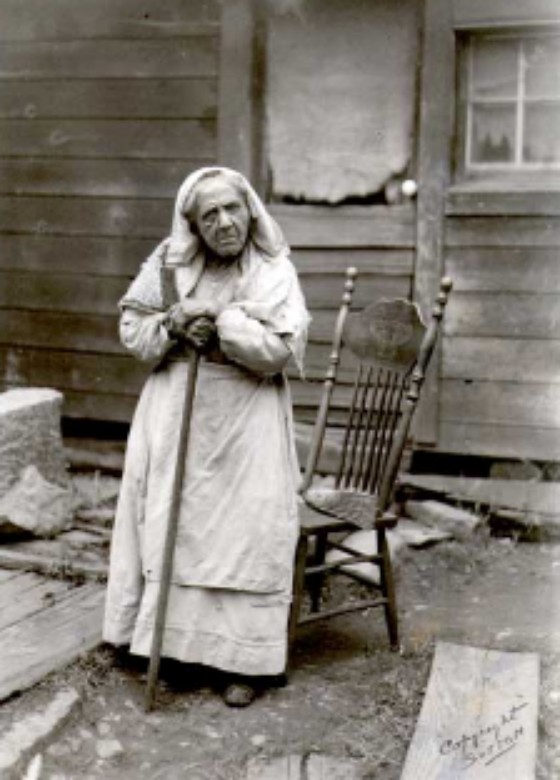
Before the California Gold Rush, before the Oregon Trail and a cabin on Salt Spring Island; back in the days of slavery and Clay County, Missouri, she was just a child who wanted to read.
Her name was Sylvia Stark. Her story is set to be featured in a POMO Museum exhibit that examines the stories of Black British Columbians.
As an older woman, Stark would sometimes tell stories of her childhood, recalled her daughter Marie Stark-Wallace.
Local news that matters to you
No one covers the Tri-Cities like we do. But we need your help to keep our community journalism sustainable.
Those recollections were not to be interrupted, she adds.
“I kept silent for fear of breaking the spell.”
Stark-Wallace was in her 90s when she decided to set down her mother’s stories in writing in a series of articles subsequently published in the Gulf Islands Driftwood newspaper.
Born Sylvia Estes, Stark’s first memories were of work. A child on a chair with a big apron around her neck, drying the white folks’ dishes. She learned to knit with broom straws.
In Missouri in the 1840s it could be dangerous for a Black child to set foot outside, Stark-Wallace writes.
“They kidnapped coloured children and sold them down south to the cotton fields from whence they never returned,” she writes. “Sometimes a stranger would offer candy to Sylvia. She always refused it and ran home.”
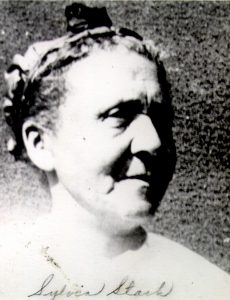
One of Stark’s jobs was taking care of a child who taught her the alphabet. It wasn’t reading, but it was a step forward.
“When the white children did their home work, she would listen. When they went out to play and left their books, she would look at them and rehearse them to herself,” Stark-Wallace writes.
That was dangerous too.
The lady of the house, Mrs. Leopold, viewed her husband’s sympathies to the burgeoning abolitionist movement as a weakness.
“Perhaps she thought if her husband would not rule their slaves according to custom in a slave state, she would,” Stark-Wallace writes, describing one incident when Mrs. Leopold attempted to flog Stark’s mother.
In another incident, Mrs. Leopold called Stark the N-word on Christmas day, ordering the child to: “Let the white children come first.”
However, Stark continued to tuck into the white children’s books when the opportunities presented themselves.
“With these small beginnings, Sylvia learned to read.”
The road ahead and the shed out back
“The dawn of freedom came to the Estes family in 1849,” Stark-Wallace writes.
The California gold rush triggered a demand for livestock and Stark’s father, Howard Estes was part of one of those cattle drives.
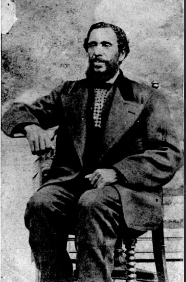
As part of the deal, Estes was able to buy his freedom for $1,000 – or so he was told.
After the cattle drive, Stark’s father toiled in the gold mines, eventually earning $1,000.
The slave owner got the money but refused Estes’ freedom papers, Stark Wallace writes.
“The time seemed long while waiting their father’s return.”
During those days with her father in California, Stark’s mother used to seek moments of solitude in an old shed.
Worried about her mother, Sylvia “stole out to the shed and peeped through the crack,” Stark-Wallace writes. “She saw her mother on her knees praying for the safe return of Howard, and that her children would be blessed and free.”
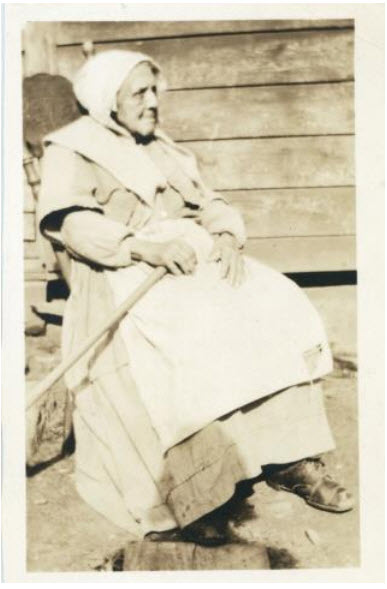
As a child, Stark was raised to honour Sunday with solemnity. However, her mother Hannah Estes broke from church dogma on one crucial aspect.
In Missouri, the family would crowd at the back of the church and the sermons would often include the lesson that servants must obey their masters.
“Every slave knew that part of the bible by heart,” Stark-Wallace notes.
Sylvia’s mother differed.
“No one could convince her that God was the author of slavery.”
Price of freedom
Stark’s father continued to find good fortune in California.
To buy his family’s freedom, Howard ultimately paid $3,900.
They initially settled on a 40-acre farm in Clay County but it wasn’t long until other black people in the area were beaten, kidnapped and terrorized by organized white supremacists that may have been a precursor to the Ku Klux Klan.
Howard and Hannah found work on a wagon train and, on April 1, 1851, they headed for California.
“They made a jolly start by making April Fool jokes,” Stark-Wallace writes.
Sylvia Stark recalled the journey as being fraught with swarms of locusts, howling coyotes and herds of buffalo.
On reaching California, they found an empty miner’s cabin and turned it into a home.
At 16, Stark married a dairy farmer named Louis Stark.
“Those days in the tumbled hills of California were the happiest days of Sylvia’s life,” Stark-Wallce writes.
They might have stayed, but in 1852, the future of California was uncertain for a Black family.
In 1849, Charles Perkins, the son of a Mississippi plantation owner, had headed to California to seek his fortune, bringing three slaves with him.
According to an account published by the California African American Museum, Perkins was so broke he returned to Mississippi alone rather than paying for the passage of the three men he’d brought with him.
The three men: Carter Perkins, Robert Perkins, and Sandy Jones, stayed in California, set up a business and – unofficially – earned their freedom.
On April 31, 1852, Perkins directed a posse of thugs to storm the three men’s cabin. In the middle of the night, the gang loaded the three men into their own wagon and took the reins of their own mule team.
A judicial officer ruled the three men were enslaved fugitives and needed to be deported back to Mississippi.
The California Supreme Court later ruled the anti-enslavement clause in the state constitution was a principle without enforcement.
“The coloured people of California were becoming alarmed over general agitation under southern pressure to make California a slave state,” Stark-Wallace writes.
Some Black people went to Australia. The Stark family, however, was curious about a place they knew as New Caledonia.
At the invitation of Governor James Douglas, Stark and her husband were two of the 600 Black Americans who emigrated to British Columbia.
She would become one of the original settlers on Salt Spring Island.
There were bears and cougars. Their Vesuvius Bay log cabin initially had a quilt that served as a front door.
Like her mother before her, Stark would head into the woods to pray.
Stark-Wallace recalls her mother saying: “Now I can see the hand of God guiding me through all of my troubles, guiding me to a higher life.”
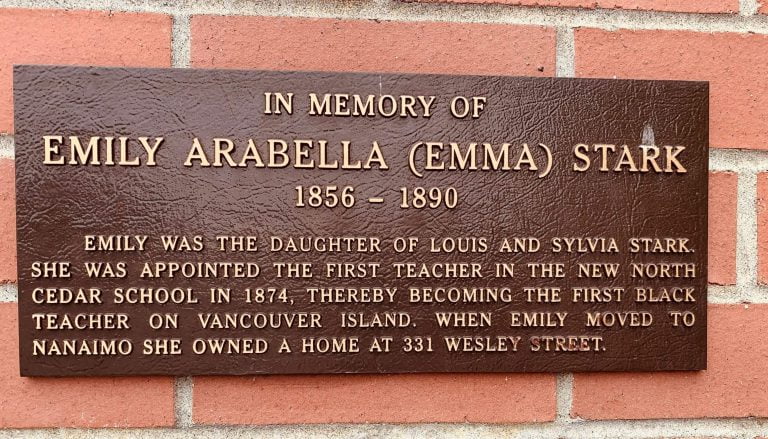
The exhibit
Titled Hope Meets Action, the POMO Museum exhibit is scheduled to remain on display until April 22.
The exhibit was created by the BC Black History Awareness Society.
Author