Concerns over local policing costs related to Red Fish Healing Centre raised by Port Coquitlam council
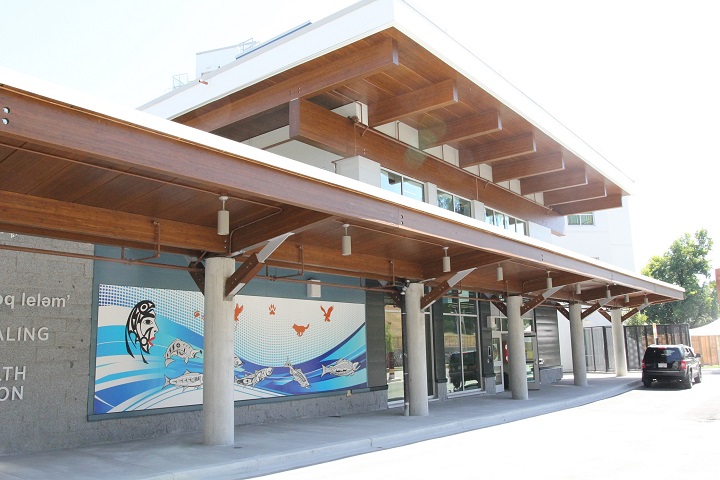
Port Coquitlam council, much like their neighbours in Coquitlam, have significant concerns over the impact a provincial mental health facility is having on policing costs.
For more than a year, Coquitlam RCMP’s leadership have been commenting on their difficulties handling the amount of calls from the Red Fish Healing Centre.
Since the centre opened in late 2021, leadership of both Coquitlam and Port Coquitlam have complained the province was essentially downloading costs onto local municipalities.
Local news that matters to you
No one covers the Tri-Cities like we do. But we need your help to keep our community journalism sustainable.
Port Coquitlam Mayor Brad West said both cities have pressed the province on the issue, adding he had recently spoken directly with Minister of Public Safety Mike Farnworth.
“We need to continue to ask the province to come to the table and fund the services that they’re creating,” West said.
Sitting on the border of Coquitlam and Port Coquitlam, the Red Fish Healing Centre houses 105 patients with complex substance abuse and mental health issues.
During a third-quarter update to Port Coquitlam council on Nov. 7, Insp. Darren Carr of Coquitlam RCMP said the department has calculated the additional workload from the facility has equated to approximately four full-time positions annually.
The centre reaches out to police to track down patients who don’t return on time after leaving Red Fish on a physician ordered pass.
In late 2022, the Coquitlam detachment reported to Coquitlam council that it was receiving five to six missing person calls a day from the centre. A recent crime report from the detachment states that $500,000 in labour have been expended in 2023.
Missing persons files have cost Coquitlam RCMP about $500,000 in labour for 2023, according to the RCMP’s crime report. The detachment has a $30.6-million contract with the city.
While West acknowledged the need for the types of services being provided, he said that individuals being cared for come from across the province.
“That’s four full time police officers who are not spending their time dealing with other policing matters in our city,” he said.
Coun. Darrell Penner noted Coquitlam and Port Coquitlam split costs for the department, and only 32.3 percent of Coquitlam RCMP’s policing activity was being deployed in Port Coquitlam.
Carr confirmed that policing costs related to the facility are not funded separately.
He reported to council that for the third-quarter, mental health related calls for service were up 4 percent compared to the three-year average, and average hospital wait times for officers have increased by 25 minutes.
Additionally, Carr said there were 10 instances where officers had to wait at hospital for longer than two hours, and one instance where an officer waited more than five hours.
City staff noted the cost share between the two cities would be reflected in the budgeting, but only based on calls for service and not time spent on each policing file.
“One call for service . . . may take up an officer’s entire shift, sometimes depending on the missing person that they may be looking for,” staff said. “So it does have an impact on our community and our resources.”
Penner said the impacts to their policing budgets are not the fault of the local detachments or municipalities. “We’re having to fund something that is provincial, without any money,” he said.
Carr, however, added there have been some improvements at the facility.
He said facility staff have reported recent changes to their infrastructure have been made, and assured them calls for service should fall by around 20 percent.
Carr added the detachment’s workload associated with the facility has been reduced due to the development of new internal procedures between facility staff and officers.
Part of the quarterly update included news that a soft launch of the Mobile Integrated Crisis Response Team, also known as the Car 67 program, has begun
The program teams up police officers and mental health nurses on mental health-related calls.
“Once we get the process up and running effectively, they will be on shift seven days a week from 10 a.m. to 10 p.m.,” Carr said. “We hope that will have a positive impact on mental health related files.”
Author