Port Moody’s land use committee endorses second massive tower project for Moody Centre TOD area
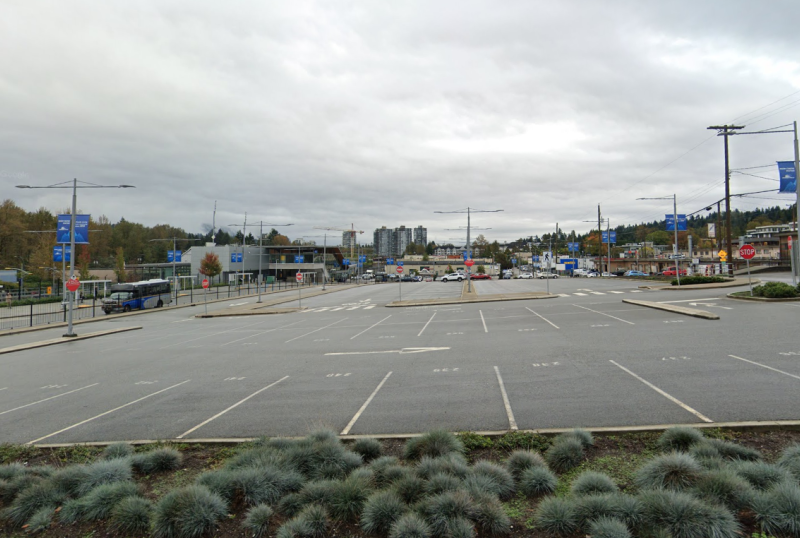
Port Moody’s land use committee (LUC) has endorsed a second set of towers for Moody Centre’s transit oriented development area (TOD).
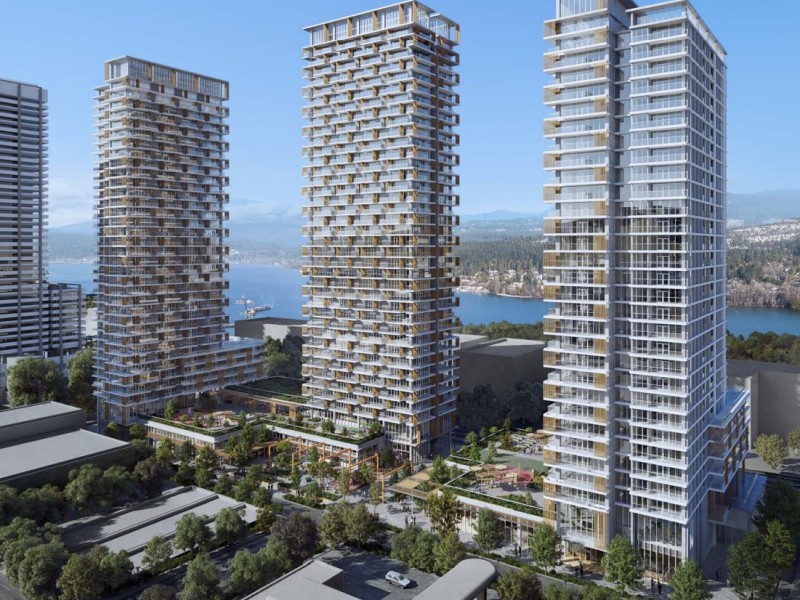
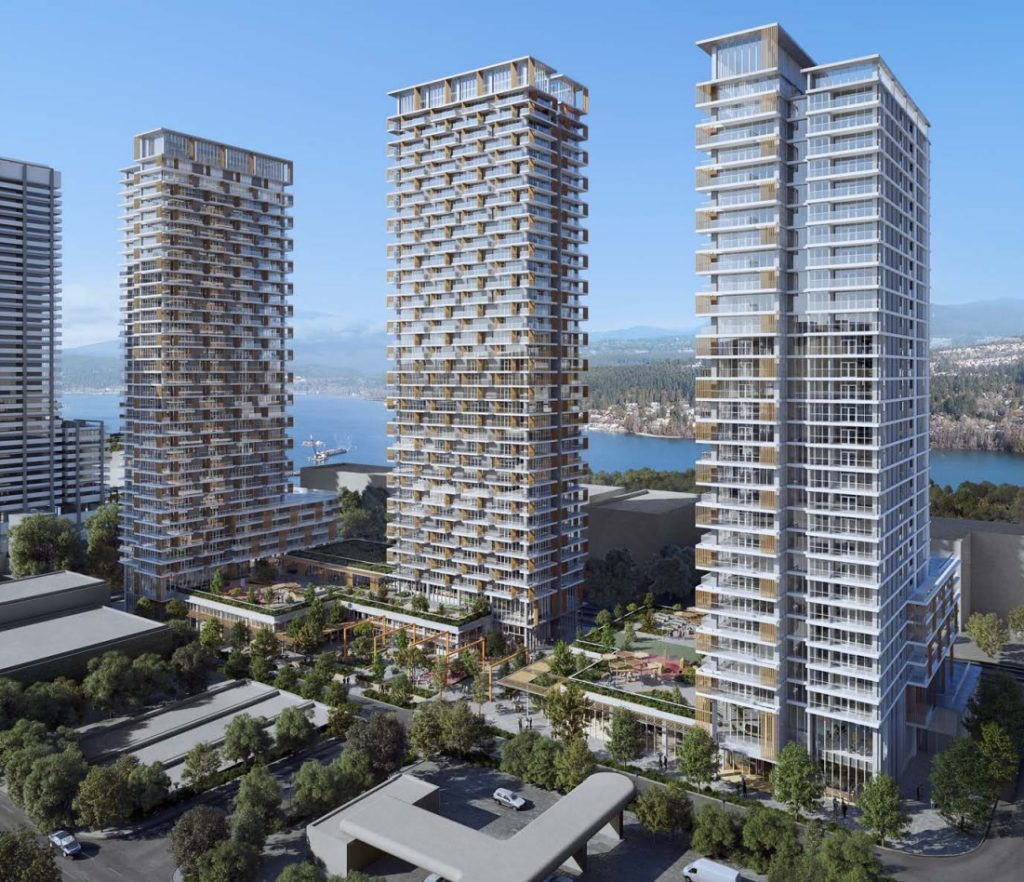
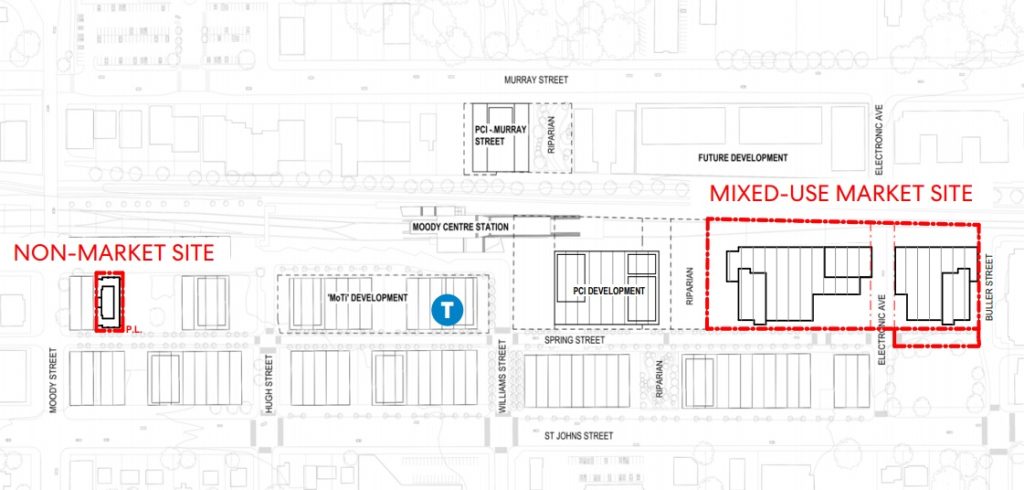
Beedie Living is proposing three mixed-use towers – 32, 34, and 38 storeys – along Spring Street and Electronic Avenue, as well as a six-storey women’s transition building at a secondary site on Spring Street three blocks to the west.
On Monday, Feb. 5, Port Moody’s LUC voted unanimously to endorse the project.
Local news that matters to you
No one covers the Tri-Cities like we do. But we need your help to keep our community journalism sustainable.
No committee member voiced any issue regarding the extra 26 storeys in density, but several stated the city needs to be properly compensated in return.
“Honestly, I’m fully in favor of (the density), I’d rather have fewer towers that go higher than try to cram more towers into an area,” said LUC member Sarah Wellman. “So we’re giving you an extra tower worth of residential development . . . but what’s in it for the city?”
While the LUC generally praised the project, their endorsement stipulated several of the city’s minimum requirements need to be addressed relating to employment space, family sized units and the non-market units.
Several committee members were also wary of the dollar figures regarding the public benefits being touted, as well as the uncertainty in planning around the secondary site.
The developer is seeking four OCP amendments in order to rezone their main 3.8-acre site.
The first amendment requests increasing the maximum tower heights from OCP’s 26-storey maximum; the second requests increasing the maximum tower floor plate size; the third requests decreasing the minimum distance between towers; and the fourth requests an expansion of the TOD area another block to the east.
All of the amendments align with a brand new policy framework for the TOD area that Port Moody council passed at the tail end of 2023.
In total, more than 817,000 square feet of residential space is being proposed, along with more than 46,000 sq. ft. of retail and employment space, and nearly 23,000 sq. ft. of amenity space.
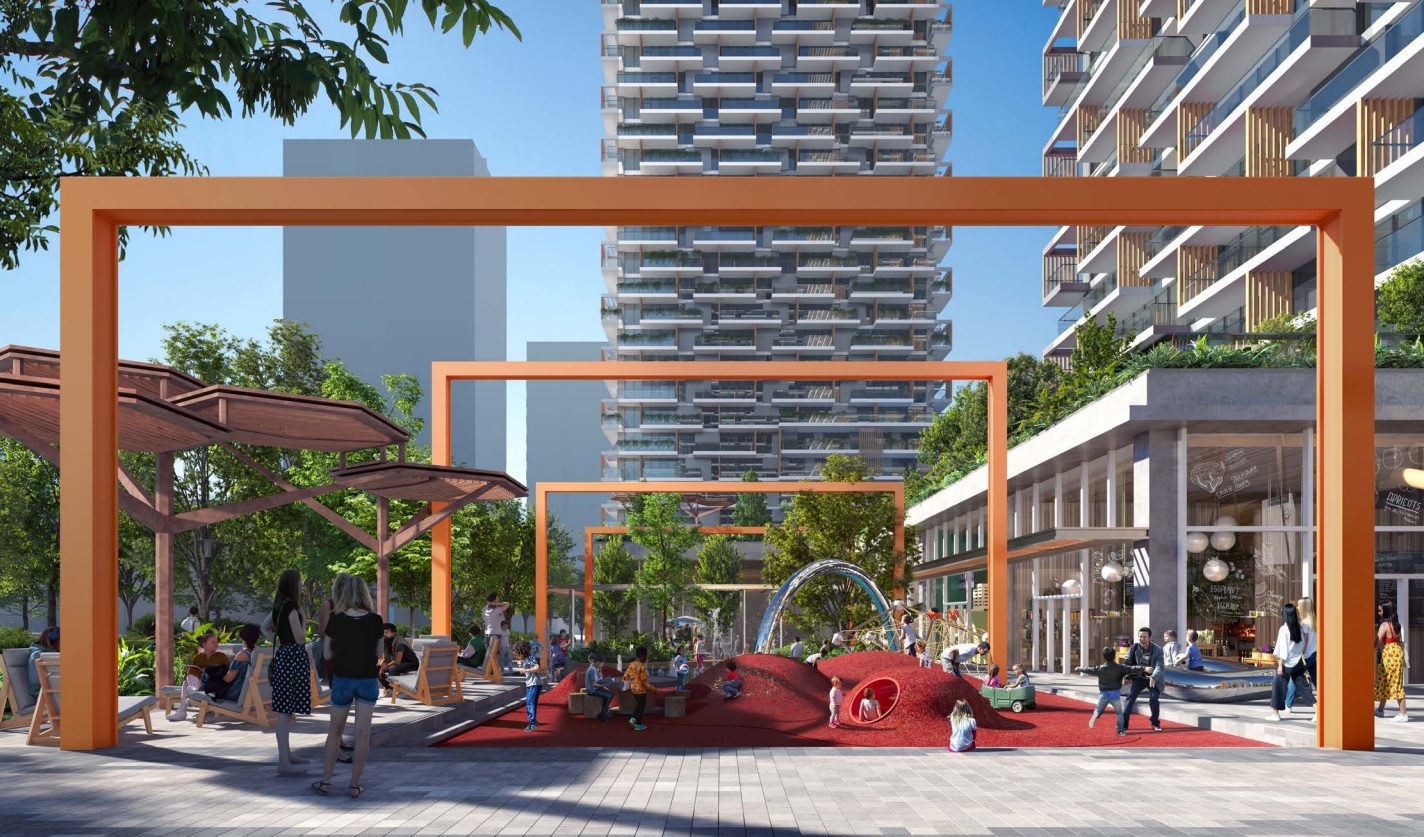
The star amenity offered is a large public plaza, dubbed the “Living Room,” which would offer various forms of community programming.
Beedie is claiming the city is being provided nearly $26.9 million in cash and in-kind contributions, but those figures are still under review by staff.
LUC member Alistar Henry said he was skeptical of the accounting regarding the in-kind contributions – which are non-monetary benefits provided to the city.
He said the $6.6 million included for off-site servicing and infrastructure may just be a required cost of their building, the $2.5 million plaza located in front would largely serve its residents, and questioned why $11.7 million was included for non-market housing.
Henry said his largest concern was that the developer is offering “a big fat zero” in developer cost charges (DCC) and amenity contributions (CAC) because their in-kind contributions exceed the city’s requirements.
“I think they’ve included line items in there that they should not be including,” he said. “They’re counting them in both categories, which seems like dubious accounting.”
Coun. Kyla Knowles noted that new provincial legislation will likely “muddy the waters” in regards to what the city can expect in terms of DCCs and CACs in the near future.
Staff’s main concern with the proposal was the employment floorspace falling well short of the city’s jobs target of 2,800 jobs created across the TOD area.
Beedie’s main site makes up more than 22 percent of the TOD’s total developable space, yet is only offering space for 385 jobs, around 38 percent short of the city’s target.
The proposal is also short on non-market housing, as the vast majority of the units are being offered as strata condos.
The city’s inclusionary zoning policy requires a minimum of six percent of a project’s floor area to be designated as non-market housing, or alternatively, 15 percent as below-market housing.
Out of the 1,012 units being proposed across the two sites, only 3.8 percent (40 units) are being offered at non-market rates, entirely at the women’s transition building on Spring Street.
Beedie’s proposal stated they plan to make up the difference with an additional 2.2 percent in one of the towers, but staff are still awaiting details.
In fact, the planning status of the women’s transition building was a concern for several LUC members.
Wellman said she thought the six-storey design was a “missed opportunity,” given the site is within 200 metres of Moody Centre station where provincial legislation has mandated high-density development zones.
“We could have at least 20 storeys of affordable housing there,” she said.
Staff note the city has been in discussion with Beedie over the possibility of merging the site with one or more adjacent properties to make better use of the land, and their current application was submitted prior to recent provincial mandates.
LUC member Jonathan Leighs said his biggest issue with the project was tying most of its affordable housing to a smaller building that has many “open-ended questions” around potential land assemblies, density and form.
“To suggest this is good on the merits of a site that everybody is saying will likely change, it’s just kind of problematic for me,” he said. “I worry about what kind of . . . covenants would be in place.”
Wellman also said she found little mention of amenities for the women’s transition building, stating these families will be in need the same level amenities as those living in the strata condos.
Another issue for some on the LUC was the lack of detail on childcare spaces, which are a requirement for developments within the TOD area.
City staff stated they are aware of another incoming development that plans to provide child care space for numerous development applications in the TOD area, including the current application, but they are still awaiting details from Beedie.
There were also no details in the application regarding the much-needed district energy system for the TOD area, which has been an environmental requirement stressed repeatedly by Mayor Meghan Lahti.
Author