Imperial Oil wins jurisdiction fight over Ioco workers’ medical privacy grievance
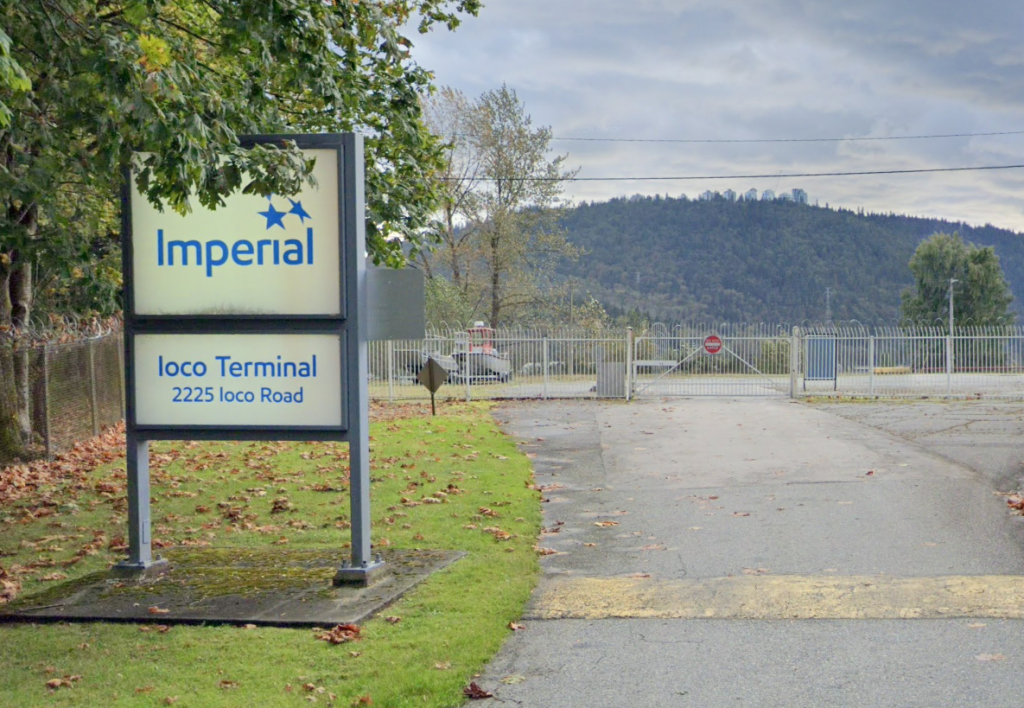
A union challenge to Imperial Oil’s medical forms for disability benefits at its Port Moody terminal has been dismissed on jurisdictional grounds.
In an Aug. 7 decision, labour arbitrator Randall J. Noonan ruled he could not decide Unifor Local 601’s policy grievance over the medical consent forms required to access temporary disability benefits.
The dispute involved 17 unionized employees at Imperial Oil’s Ioco distribution terminal, many of whom work in safety-sensitive positions.
Local news that matters to you
No one covers the Tri-Cities like we do. But we need your help to keep our community journalism sustainable.
Unifor argued the forms were overly intrusive and violated workers’ privacy rights under B.C.’s Personal Information Protection Act (PIPA).
Noonan, however, found the disability plan exists outside the collective agreement, meaning the dispute could not be resolved through labour arbitration.
The ruling means the arbitrator did not decide the central privacy question raised by the union: whether Imperial Oil and the company administering its disability plan are legally entitled to collect and exchange the breadth of medical information required by the forms.
“I do not minimize the privacy interests the union raises. They may well be significant, and the parties argued them fully,” Noonan said. “However, those interests go to the merits of the complaint and to the forum in which it must be pursued.”
Imperial Oil provides a temporary disability benefits plan to employees across Canada, whether unionized or not. The company funds the benefits, while Telus Health administers claims and return-to-work planning.
The plan is not incorporated into the Ioco workers’ collective agreement.
Workers seeking benefits for an absence longer than five workdays or 40 hours, whichever is shorter, must complete an “Attending Physician Statement and Consent Form.”
Employees who refuse can remain off work for medical reasons without discipline, but will not receive temporary disability benefits and may have previously advanced sick pay recovered.
The paperwork seeks medical details including diagnoses, test results, symptoms, medications, treatment and hospital admissions.
Its provisions also permit health information to be exchanged between Telus, Imperial Oil’s occupational health division and medical providers.
One provision says that if a dispute arises with Imperial Oil — including a grievance, lawsuit or human rights claim — Telus may provide the company with the employee’s complete short-term disability file, including medical documents.
Unifor filed the grievance in April 2024.
It originally included worker Chris Brown, who refused to sign the forms because he considered them too intrusive. He was denied benefits and money already paid for sick days was recovered.
Imperial Oil later agreed to pay Brown, resolving the individual portion of the grievance.
The union continued with its policy grievance, seeking narrower consent forms, removal of the provision allowing Telus to provide full disability files during disputes and $1,000 in damages for each bargaining unit employee who had signed the forms since the grievance was filed.
Imperial Oil argued the grievance could not be arbitrated because its disability plan was an extra-contractual benefit that the collective agreement does not require it to provide.
Noonan agreed, finding the dispute centred on the legality of a condition imposed on workers seeking a benefit that was not created by the collective agreement.
The agreement does not require Imperial Oil to provide temporary disability benefits, set a process for claiming them or regulate the medical information required to receive them.
Noonan said workers challenging the plan may instead have to proceed outside the collective bargaining process, including through B.C.’s privacy commissioner or the courts.
He did agree with Unifor that portions of PIPA are intended to regulate employment relationships, but that did not make every workplace privacy dispute negotiable under the collective agreement.
In this case, the disability plan was offered nationally on the same terms to unionized and non-unionized workers, while sick pay had never been negotiated into the Ioco collective agreement.
PIPA complaints instead have to be pursued through the province’s privacy commissioner.
Separate privacy fight at Ioco
The ruling comes amid a separate, long-running privacy dispute between Unifor and Imperial Oil at the Ioco terminal.
Local 601 filed a grievance in 2022 challenging mandatory medical certification and recertification exams for workers in safety-sensitive positions, including drug and alcohol testing and broader fitness assessments.
Those examinations have roots in a decades-old agreement between the company and union.
Unifor has argued that B.C.’s privacy laws and labour jurisprudence have changed significantly since the testing regime was established.
In a preliminary ruling in that separate case, an arbitrator rejected Imperial Oil’s attempt to dismiss the grievance and allowed the union’s privacy challenge to proceed.
That case differs from the latest ruling because the medical testing regime is tied to language incorporated into the collective agreement, while the disability plan considered by Noonan was not.
Noonan stressed that his decision did not dismiss the privacy concerns raised by the union, finding those issues should be considered by a different authority.
The union also took issue with Imperial Oil only raising its jurisdictional objection one week before the February hearing.
Unifor argued that was too late, but Noonan found the union had a full opportunity to respond and suffered no demonstrated prejudice.
He added that jurisdiction cannot be created through “silence, delay, waiver, or consent.”
The grievance was dismissed without a ruling on whether Imperial Oil’s disability benefit forms comply with B.C. privacy law.
Author