How Port Coquitlam made its pools safer for staff
Over the past year, the city has made several changes to reduce staff members’ exposure to chemicals at Port Coquitlam Community Centre
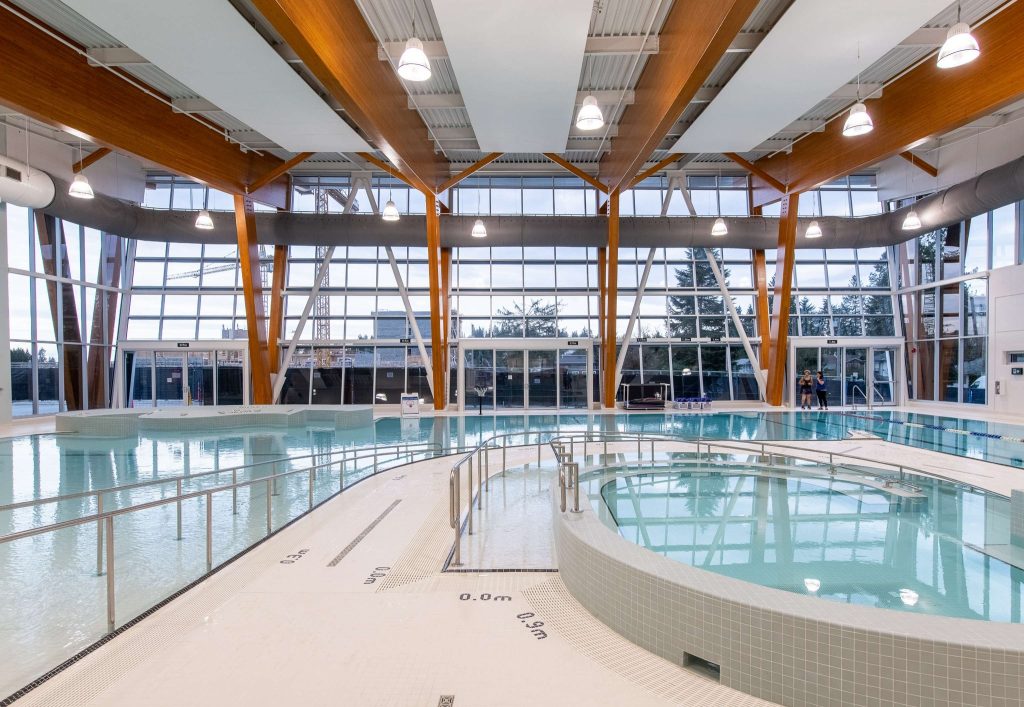
Last August, a Port Coquitlam Community Centre staff member felt faint while working at the pool and went to the first aid room.
This wasn’t the only incident. The City of Port Coquitlam received a number of other reports about symptoms like itchy eyes — 105 total in 2024.
The most likely reason? Indirect or direct exposure to chloramines, a by-product of chlorine as it reacts with contaminants in the water. It’s especially prevalent in hot, moving water — like hot tubs — and is what is often associated with the smell of pools.
Local news that matters to you
No one covers the Tri-Cities like we do. But we need your help to keep our community journalism sustainable.
Despite some adverse effects, chlorine is important since it disinfects the water. And in the past year, Port Coquitlam has taken a number of steps to reduce chloramine exposure for staff.
So far this year, there have been 27 chloramine-related incident reports, with 24 of those from January and February.
“This is something new that’s across the aquatic industry, across the province, across Canada,” said Glenn Mitzel, the recreation manager for Port Coquitlam. “There’s always been chloramines in the air, [but] it’s becoming higher profile now.”
What did Port Coquitlam do?
After the incident where a staff member felt faint, Mitzel said they investigated the pool’s HVAC system, but found it functioning properly.
They also tested the airborne concentration of chloramines at five areas at the pool. The WorkSafe BC guideline is that the airborne concentration of chloramines is less than 0.35 milligrams per cubic metre, to avoid negative health effects like eye and skin irritation, coughing, and difficulty breathing.
One of those areas was 0.02 above the recommended guideline at 0.37, one was equal at 0.35, and the others were lower.
The city completed a number of smoke tests to learn how the air moves around. They discovered where they needed to make changes, based on the air’s movement.
Mitzel told the Dispatch they suspected that the 0.37 reading was due to limited ventilation at the pool’s west wall, so they added in more air movement over that wall and the hot tub.
The city took a number of other actions, including:
- Creating a chloramine exposure plan with steps to take when there is a chloramine spike.
- Educating staff on what chloramines are.
- Changing pool chemistry, how they monitor pool chemistry, and pool cleanings.
- Adding humidity sensors and pool thermometers.
- Reviewing staff rotations and how they move on the pool decks, to make sure they aren’t actively standing in the areas around the hot tub.
- Creating a showering campaign to educate pool users on the importance of showering before entering the pool, since body oil, suntan lotion and dirt all react with chlorine to create chloramines.