Developers will profit and growth will stagnate under B.C.’s new rules, warn Coquitlam councillors
Critical changes to the municipal development process could take hundreds of millions of dollars out of city coffers while triggering a housing slowdown, warned Coquitlam council on Monday.
“We’re going to build less housing in 2024 than 2023,” predicted Mayor Richard Stewart.
For decades, developers have paid Community Amenity Charges when building projects bigger or denser than the city envisioned. Coquitlam has used those CACs to pay for rec centres, infrastructure upgrades and to support funds for childcare and affordable housing.
Local news that matters to you
No one covers the Tri-Cities like we do. But we need your help to keep our community journalism sustainable.
The province is set to phase out CACs in favour of Amenity Cost Charges. However, the precise rules around Amenity Cost Charges may not be released until fall, a prospect that has left cities grappling with uncertainty.
“We don’t know what ACCs [are] going to look like,” said city manager Raul Allueva. “We don’t know what a developer holding a building permit’s going to do right now if he can save $30 million. I don’t know. The province doesn’t know.”
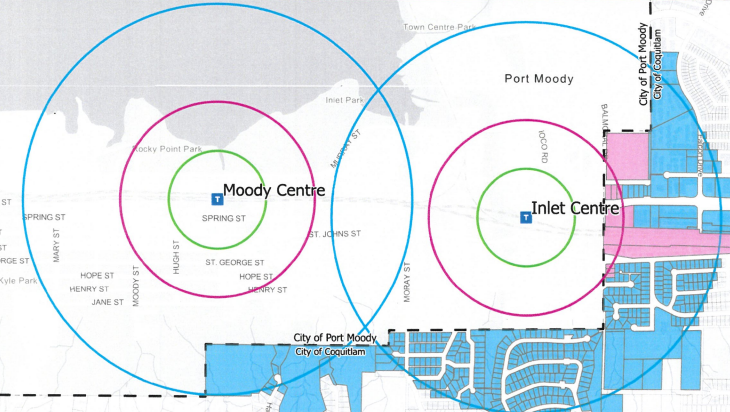
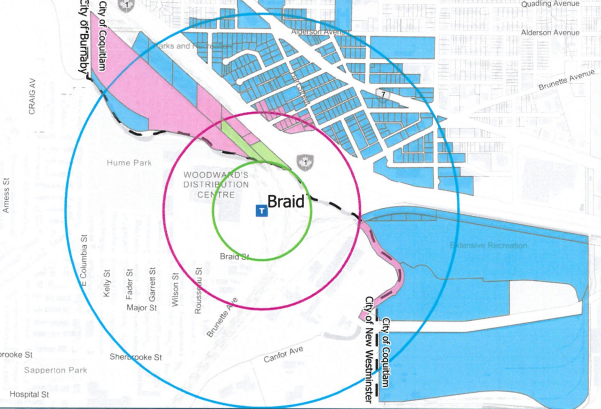
The rules apply to any transit hub-adjacent development that haven’t received first reading as of Nov. 30, 2023.
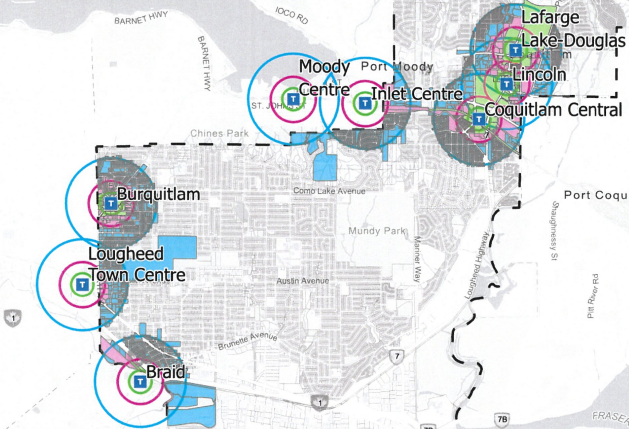
The city currently has 13 projects near transit hubs awaiting first reading from council. Those projects add up to an estimated $160 million in Community Amenity Charges.
Projects that have already been granted third reading but haven’t yet received a development permit add up to $135 million in CACs.
The Northeast Coquitlam Community Centre was initially slated to be paid for with development cash. That project, along with the Blue Mountain Park upgrade as well as transportation and non-market housing projects could be jeopardized by the new rules, according to city staff.
“We’re talking about a very, very significant long-term problem,” Allueva said.
The city could be forced to finance projects by taking on debt which would be paid off with higher taxes, according to city staff.
The legislation essentially facilitates a “wealth transfer,” according to Coun. Robert Mazzarolo.
Rather than using money to pay for parks and rec centres to support residents living in high-density communities, that money essentially gets transferred to wealthy developers, Mazzarolo said.
Coun. Craig Hodge likened the situation faced by developers to Christmas shoppers waiting for a Boxing Day sale.
Developers could withdraw and resubmit pending applications in the hopes overall cost charges will be reduced, he suggested.
“The provincial government is basically handing them a gift,” Hodge said.
Allueva concurred.
“Those that are holding land right now that already budgeted for bonus density are holding a windfall in their hands that could be millions of dollars,” he said.
But while the city can’t stop developers from resubmitting their applications, those projects won’t necessarily be approved.
There’s no other option except to hold off on approving any projects until the city gets some certainty or another source of funding, said Coun. Matt Djonlic.
“We can’t be approving 50-storey towers without knowing that the parks, the rec centres, the amenities that are going to be required for putting people in denser areas . . . are going to be able to be paid for,” he said.
“I think everyone on council agrees that growth should pay for growth,” Djonlic added. “We’ve lost that here.”
Stewart agreed.
“I hate the words, ‘We should press pause,’” the mayor said, while acknowledging that a pause seemed to be the only option.
Stewart added that he didn’t want council’s reluctance to be seen as an effort to thwart the province’s housing initiative.
“If you want to talk about thwarting,” Allueva responded. “[The province] unilaterally adopted legislation which rendered our zoning largely unable to be approved. . . . We could have had proper conversations about how to integrate (bonus density) with the provincial program.”
The province’s efforts have been “ham-fisted,” according to Coun. Brent Asmundson, who blasted the province’s approach to consultation.
Many staffers involved in planning the provincial housing strategy signed non-disclosure agreements, Asmundson said.
“Consultation in secret is not consultation,” he said, adding that city staffers who signed NDAs: “couldn’t even talk to each other.”
Asked about that consultation, Allueva said the question of density bonus cash was “not even broached.”
Around the hubs
The province essentially drew circles around transit stations, earmarking those spots for higher density and essentially jettisoning the city’s previous plans for complete communities, according to Asmundson.
Coquitlam recorded approximately 4,500 housing starts in 2023. That number will likely decline this year, Stewart said.
Developers that haven’t received first reading have “no idea” what their development costs will be, Stewart said.
“Land buyers can’t go out and buy land now because they don’t know what basis they’re bidding on,” he said.
City staff are set to return with formal recommendations for council’s consideration at an upcoming meeting.
Author