Anmore CAO addresses online ‘misinformation’ surrounding clear cutting of Ravenswood Forest
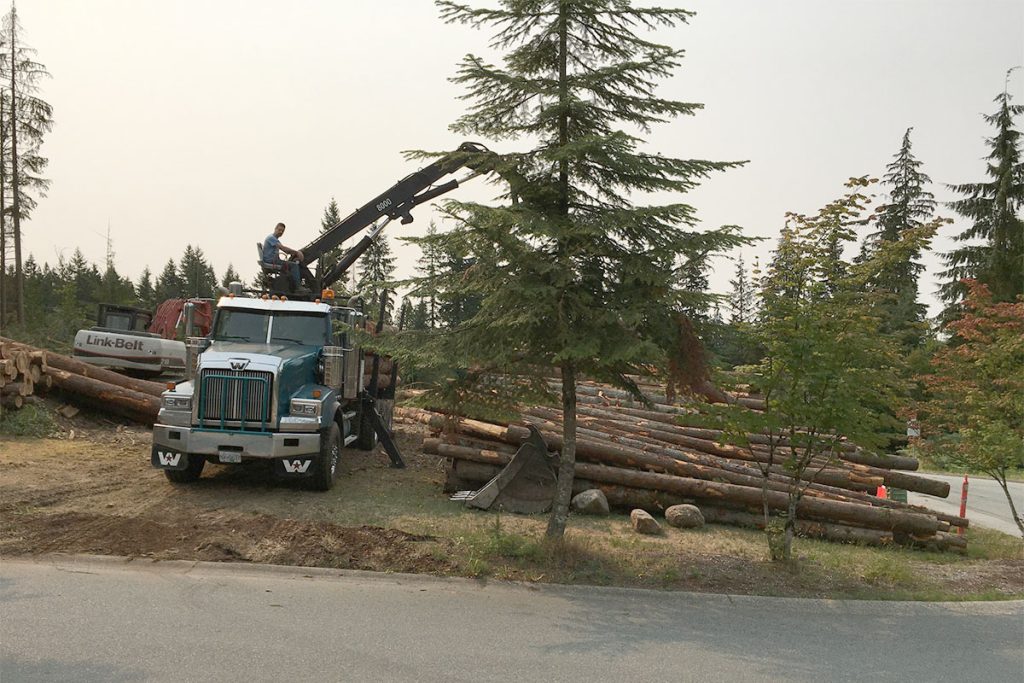
Wherever a significant amount of trees are cut down, local anger is sure to grow.
Village of Anmore CAO Karen Elrick took time out of council’s April 2 meeting to address online “misinformation” being posted about the municipality’s decision to completely clear cut a prominent forested area.
“We all love trees. . . . But we are also responsible for ensuring that our community is safe, and leaving trees that are at risk of falling or wildfire was not an option,” Elrick said. “I cannot even imagine the tragedy if someone was seriously injured or killed, or we had a wildfire incident in the heart of our community because we failed to do the right thing.”
Local news that matters to you
No one covers the Tri-Cities like we do. But we need your help to keep our community journalism sustainable.
The village began hacking down the approximately two-acre area – known as Ravenswood Forest – in August, 2023, after receiving an arborist report which detailed the declining health of the trees.
There have been numerous posts on social media bemoaning the loss of trees in the months since, with comments alleging the municipality acted improperly, or has a hidden agenda for the publicly owned land.
Several have also grilled council at public input periods, most recently at the March 19 meeting.
Despite repeated messaging from the village, Elrick argued many of these complaints are ignoring the fact the arborist report deemed the area dangerous and suffering from drought stress.
Staff first became aware of the safety risks when an instructor providing chainsaw training to public works crews refused to work in the area, according to Elrick.
She said these concerns led to the council ordering a risk assessment by a certified arborist in May, 2023.
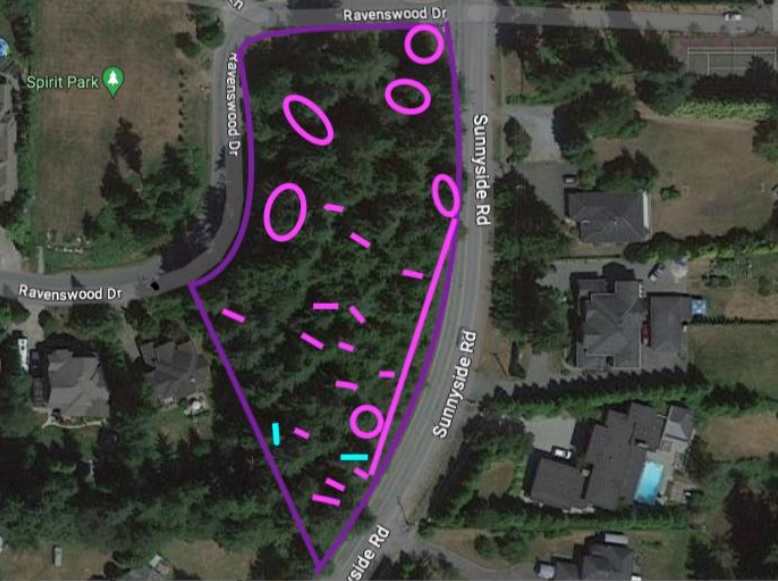
The resulting report found overall health of the forested area between Ravenswood Drive and Sunnyside Road was declining, especially the elevated northern portion of the site, which receives less water.
Hemlock trees – which made up a majority of trees in the forested area – are particularly vulnerable to drought conditions due to the shallow nature of their roots, the report stated.
At the time of the inspection, the forest floor was extremely dry exhibiting conditions normally seen in August, and the report noted hot dry conditions have persisted over the previous three years.
Drought stress was seen in the majority of the hemlocks observed, which had thinning canopies and heavy cone crops in the upper levels.
Hemlocks often break apart from the top down as they die, according to the report, which added some of the trees appeared to have secondary rot infections from drought conditions.
Bike jumps and trails on the first floor had also compacted the soil, exacerbating the stresses on nearby trees, the report stated.
The report marked 50 trees as hazardous high-risk trees that required immediate removal, and several others requiring annual monitoring.
Additionally it recommended all trees interfering with power lines along Sunnyside Road be removed, along with 75 percent of fallen trees to reduce wildfire risk.
While some trees at the southwest portion of the site were tagged as worth retaining, the arborist said they would need to have regular risk assessments as they could become vulnerable if sheltering trees to the north are removed.
Elrick said the conditions posed a “completely unacceptable” safety risk to the community and the environment, as well as a significant liability risk to the village.
She said if only some trees were axed, neighboring trees would be put at risk, leading to a financial burden as repeated arborist inspections would be required.
“It was determined that the best course of action would be to remove all of the trees,” Elrick said. “We value trees in our community, but we also have a responsibility to protect people and animals and address safety risks.”
One of the arborist’s recommendations was to plant more drought-tolerant species in the area, such as Douglas fir and alder trees.
Elrick said the municipality is examining best use for the now-empty public land, including the replanting of trees, shrubs or other greenery that can thrive in the soil conditions.
Author