Following salmon bones through 3,000 years of history
It was like finding a time machine on cinder blocks.
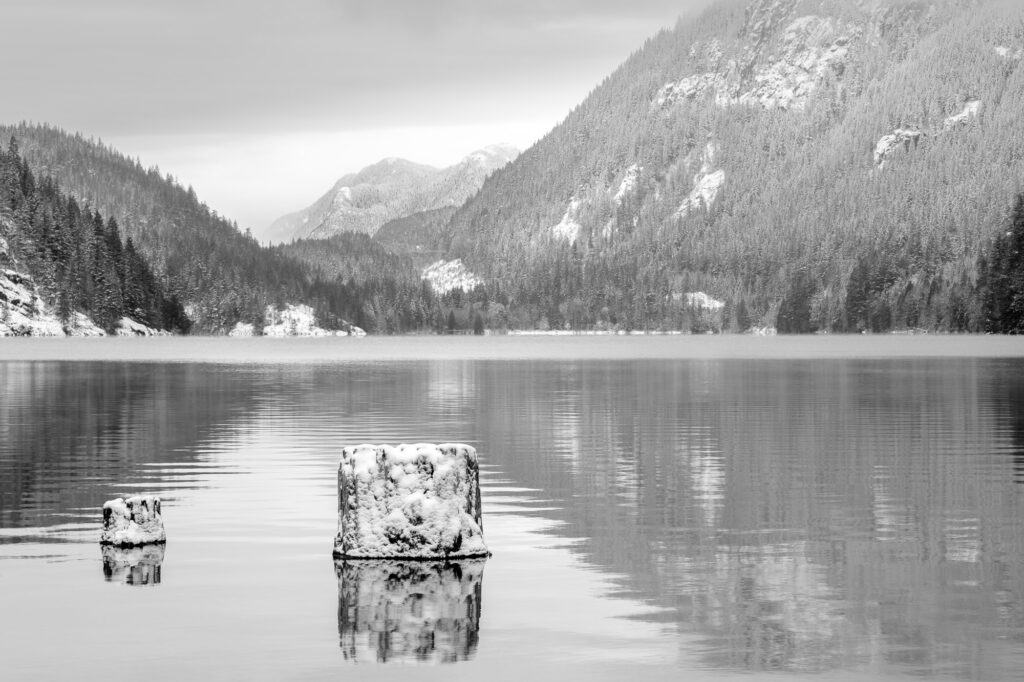
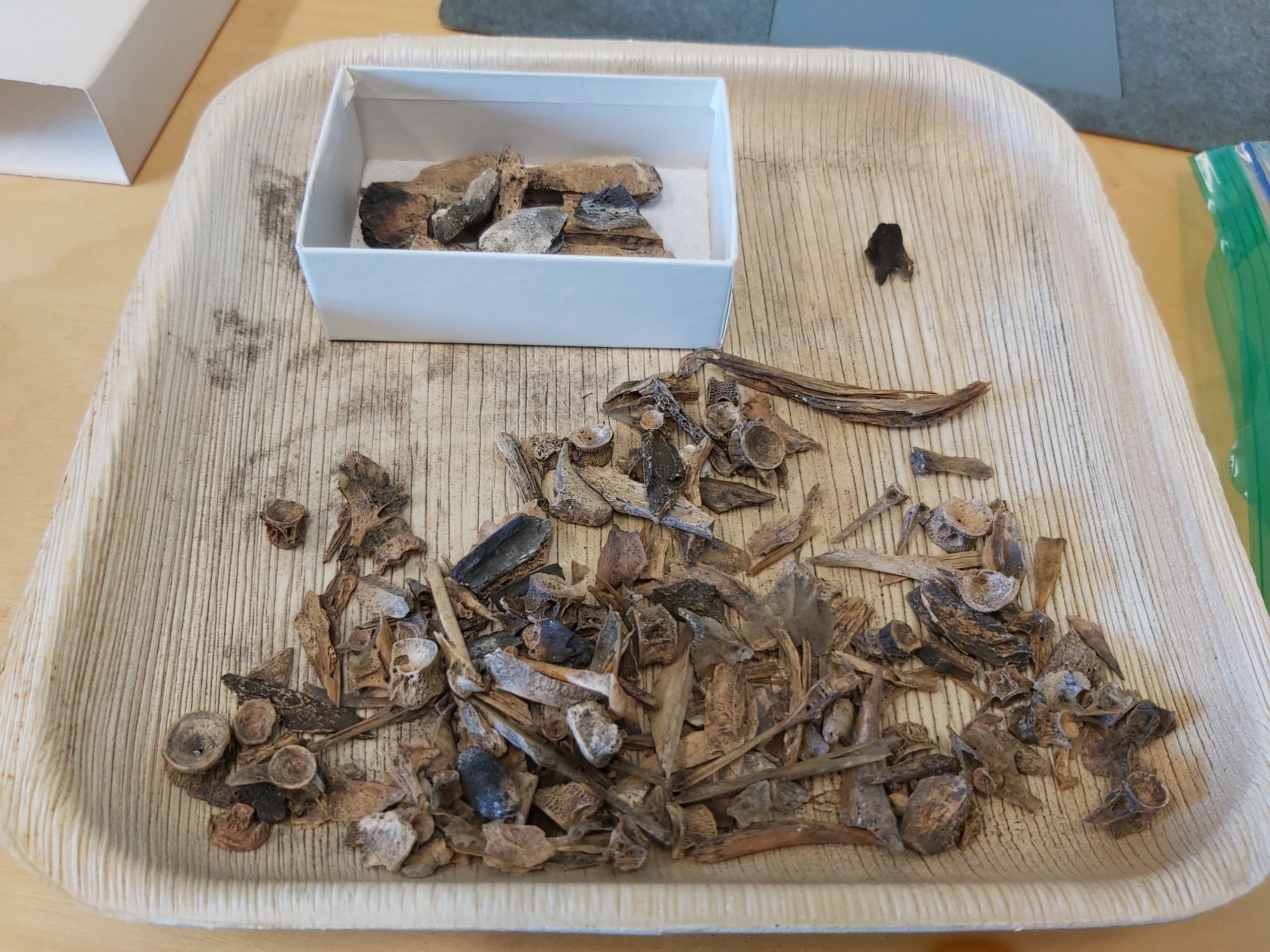
A half-century earlier, archaeologists had dug into the earth at təmtəmíxʷtən (Tamm-tamm-eeuff-ton), then known as Belcarra Regional Park. They pulled out eagle talons, the limb from a seal and moose bones, some of which dated back to the time Olmecs were turning basalt boulders into colossal sculptures.
The find was a vehicle that could take archaeologists 3,000 years into the past and offer a glimpse into a land brimming with biodiversity. But for the better part of five decades, the find gathered dust. The bones were placed in brown paper bags, labelled in pencil, and more or less forgotten.
Local news that matters to you
No one covers the Tri-Cities like we do. But we need your help to keep our community journalism sustainable.
They might have stayed there, too, if archaeologists hadn’t been forced to look inward.
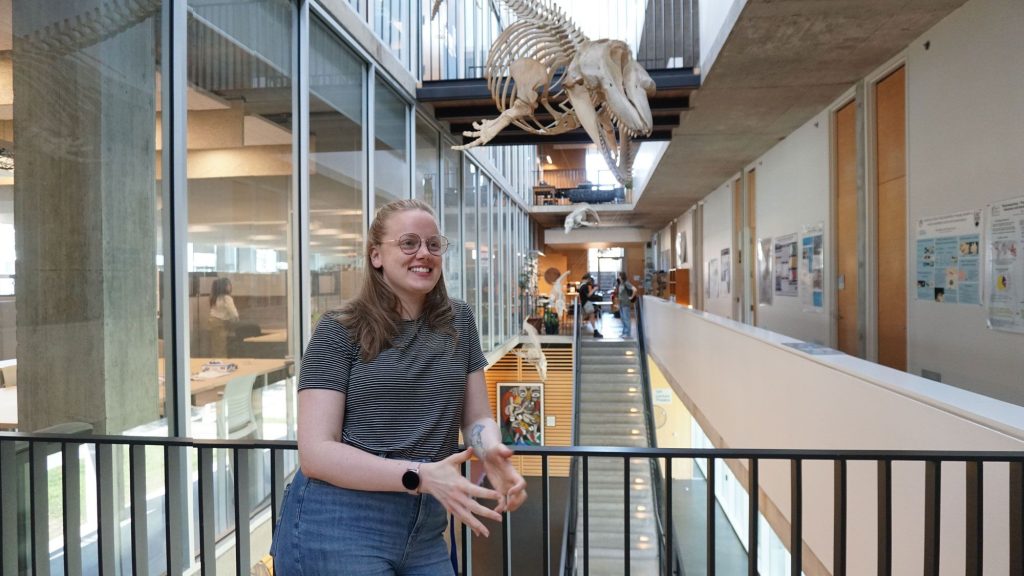
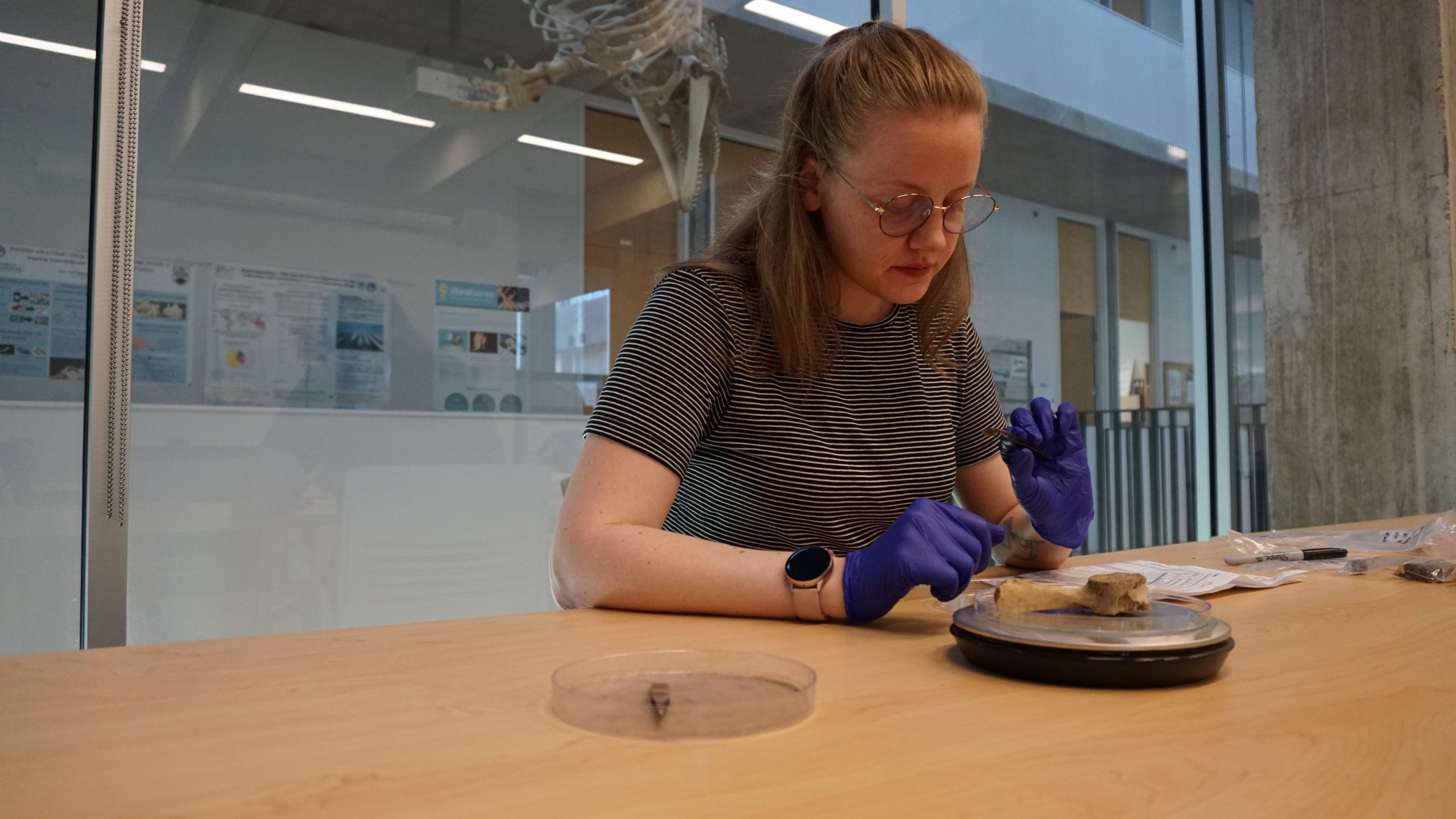
When the pandemic hit, new excavations were suddenly off-limits. It might be an idea, considered UBC archaeologist Meaghan Efford, to do some digging indoors.
“Thankfully, I love lab work,” she says.
Efford came across piles of salmon bones – the remains of Arthur Charlton’s excavation from the early 1970s – waiting to be discovered like the prize at the bottom of the Cracker Jack box.
In some ways, it was a relief not to put another hole in the ground, she explains.
“Archaeology is inherently a destructive science,” she says. “When we can use material that’s already been taken out, that reduces our destructive impact.”
Besides creating a digital inventory of the brown bagged findings, Efford discussed the project with representatives from Tsleil-Waututh.
Given the timespan, Efford was asked to mark the changes to the salmon population over thousands of years.
It was a story to tell, Efford explains.
Before she was an archaeologist, Efford was a ballet dancer. (She describes the movie Black Swan as “disturbingly accurate.”) As a dancer, you tell a story through movement, Efford explains. In academia, she adds, you’re telling a story through science.
“Archaeology is all storytelling,” she says. “You just get a window. You get a piece of the puzzle and so you’re telling a story, you’re trying to bring the past to life but you don’t have the entire puzzle.”
This research, Efford quickly realized, would lead to a fascinating tale.
“Every time I opened a box there was something new and exciting,” she says, likening herself to a kid in a candy store.
The findings were packed in tightly packed heaps of soil, shell and bones called shell middens. Those shell middens, she says, are “time capsules.”
Capsule by capsule, based on teeth and bones, a picture of teeming life and vibrant biodiversity started to come into focus.
“You start building this picture of the ecosystem in your head,” Efford says. “It feels like it shouldn’t be possible.”
Finding the story
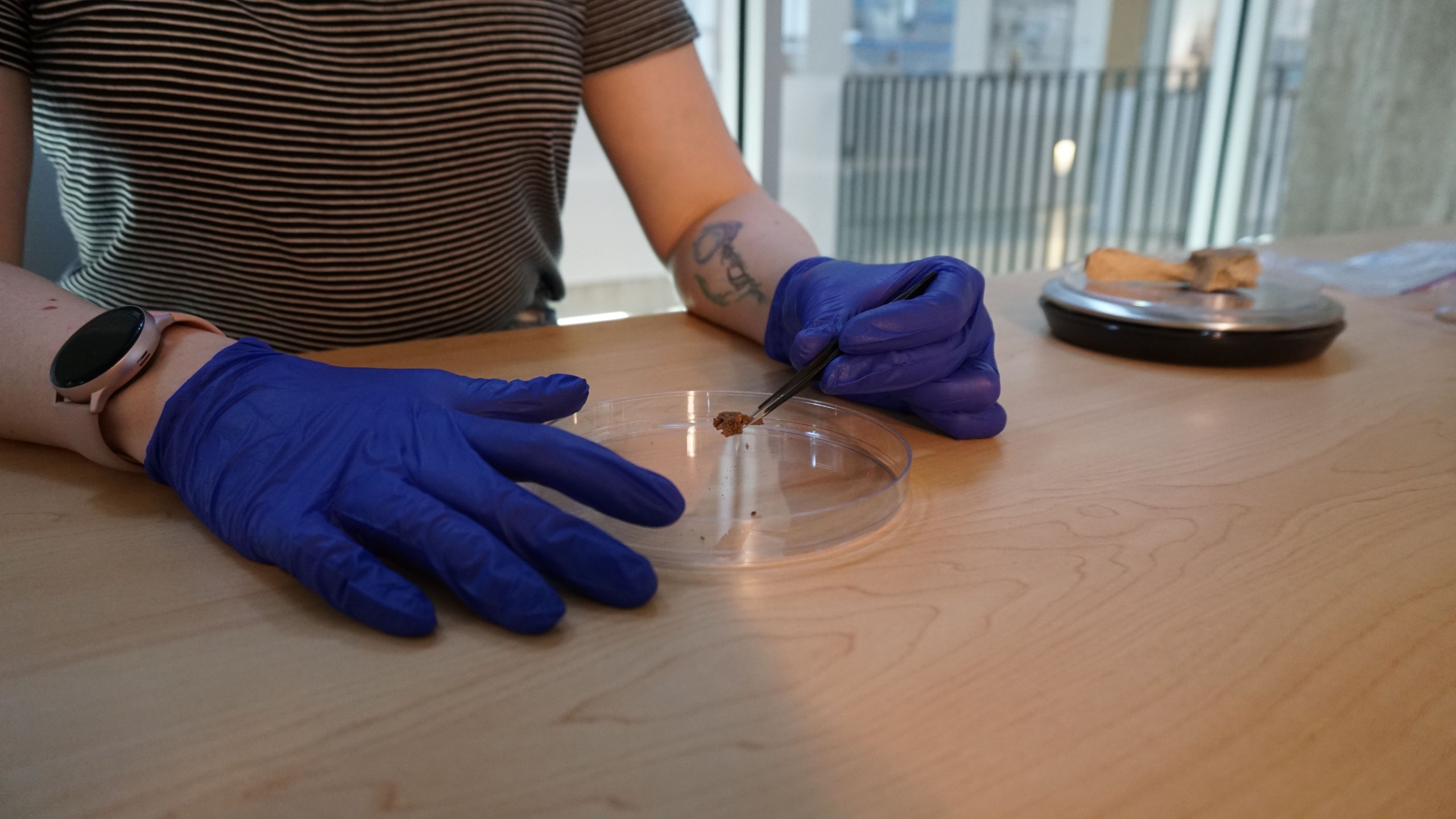
Even after millennia, the bones have a story to tell. Bits of protein are preserved in the bone and those bits are as distinct as fingerprints.
Getting a good fingerprint, however, was a bit of a process.
Efford recalls conducting the research through the shutdown, often the only person in the building.
“I was working through this material alone. Either in a basement or in an office,” she says.
Researchers took between 10 and 30 milligrams of bone. The samples were rinsed and eventually gelatinized before being enzymatically digested. After a night of digestion, the samples were acidified and put under a mass spectrometer with a smart beam laser.
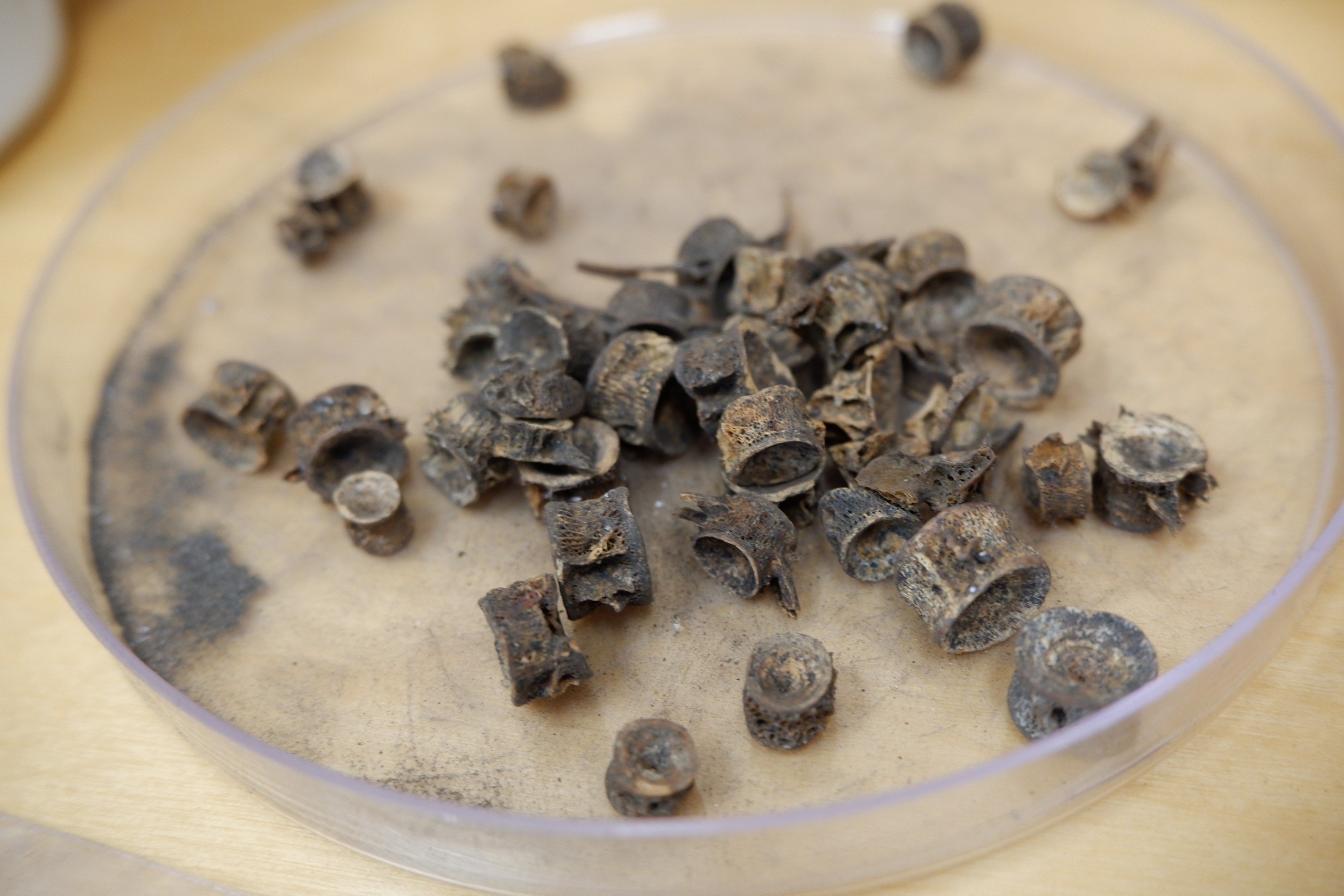
The method is intended to filter out everything and leave researchers with the essential building blocks of the life that was.
Advances in carbon dating allowed researchers to look back more than a millennium beyond what Charlton had in mind.
Researchers analyzed 245 salmon vertebrae.
It turned out that the story told by those vertebrae was the same story the Tsleil-Waututh had been telling for centuries.
The 3,000-year fishing trip
As early as 850 BCE, Tsleil-Waututh were fishing in the area, and they were fishing selectively.
At a time when salmon in the Inlet were about as accessible as clam gardens, the Tsleil-Waututh overwhelmingly fished for male chum salmon, which accounted for about three quarters of the fall harvest.
Allowing the females to swim upstream was one of the stewardship practises that allowed for the preservation of the species, explains Tsleil-Waututh technical specialist Michelle George.
“I hope people understand that we knew what we were doing,” George says. “If we could manage it that long . . . we must’ve been doing something right.”
That salmon-to-people relationship was maintained for “perhaps 100 generations,” the study noted.
“I don’t think anyone at Tsleil Waututh was surprised,” Efford says. “The science is finally representing what their parents and grandparents and great-grandparents told them.”
It’s a departure from the way scientists used to approach the work.
“The Indigenous community that is most impacted by this work is driving the work,” Efford says.
The fact that salmon populations were deliberately maintained shouldn’t be surprising, Efford adds. A chum salmon fishery is susceptible to over-fishing, she says. The study illustrated just how susceptible.
Before contact
The study also deals with some misapprehensions about untouched land, “ready to be adopted and cultivated by European settler communities.”
This work is more evidence of what Indigenous communities have been saying for years: that the land and the waterway were: “highly managed spaces, with ancestral community ties and responsibilities to steward and manage.”
At one time, there was teeming populations of herring, eulachon, anchovy, and smelt. But after urbanization, pollution, overfishing and even dynamite fishing, those fish populations collapsed by as much as 99 percent.
Archaeology can play a crucial role in countering “shifting baseline syndrome,” Efford says.
There’s a tendency to compare today’s environment to the environment you recall from your youth, not realizing that too was a product of depreciation.
“Archaeology can pull that baseline back before some of these really major changes,” she says.
It’s like peering past buildings and cars to see another time, the same inlet but a hugely different ecosystem and an equally different way of interacting with that ecosystem.
Back then, it was the Tsleil-Waututh’s largest village, təmtəmíxʷtən, “the biggest place for all the people.”
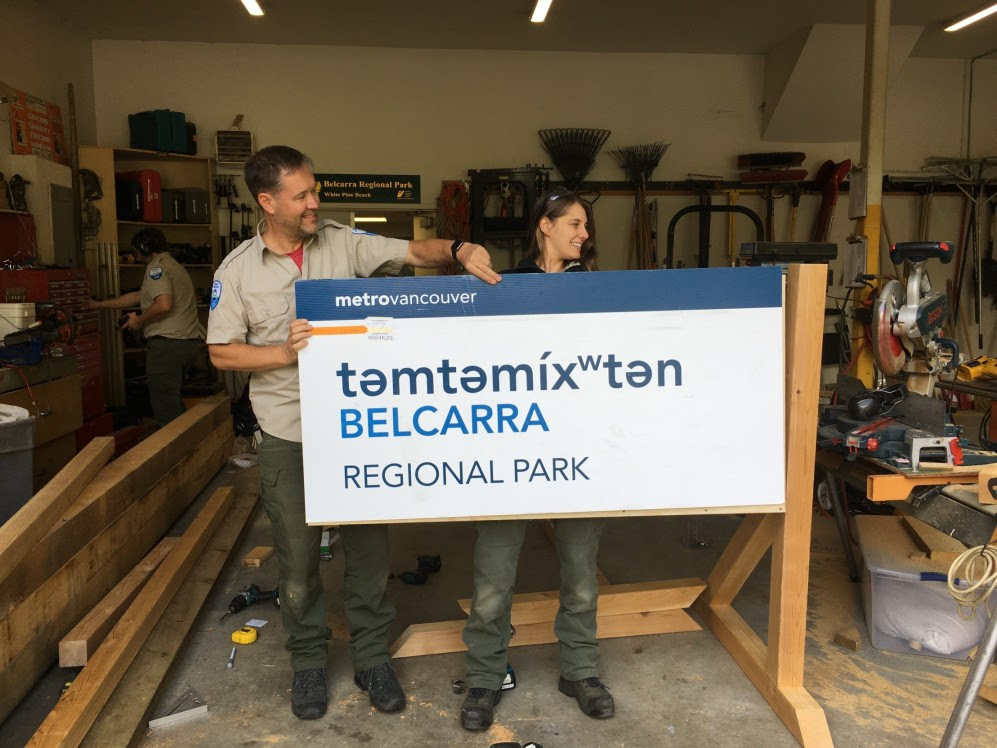
It’s a reminder for young archaeologists that, before heading into the field with picks and brushes, to unearth the findings on university shelves.
“Nobody knows,” Efford says with a laugh, noting that many of the archaeologists who produced the findings have since retired or died. “You just have to unpack it and find out what’s in there.”
For Michelle George, the research is an echo of her elders’ knowledge.
“From what I understood from what they were telling me about their past and their elders and the way that we handled and managed the land, it was confirmation,” she says. “To have that scientifically backed up is pretty amazing.”
George says she hopes people gain a deeper appreciation for the Tsleil-Wauuth’s ways of life.
As more work is done, more evidence of Indigenous stewardship will become apparent, George says.
“My family and my kinfolk have wandered the lands for many, many generations,” she says. “I’m not surprised any of this was brought to light.”
Author