Port Moody delays community survey to 2027 to avoid election-year conflicts, better guide policy
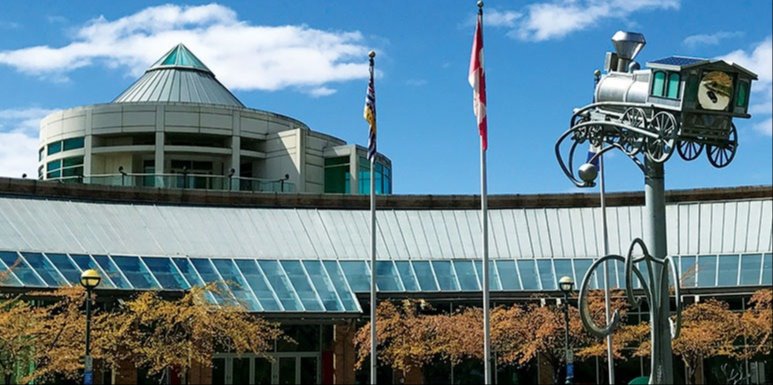
Port Moody council has approved a shift in how and when it measures public opinion, delaying its next community satisfaction survey until after this fall’s municipal election.
The move is aimed at avoiding political influence and strengthening its usefulness in shaping policy.
“I think this makes a lot of sense,” said. Coun. Samantha Agatarap. “If we’re going to be spending money on this, we should want to get results that are like actionable information and more valid in the broad sense, rather than risk being focused on one particular time in our community.”
Local news that matters to you
No one covers the Tri-Cities like we do. But we need your help to keep our community journalism sustainable.
The decision, passed April 28, pushes the next survey from 2026 into early 2027 and realigns the city’s biennial survey cycle to years one and three of each council term. Staff said the change will both sidestep election-period restrictions and better integrate feedback into budget planning.
At the centre of the change is the looming October 2026 municipal election and the provincially mandated “pre-election quiet period,” which begins July 20 and limits what municipalities can communicate or engage on publicly.
Staff warned that running the survey this year would either force it into a tight June–July window before the quiet period or delay results until after the election, reducing its immediate value to council.
Under provincial rules, municipalities are restricted from conducting communications or engagement that could be perceived as influencing voters during the quiet period, including reporting back on public surveys.
By postponing the survey to 2027, the city avoids those constraints entirely while also ensuring results can feed directly into the 2028 budget process.
The goal would be to have the results in time for the start of the staff work on the budget planning, which starts in May/June,” said Lindsay Todd, manager of communications and engagement.
The community satisfaction survey – conducted by an independent research firm and sent to thousands of randomly selected households – provides statistically valid data on residents’ views around quality of life, city services, governance and perceived value for taxes.
Mayor Meghan Lahti said adjusting the timing has been a long time coming, particularly given how heavily council relies on the data during budget deliberations.
“This is supposed to be able to guide us with statistically valid community perspectives . . . and it’s going to be very helpful for us when we’re heading into a new term,” she said, pointing to its role in shaping decisions around service levels, taxation and overall community priorities.
The revised schedule is also intended to give each council two opportunities within its four-year term to measure public sentiment – once early on to help set direction, and again later to assess progress.
But while council supported the shift, not all members were convinced the proposed early-2027 timing strikes the right balance.
Coun. Kyla Knowles said she supports surveying in years one and three, but questioned whether launching the survey so soon after a new council is sworn in would produce meaningful feedback.
“That seems a bit early . . . the new council will have just barely gotten started,” she said.
Knowles argued residents may not yet have enough experience with a new council’s direction to provide “well-rounded” input, suggesting a later 2027 timeline could yield more substantive feedback.
Other councillors, however, framed the early timing as a strategic advantage, particularly in the context of a fresh electoral mandate.
Coun. Callan Morrison emphasized that residents already have multiple avenues to provide input outside the survey, including speaking at council and committee meetings, and said earlier survey data allows council to adjust course while there is still time to act.
“I think it’s valuable to be able to reprioritize . . . earlier in the council cycle, as opposed to doing that at the end of the term, and then all of that getting mixed up with the new election,” he said.
Historically, the survey cycle had drifted into years two and four following the province’s move to four-year council terms, meaning one survey often landed close to an election.
Staff said that timing risked skewing results due to heightened political discourse and limited the city’s ability to act on the findings before voters went to the polls.
By moving the survey into non-election years, the city aims to produce more stable, comparable data, and ensure council has time to respond.
The most recent survey was conducted in 2024, with more than 1,100 residents participating.
That survey showed the vast majority of participants, 94 percent, rated Port Moody’s quality of life positively. However, 42 percent said that quality of life had declined over the last three years, compared to only 12 percent stating it had improved.
The biggest issues for respondents who said it had worsened: growth (44 percent), traffic (29 percent), lagging infrastructure and services (7 percent), and cost of living (6 percent).
The next community satisfaction survey is now expected to launch in early 2027, marking the start of the revised cycle and the first opportunity for the next council to gauge public sentiment after the 2026 election.
The changes passed unanimously. Couns. Diana Dilworth and Haven Lurbiecki were absent.
Author