Port Moody floats becoming first North American city with recognized urban marine protected area
City may also apply for official recognition from UNESCO
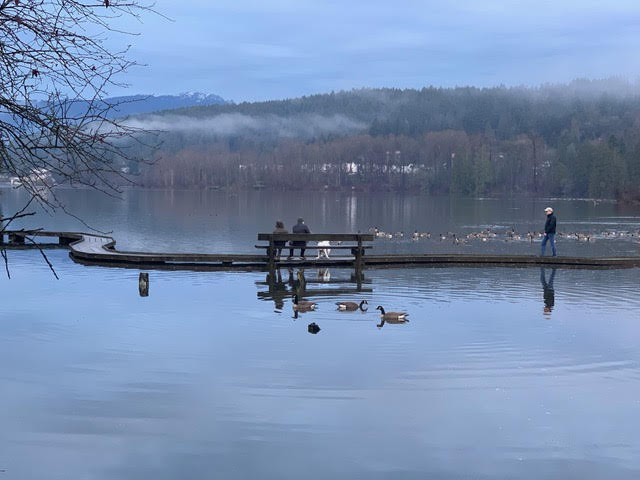
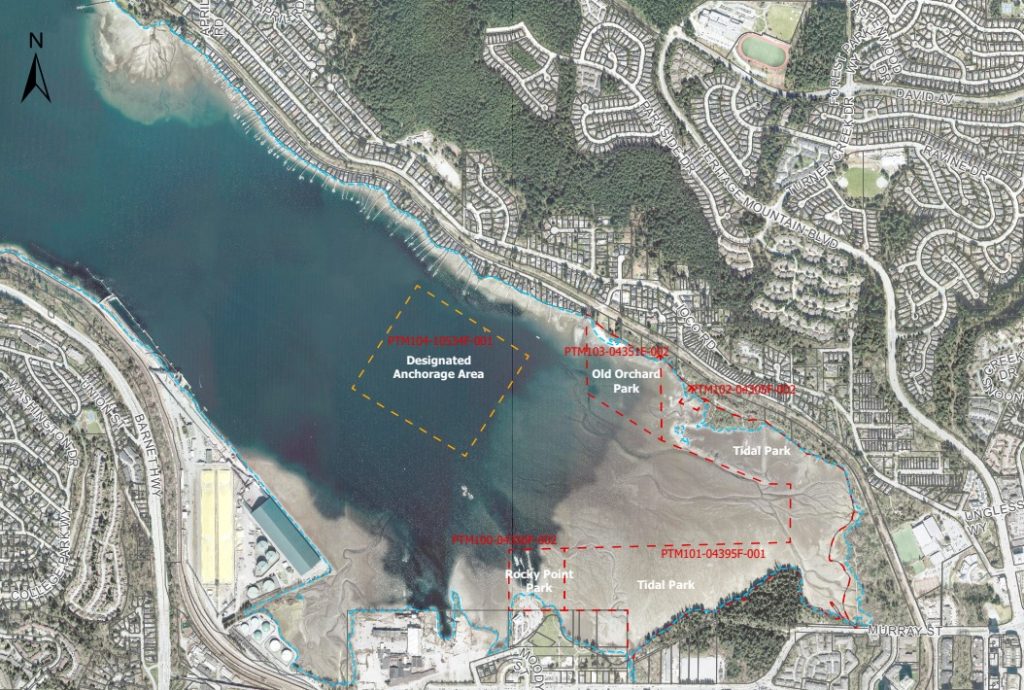
Port Moody is considering whether to designate the ecologically rich mudflats at the eastern end of Burrard Inlet as North America’s first municipally located urban marine protected area (MPA).
Mayor Meghan Lahti brought forward the motion at the June 23 council meeting, calling on the city to designate the intertidal flats and foreshore lands within its leasehold, as well as apply for official recognition from the United Nations Educational, Scientific and Cultural Organization (UNESCO).
“There are many good reasons to do this,” Lahti said. “I think we need to embrace this idea . . . I think that the community will be on board.”
Local news that matters to you
No one covers the Tri-Cities like we do. But we need your help to keep our community journalism sustainable.
The estuarine salt marsh and mudflat habitat hold environmental and ecological value, supporting salmon, migratory waterfowl, and shorebirds with its rich biofilm and carbon sequestration capacity.
The area in question has been under city lease from the Port of Vancouver since 2002, forming a protected stretch of shoreline between Rocky Point and Old Orchard parks.
Lahti’s motion cited support from a range of scientific and environmental organizations, including the Burrard Inlet Marine Enhancement Society and researchers from the Pacific Wildlife Foundation and Simon Fraser University.
If approved, Port Moody would become the first city in North America to establish an urban MPA within its own municipal boundaries – a symbolic and potentially precedent-setting move.
“This is an opportunity to reinforce the rationale behind our new boardwalk, to promote citizen science, and to celebrate conservation at no cost to the city,” Lahti said in her motion, noting it also aligns with council’s strategic goals and official community plan.
Council, however, opted to refer the motion back to staff to examine feasibility, implications, and timelines, including the potential pursuit of UNESCO recognition.
Staff are expected to return with a report within three to six months, as the motion was flagged as “time-sensitive.”
Though the council was largely supportive, several councillors did note there was some concern in the community.
Coun. Kyla Knowles noted the city has a “contentious” history with protected environmentally sensitive areas (ESA).
In 2021, the city proposed expanding some ESAs through an updated strategy, which some residents interpreted as infringing on private property rights.
The city later cancelled the project due to the confusion it caused within the community.
“We should take these concerns seriously and do everything we can to ensure residents, First Nations and all stakeholders have access to all relevant information, and are consulted before irreversible decisions are made,” Knowles said. “There’s no rush on this.”
Coun. Amy Lubik said the community anxiety is likely a holdover from the shaky ESA rollout, joking that “we’re all still in PTSD from that.”
But even some local environmental advocates, who spoke at public input, were split on the idea.
Judy Taylor Atkinson, who the city honoured with an environmental award in 2018, said she had “reservations” about the MPA designation.
She noted the area is already heavily protected under the provincial and federal legislation, and that an MPA would add a “false sense of security.”
“A small isolated MPA is going to have a minor impact on the external factors that are degrading mudflats, such as increasing salinity, rising ocean temperatures, changes in late exposure and storm surges,” Atkinson said.
Instead, staff should be conducting a comprehensive evaluation of whether more ecological and economic benefits could be gained through smaller scale projects, such as studies and monitoring of toxic runoff from streams.
On the other hand, Rod MacVicar, a 48-year veteran volunteer of the Mossom Creek Hatchery and Education Centre, was supportive, noting that salt marshes and mudflats are “pretty well disappearing” from the Lower Mainland’s coastlines, and the city should try to attain some form of recognition.
He suggested the city seek to have the area recognized as an important bird area
“They’re absolutely unique in the Port of Vancouver,” MacVicar said. “It’s not about protection. There are 20 or 30 statutes that cover water qualities. It’s about awareness of an important marine area to the public.”
Coun. Haven Lurbiecki also expressed skepticism over an MPA, questioning why council should prioritize already stretched staff resources to the project.
While Lurbiecki said she would be supportive if there were tangible benefits, she noted other external factors, such as development, are impacting these environments and the city should focus on more substantial protections.
“I’m not sure what additional protections this proposed designation would bring, besides on paper and to make us feel good,” Lurbiecki said. “How is this going to make any difference from what is there now?”
Lurbiecki also said the community would be wary of “pet projects starting to pop up in an election year.”
Both Lahti and Coun. Diana Dilworth took issue with that framing, with the latter describing it as an “inappropriate comment.”
Dilworth said Port Moody has been an award-winning and environmentally leading municipality throughout the region for decades.
“To suggest this is a political project is not anything I’d even considered when the mayor first brought this forward,” Dilworth said. “I think it’s an opportunity to set absolutely new standards for preservation, conservation and enhancement of title, mud flats and salt marshes.
“Much of what we start here in Port Moody is emulated by our neighbors, throughout the region, even across the province – and that’s a good thing.”
Author