Vagrants, Wobblies, and the first days of policing Port Coquitlam
They came in on the rails – honest folks desperate for work or a blight on inevitable progress, depending on who you asked.
Coquitlam, according to one newspaper account, was about to “achieve her greatness.”
It was 1911 and CPR president Thomas Shaughnessy had just announced a railyard expansion with 27 tracks and the capacity to hold 5,000 train cars, according to Ralph Drew, who documents the change in Coquitlam Chronicles: Historical Crossroads on the Fraser River.
Local news that matters to you
No one covers the Tri-Cities like we do. But we need your help to keep our community journalism sustainable.
“The forces which are behind it cannot, will not be stopped by government or man. Coquitlam will pull you if you hitch yourself up to it,” an advertisement promised. A headline in the Coquitlam Star declared: “What Pittsburgh is to the United States, so will Coquitlam be to Canada.”
But amid those promises of economic prosperity there was a stark fear of itinerant, jobless men carrying blanket rolls. It’s an issue PoCo Heritage is set to examine as part of the upcoming exhibit Crimes, Fines and Hard Times, opening Thursday.
“One of the driving factors for forming a police force in the District of Coquitlam . . . was what they termed at the time as vags, vagrants, hoboes,” explained PoCo Heritage Museum and Archives curator Alex Code.
Besides the railyard, Port Coquitlam was full of empty expanses of land bought by real estate speculators who didn’t live in the city.
“There were homes to squat on and fields to pitch your tent,” Code said. “There were kind of hobo jungles dotted around.”
The jungles weren’t welcomed, however.
For hoboes, Vancouver “is like a flame to moths,” wrote reporter J. Sydney Williamson, who described more than a dozen drifters hopping out of boxcars at the CPR freight yards in Coquitlam.
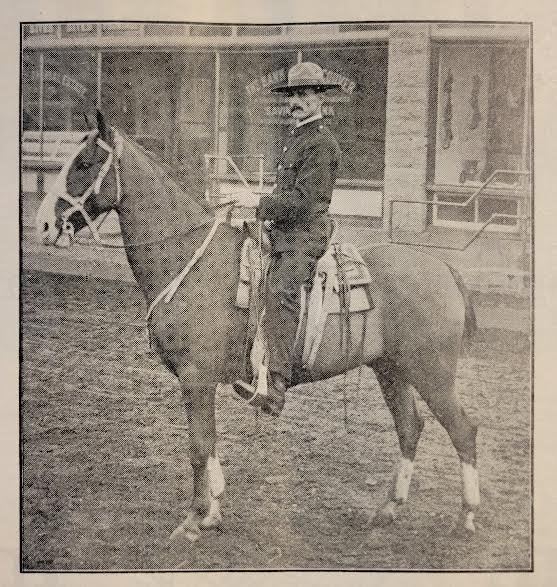
The municipality, which was still known as the District of Coquitlam in 1911, hired J. R. Edwards to serve as the city’s first police Chief Constable. Edwards also doubled as the Fire Chief.
The constable patrolled the city on horseback, however, much of his focus seemed to be the rail yards.
An article in the Coquitlam Star in 1911 describes two constables who: “helped to clean out a lot of undesirables.”
“Eight and ten hoboes were given their walking orders nightly, and the name of Coquitlam will not in future be a good one amongst this fraternity, a fact which will not be regretted,” the reporter wrote in slightly mauled syntax.
In 1917, the Coquitlam Star article described a strike agitator being turned back from the city.
After looking disgusted by the hive of industry before him, the agitator, “turned tail looking as crestfallen as some of Miss Jiggs’ suitors when old man turns them down,” the article concluded.
There was also some evidence of an organized labour movement in Port Coquitlam, Code said, noting labour parties at Aggie Hall.
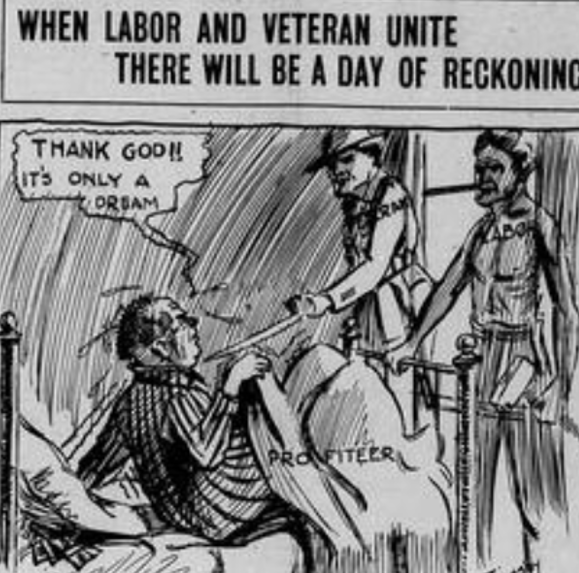
The extremely pro-labour newspaper the BC Federationist was distributed in Port Coquitlam, according to Code. The Federationist featured one cartoon where a veteran and a labourer come together to metaphorically put a blade to the throat of a “profiteer.”
There was also an incident involving the police and a pair of visitors from the United States who were both members of the Industrial Workers of the World.
Also known as Wobblies, the IWW was a collection of miners, loggers, navvies and harvesters who aimed to form an international union, according to the Canadian Encyclopedia.
In November, 1925, two Wobblies were charged with vagrancy in Port Coquitlam – one was also accused of not paying for a meal at a Port Coquitlam restaurant.
“Both men are members of the IWW and had membership cards and books,” the police report noted.
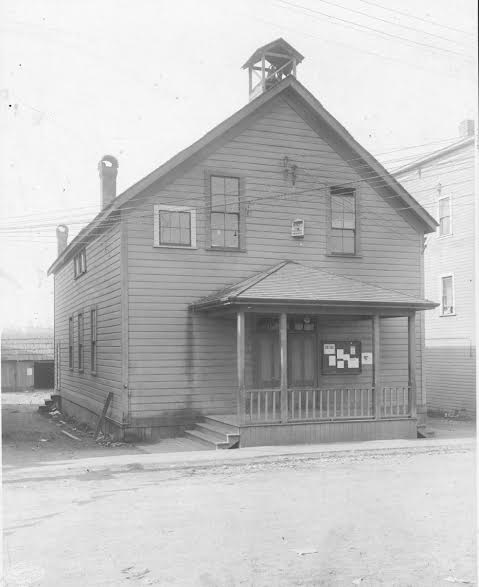
They were sentenced to 14 days in the City Hall jail. However, as was typical, the sentence was suspended for half an hour, essentially giving the perpetrators time and incentive to get out of town.
“The membership cards were returned to them but the song books and other books were retained,” the police report concluded.
The exhibit is set to open Thursday. More info here.
Author