Tri-Cities Chamber of Commerce calls for ports to re-open
With the two sides at loggerheads over automation, the Tri-Cities Chamber of Commerce is calling for an end to the dispute that shut down B.C. ports earlier this week.
The ongoing lockout is hurting businesses and communities, according to Tri-Cities Chamber of Commerce CEO Leslie Courchesne.
“Our chamber is calling for the immediate re-opening of our ports to stop the damage to our economy and to Canada’s reputation as a global trading partner,” Courchesne stated in a release.
Local news that matters to you
No one covers the Tri-Cities like we do. But we need your help to keep our community journalism sustainable.
The BC Maritime Employers Association locked out more than 700 port workers Monday afternoon.
The lockout was an attempt to: “create a crisis instead of negotiating,” according to International Longshore and Warehouse Union Local 514 president Frank Morena.
After the previous contract expired in March 2023, the union was set to step up job action on Monday morning by not working overtime and refusing to implement tech change. Technological change often refers to an employer bringing in new equipment that changes how work is done.
Locking workers out was an overreaction, according to Morena.
“Not only has the BCMEA continuously refused to bargain on the major issues, including manning, but are now threatening to close the entire waterfront with a full-scale lockout in their attempt to force the federal government to intervene,” Morena stated in a release.
The B.C. Maritime Employers Association, which previously emphasized the importance of adapting to new technologies, stated that the lockout was necessary.
“Strike activity can easily escalate, including a complete withdrawal of labour without notice,” the association stated in a release.
Potash takes hit
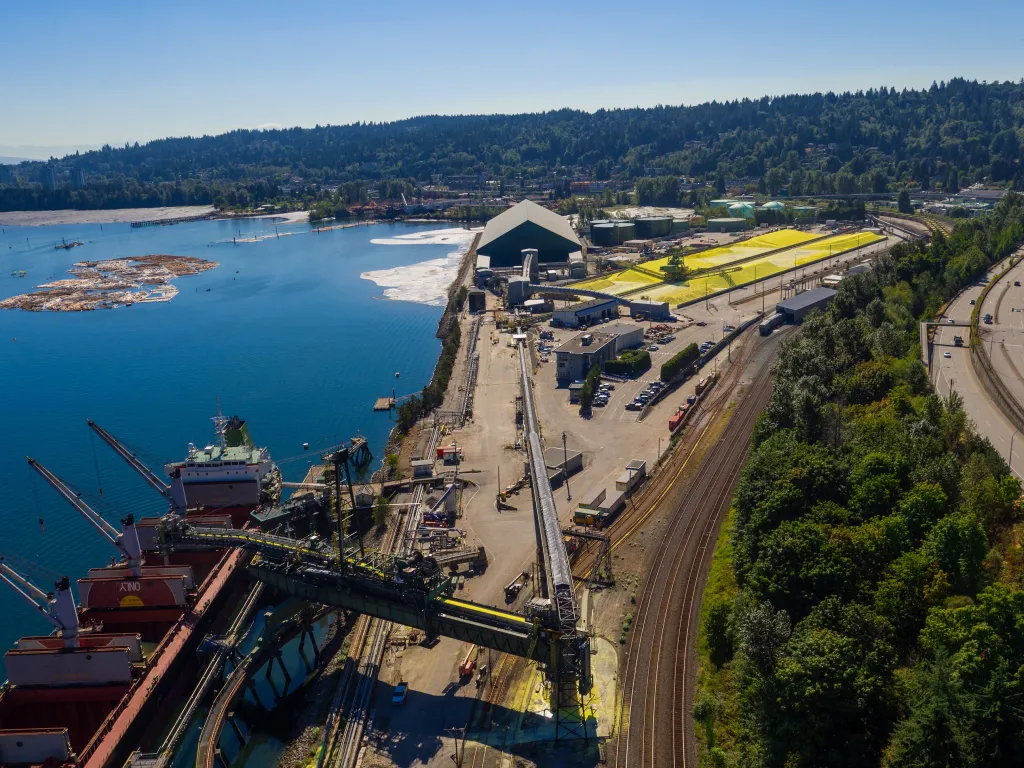
In addition to canola oil and sulphur, potash is a major part of operations at Pacific Coast Terminals in Port Moody.
The terminal handles about 1.8 million tonnes of pink and white potash.
Shutting down the ports could mean a huge impact for potash exporters, with the fertilizer industry losing about $9.7 million per day in lost sales revenue, according to a release from Fertilizer Canada.
Besides jeopardizing food security, the disruption could mean losing market share to Belarus and Russia, the organization stated.
“We are once again on the brink of losing access to a critical trade corridor, and potash fertilizer will be one of the hardest hit commodities,” stated Fertilizer Canada president Karen Proud in a release.
Bargaining landscape
Following several bargaining sessions, BCMEA presented a comprehensive proposal to the union in April 2024. The union responded with a new proposal related, in part, to minimum staffing requirements.
The proposal was too late and had the effect of “shifting the bargaining landscape,” according to BCMEA.
The Canada Industrial Labour Relations Board panel generally agreed.
While acknowledging remote and semi-automation would mean changes to minimum staffing levels, the board noted those decisions are within management’s discretion.
“The change from a gang model to a desk model does not appear to the board to be a change in the terms and conditions of employment as there is no entitlement to a certain model of staffing,” the board wrote.
The board also concluded the union could have addressed automation earlier in the bargaining process, and directed the union to remove that aspect from its proposal.
The B.C. Maritime Employers Association represents about 49 waterfront employers.
BCMEA has stated their current proposal includes a $21,000 signing bonus. A median foreperson would also see their compensation increase from $246,323 to $293,617.
The lockout doesn’t apply to grain or cruise operations.
There are currently no talks scheduled.
Author