The train rolled into Port Moody . . . and rolled on
For 10 months Port Moody was the western terminus of a transcontinental railroad and the commercial centre of B.C. And then it wasn’t
“Trains are big and black and smokin’ louder than July four
But everybody’s actin’ like this might be somethin’ more.”
Guy Clark, “Texas 1947”
The arrangement was simple: Canada would get British Columbia and Port Moody would get the railroad.
In the early 1880s, a transcontinental line was stretching toward the West Coast as unsteadily as a deep sleeper reaching for the alarm clock.
Local news that matters to you
No one covers the Tri-Cities like we do. But we need your help to keep our community journalism sustainable.
In Port Moody the only thing higher than the hopes were the real estate prices. By 1885, land at Clarke Street that had been worth $15 sold for $1,000.
But, as it turned out, the plan was already going off the rails.
Prime Minister John A. Macdonald had promised that, within 10 years of B.C. joining Canada, a rail line would connect Victoria.
But 11 years later, the Canadian Pacific Railway was moving like St. Johns Street traffic at rush hour. With the line “impeded by political, management, and financing problems,” Macdonald recruited William Cornelius Van Horne.
Originally from Illinois, Van Horne had ben tasked with keeping the trains on time during the U.S. Civil War.
After taking the job in 1882, Van Horne fired his engineering staff and moved the rail line through the Kicking Horse Pass of the Rocky Mountains.
Van Horne was known for showing up at remote sites without warning where he would “assess progress and shout orders,” according to the Canadian Encyclopedia.
A total of 259 kilometres of rail had been built during he previous construction season. In Van Horne’s first year, 671 kilometres stretched into the prairies.
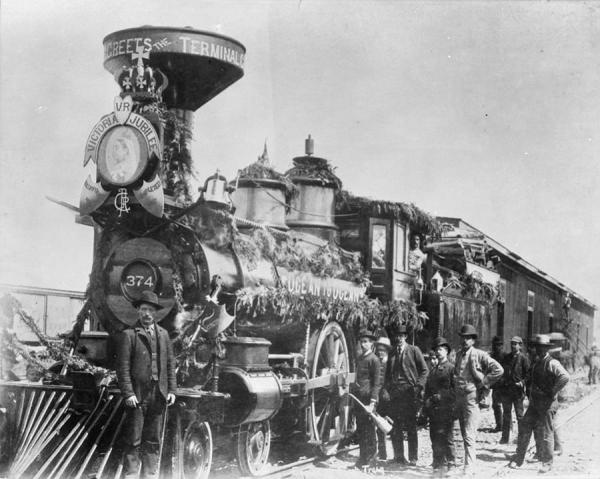
On November 7, 1885, a worker drove the last spike into the railway. Nine months later, on July 4, 1886, a passenger train from Montreal arrived in Port Moody.
The Victoria Daily Times called it: “the most wonderful feat in railroading on record.”
There were celebrations amid streets draped with banners, according to one account.
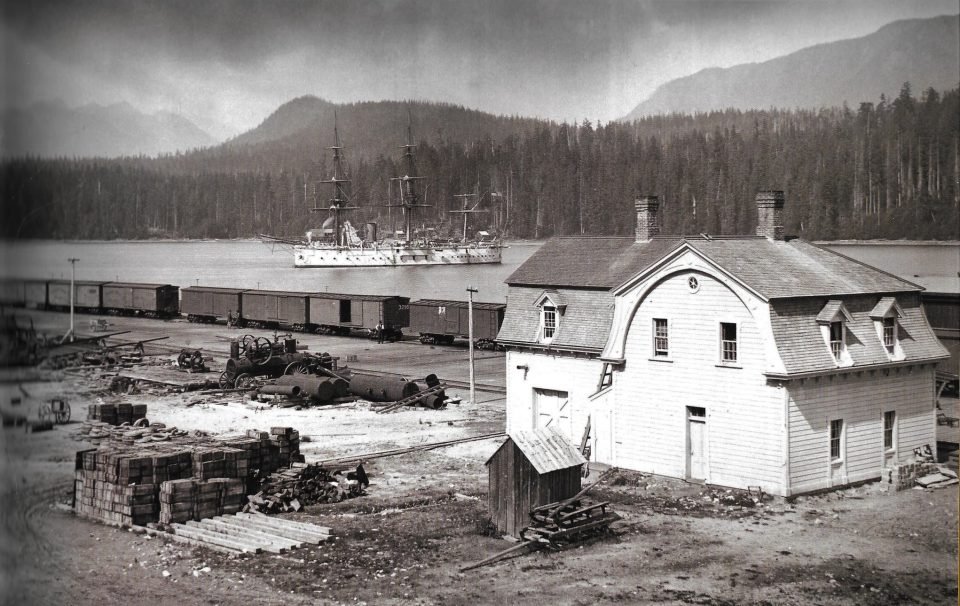
For 10 months, Port Moody was the centre of the province.
A plaque commemorated the last spike as: “thus completing the bond of union and making Canada independent in the matter of railway transportation.”
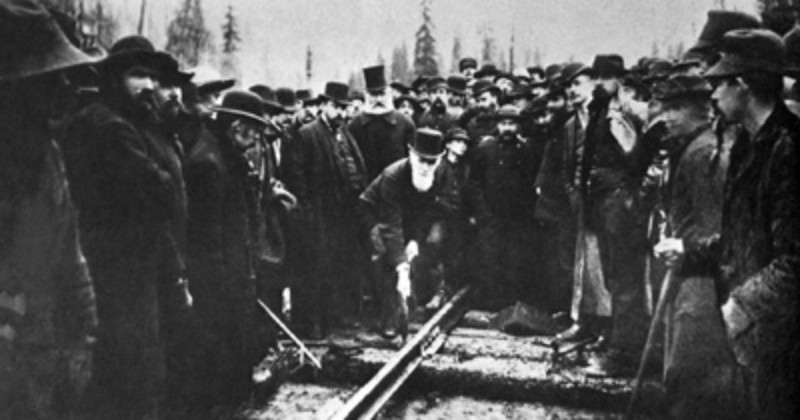
In the summer of 1886 Port Moody was the end of the line. However, that wasn’t the end of the story.
Van Horne judged Port Moody to be a little skinny between water and hillside. Having overseen 4,600 kilometres of rail, extending the line into Vancouver seemed simple enough.
The decision sparked “amazement and anger,” as well as lawsuits that turned out to be unsuccessful.
On May 23, 1887, a transcontinental passenger train from Montreal arrived in Coal Harbour, thus relegating Port Moody to, “merely another stop en route to Vancouver,” wrote historian Chuck Davis.
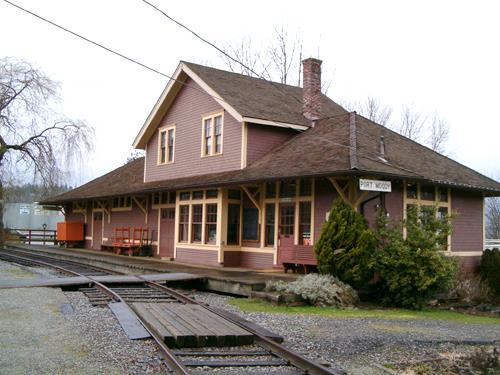
In Port Moody’s collected history, the writer noted that a cairn in the city commemorates the completion of the railway.
“There is no cairn for William Van Horne,” the writer added, noting Port Moody’s population was stuck at about 250 for the next two decades.
While it’s generally acknowledged that the rail extension allowed Vancouver to become B.C.’s main port and its commercial centre, there is a semantic counterargument.
W.H. Evans was the engineer who drove the train into Port Moody in 1886.
Fifty years later, he told the Vancouver Sun’s James Dyer that, “officially,” Port Moody is still the terminus.
“They merely built a branch line into Vancouver, and it is a only a branch line still,” he said.
Author