Anmore eyes major expansion for Dr. Hal Weinberg Spirit Park with wildfire safety and community feedback guiding the plan
The Village of Anmore is moving ahead with plans to expand and enhance Dr. Hal Weinberg Spirit Park, the community’s central outdoor gathering space, with wildfire resiliency, emergency preparedness and new public input shaping the vision.
It is an “exciting” project, wrote Mayor John McEwen in the Anmore Advisor’s summer edition, released Aug. 15. “I encourage you to … participate in the next round of community engagement to share your priorities for this amazing gathering space.”
Located at 1009 Ravenswood Dr., the village plans to expand Spirit Park onto the adjacent village-owned lot on Ravenswood, connecting to the civic hub alongside the new Anmore Community Hub. The expansion will integrate new amenities, outdoor spaces and pathways – while maintaining a strong focus on safety and environmental stewardship.
Local news that matters to you
No one covers the Tri-Cities like we do. But we need your help to keep our community journalism sustainable.
But before design work progresses, the village is completing wildfire risk assessments and other municipal green spaces. These assessments follow provincial wildfire threat analysis protocols: examining trees, ground cover, topography and human use to determine risk levels. The results will guide strategies to reduce wildfire hazards in the community.
“This initial field work is nearing completion, and it is anticipated that the updated Community Wildfire Resiliency Plan and related recommendations, including FireSmart for homeowners, will be presented to council this fall,” McEwen said. “This information is essential for understanding our wildfire risks and what we can do as a community to minimize them.”
The wildfire assessments are part of broader emergency planning initiatives, which also include the Alertable emergency notification system, an updated emergency and evacuation plan and a resident emergency guide handbook. McEwen added that the Buntzen Lake parking registration system has also been effective in keeping roads clear for emergency response.
Public engagement
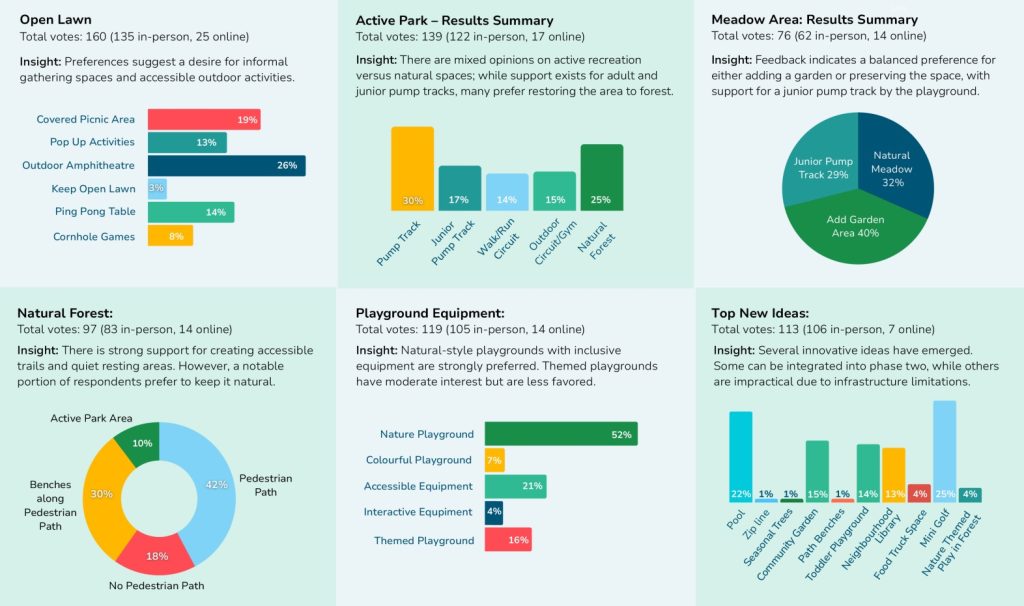
At the same time, the village has launched a multi-phase public engagement process to shape the park’s future. Phase One, held earlier this spring, gathered ideas in person and online. Residents shared feedback on five key areas of the park:
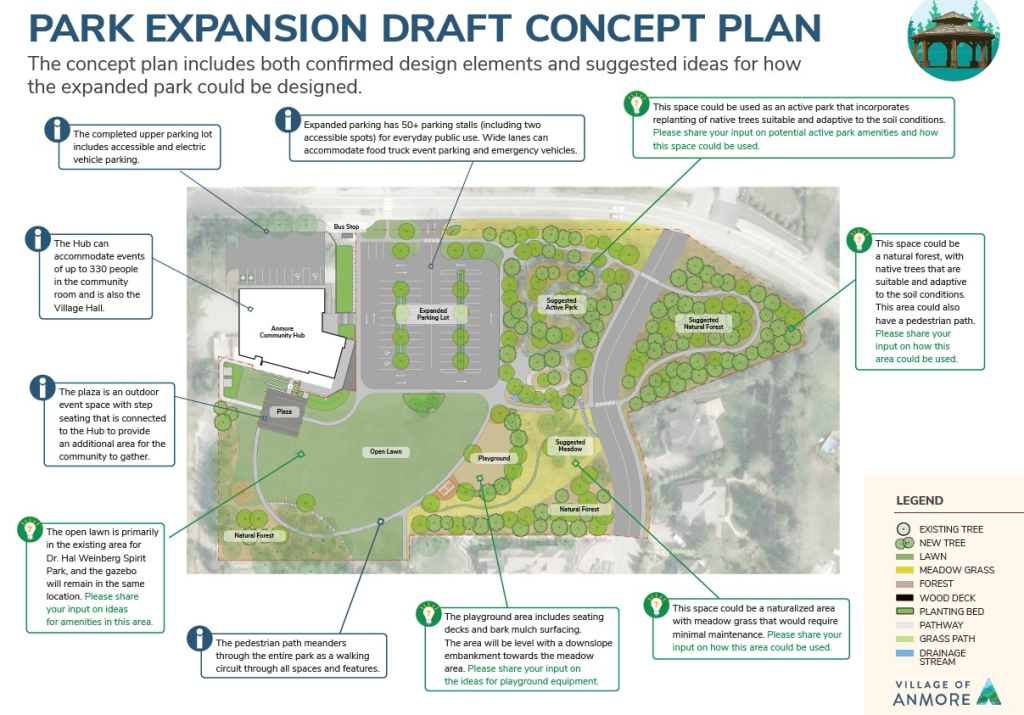
- Open Lawn: strong support for an outdoor amphitheatre, covered picnic area and recreational features like a ping pong table.
- Natural Forest: residents want to keep it as natural as possible, with added walking paths and benches.
- Active Park: a bike pump track was popular, though some suggested restoring the area to forest.
- Playground: support for nature-themed equipment, accessibility and creative play concepts.
- Meadow Area: residents suggested keeping the meadow intact or adding a garden or junior pump track.
Other popular ideas included a community garden, mini golf and a toddler play area. While a community pool was frequently suggested, staff ruled it out as unfeasible due to infrastructure constraints.
To support planning, staff and engineers have prepared a preliminary concept map based on technical assessments. Some elements are already confirmed, including road alignment, expanded parking with accessible and EV spaces, the gazebo in its current location, the plaza connected to the Community Hub and access pathways.
All other features remain conceptual and will be refined through public feedback, budget review and technical feasibility.
Phase Two of community engagement is scheduled for September, with additional opportunities for residents to weigh in on preferred uses and amenities.
“Together, we are shaping a civic space where the community can work, gather, and celebrate for years to come,” McEwen said.
Author