Divers haul more than 450 pounds of trash from Sasamat Lake in early December cleanup
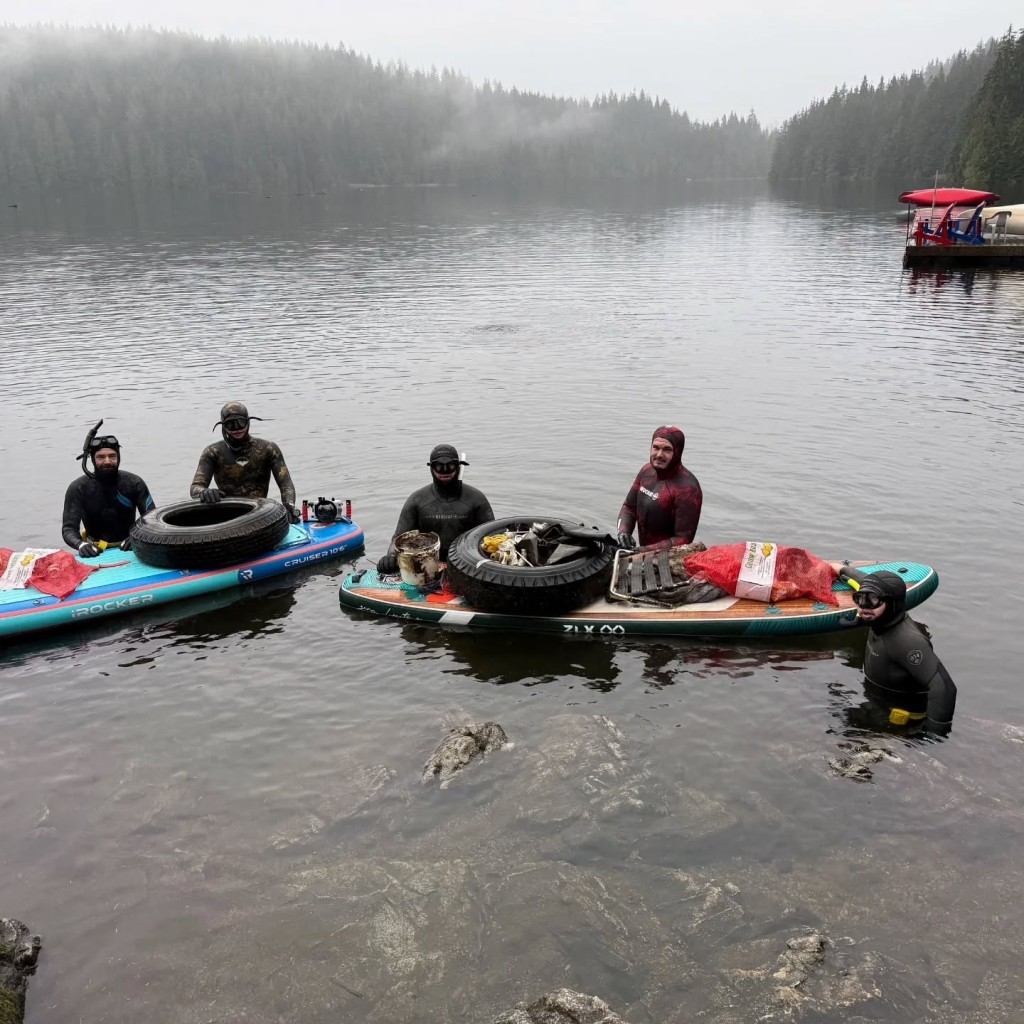
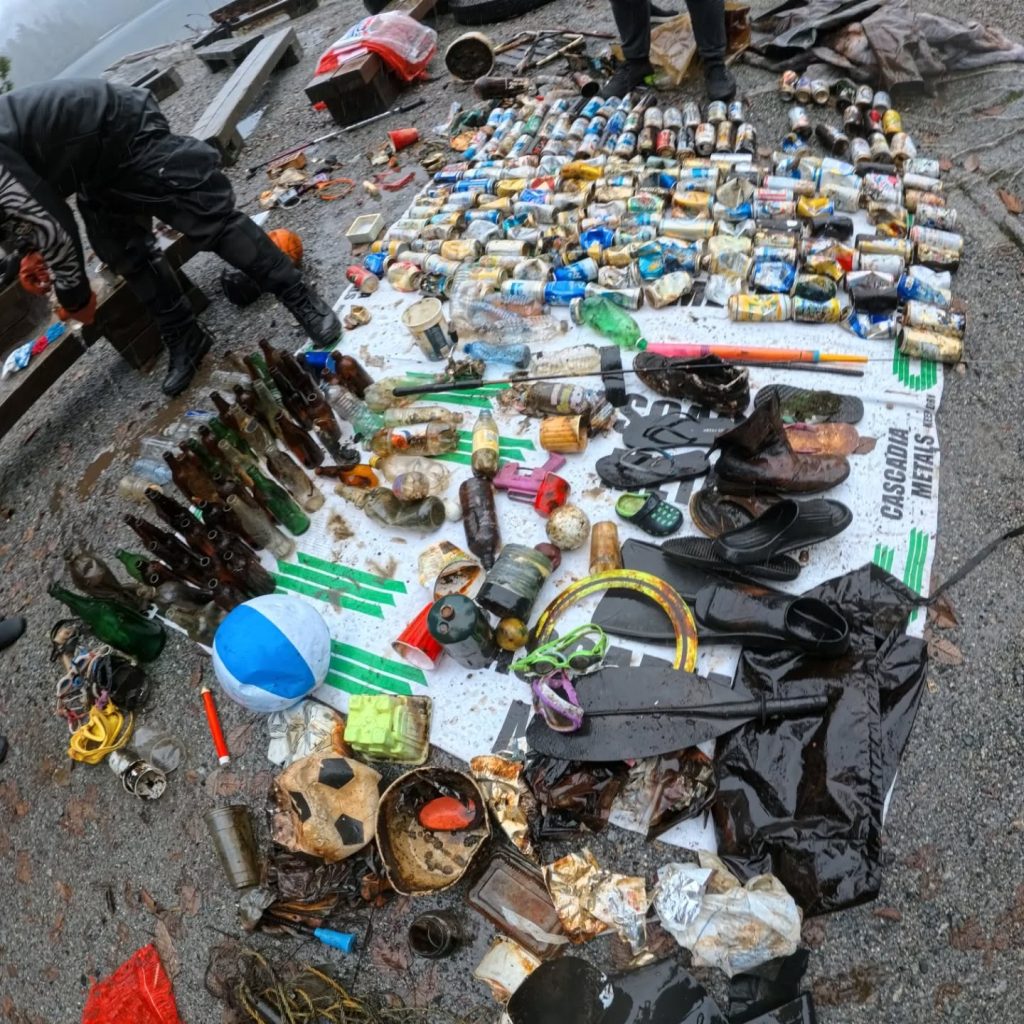
A team of volunteer scuba and free divers pulled more than 450 pounds of garbage from Sasamat Lake on Dec. 7, including 275 drink containers, in a Christmas-time cleanup.
The effort involved 10 divers – four scuba and six free divers – who spent about two hours in the water on the lake’s north side, near the Sasamat Outdoor Centre. Among the haul were large items like tires, along with a heavy mix of plastics and cans that had accumulated underwater.
“It’s just something we’ve been doing for years,” said Clayton Helkenberg, who organized the dive alongside Henry Wang, a professional diver who regularly cleans up B.C.’s waterways. “We go to our local lakes and rivers and oceans, and often it’s just a lot of trash. It’s kind of a fun thing to get groups of divers together and help clean up the environment.”
Local news that matters to you
No one covers the Tri-Cities like we do. But we need your help to keep our community journalism sustainable.
Wang, who last year removed 144 pounds of debris from Sasamat Lake, runs the organization Divers for Cleaner Lakes and Oceans, which has pulled up more than 68,000 pounds of trash since 2013. Helkenberg leads a separate group called Aquatic Monkey based in Chilliwack.
The two regularly organize dives across the region.
While this year’s total surpassed last December’s haul, Helkenberg said the amount of garbage recovered can vary significantly depending on location and conditions.
“Two years ago we actually had a bigger haul,” he said. “This year the weight was high because of a couple large tires and a lot of plastic. Other times, we’ve had way more containers – we’ve filled my little boat completely. We’ve even had cleanups with several thousand cans.”
This year’s dive focused on the north side of Sasamat, an area that sees fewer visitors than hotspots like White Pine Beach and the lake’s pedestrian bridges.
“Those more accessible areas are where we usually see the most trash,” Helkenberg said. “That’s where people are drinking and hanging out in the summer.”
Helkenberg said the Dec. 7 dive was not tied to a seasonal initiative, but rather scheduled based on volunteer availability. Helkenberg said the group conducts cleanups year-round and is equipped to dive safely in winter conditions, allowing them to operate outside the busy summer season.
“There’s not really water that’s too cold for us. I’ve dived in negative 15 degrees before — that was pretty chilly — but our suits are pretty dang good.”
When asked how Sasamat compares to other local sites, Helkenberg described it as one of the most garbage-ridden lakes he encounters, rivaling Cultus Lake.
He attributed the problem largely to the lake’s proximity to major population centres and heavy summer use, with floating devices, alcohol consumption, and high visitor volumes contributing to the buildup of submerged litter over time.
“Unfortunately cans get dropped – sometimes by accident, sometimes by neglect – and it just piles up over the years,” Helkenberg said.
While some residents argue the lake was cleaner decades ago, Helkenberg said divers routinely recover bottles dating back to the 1950s, suggesting the issue is longstanding but more visible today due to population growth and online documentation of cleanups.
Despite the steady influx of new garbage, Helkenberg said repeated cleanups can produce lasting improvements.
He pointed to areas of Cultus Lake that were heavily polluted during the early years of the COVID-19 pandemic but now show significantly less debris after years of regular diving.
“I still see the odd can or maybe one we missed, but it’s really nice to go back to some of these places and see just a huge difference,” Helkenberg said.
Strong volunteer turnout has helped sustain the cleanups, supported in part by sponsorships that allow organizers to offer small incentives and prizes. Helkenberg said the events have become as much about community-building as environmental stewardship, bringing together divers who share an interest in both.
For Helkenberg, the cleanups grew naturally out of his love of diving.
“When you pick up a phone and you see like 10 cans beside it, I kind of felt guilty not picking up the trash too,” he said. “It kind of just evolved from there; wanting to dive in places and not just see tons of human trash everywhere.”
While trash is the most common find, Helkenberg said diving has occasionally turned up surprises.
“One of my personal favorites: I found a .22-caliber handgun in Chilliwack Lake, which I found out later was actually stolen in 1994,” he said. “My most valuable find was finding a gold chain that I ended up selling for $3,000.”
Author