Prohibition, PoCo, and the smell of stale beer
‘The whisky did not belong to me or anyone belonging to me’
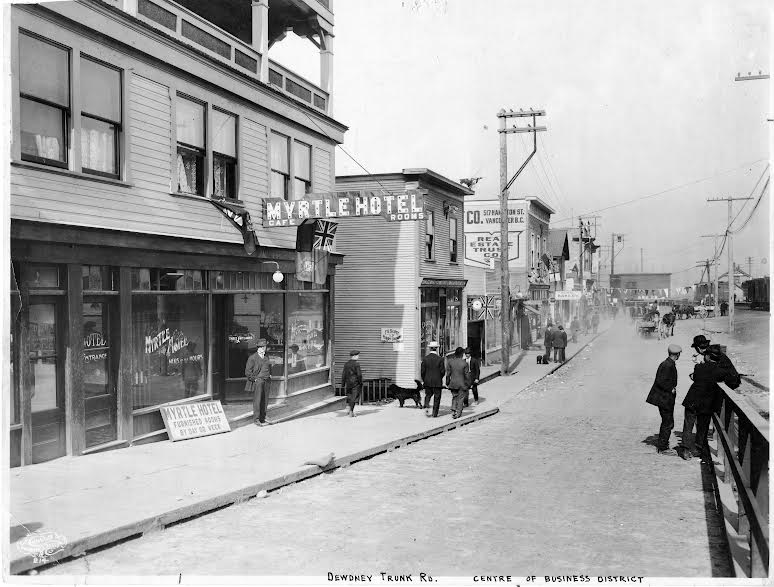
The former bar sold cigarettes, cigars and soft drinks – but police suspected there was something a little stronger on offer at the Myrtle Hotel.
On April 2, 1921, Constable John MacDonald led a search of the Port Coquitlam speakeasy.
At the time, Port Coquitlam was chock full of pool halls, bars, and other spots thought to harbour criminals, noted PoCo Heritage Museum and Archives curator Alex Code. PoCo Heritage examined prohibition in the city as part of the exhibit Crimes, Fines and Hard Times, opening Thursday.
Local news that matters to you
No one covers the Tri-Cities like we do. But we need your help to keep our community journalism sustainable.
“PoCo was just packed to the gills with bars,” Code said. “Prohibition came along, and not everyone stopped serving.”
There were stories of tipsy gentlemen acting as nonchalant their blood-alcohol levels permitted while police officers dug whisky bottles out from under beds and behind stairs, Code explained.
“It certainly didn’t stamp out the consumption of alcohol or the serving of alcohol; in our city at least.”
The Myrtle Hotel raid ended with proprietor Thomas E. Denny facing charges of possession of liquor “in a place other than a private dwelling house in which he resides.”
For the second time, Denny was charged with violating the British Columbia Prohibition Act of 1916.
Provincial Constable John MacDonald was usually stationed in New Westminster but, after getting several complaints regarding liquor being “kept or sold” in the Myrtle Hotel, MacDonald got a search warrant.
While both Mrs. Denny and a barkeep denied any knowledge of liquor being sold or consumed at the Myrtle, the officers found “several glasses” smelling of whisky, a bottle which had contained rye whisky, and two flasks. After getting behind the bar, another officer reached into a bucket of water and pulled out a full whisky bottle.
Amid the Coca-Cola and ginger beer, and playing cards, officers also found 20 empty bottles.
Constable Frank William Gallagher faced the tough question of whether or not he could distinguish between the small of stale beer and whisky.
“Oh yes,” he told the court.
In his defense, Denny told the court the only whisky in the Myrtle Hotel was legal.
B.C.’s prohibition act essentially banned the sale of hard alcohol. However, druggists were allowed to sell liquor for “strictly medicinal purposes.”
There was no liquor at the Myrtle Hotel, Denny told the court, “except probably from four to six ounces in my bedroom, allowed by Mrs. Denny under prescription from Dr. Sutherland.”
The crux of Denny’s defense revolved around a Vancouver candy salesman identified only as L. Ray. It was Ray, Denny told the court, who warned the gentlemen in the hotel that provincial police were in town.
“If these boys had whisky there [they] would, in the circumstances, leave it right under the counter,” he said.
With the trial nearing its conclusion, Denny seemed to allege he was being framed.
“An official of this city told me told me I was to be driven out of this city,” Denny told the court, adding somewhat cryptically that the hotel was unlocked and there was “plenty opportunity.”
After telling Denny he’d have to bring direct sworn evidence regarding being driven out of the city, the court asked the Myrtle Hotel proprietor to explain his defense.
“My contention is that the whisky did not belong to me or anyone belonging to me.”
The court didn’t accept Denny’s claims of persecution or his hearsay evidence that the men in the hotel were only drinking beer.
“The evidence is overwhelming. I find you guilty,” the judge ruled.
As it was Denny’s second offence, the court issued a $400 fine or two months in prison.
Author