Storing high-end grand piano at Port Moody’s Inlet Theatre could come at a high price
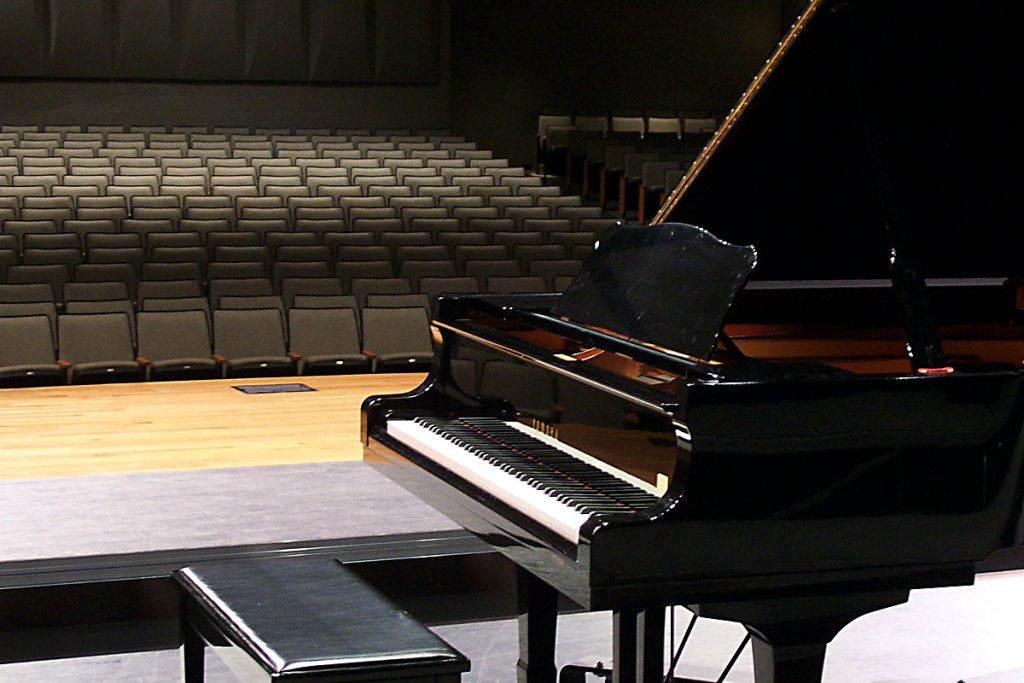
Keeping a grand piano at Port Moody’s Inlet Theatre could wind up being more expensive than the actual piano.
Staff presented a range of storage options for the incoming instrument to council on Oct. 10 – the more pricey options range from $500,000 to $2 million.
“I’m not too concerned about the overall cost if it’s going to have a benefit to expanding culture and arts within our community,” said Coun. Callan Morrison. “We need to put our money where our mouth is when it comes to the arts.”
Local news that matters to you
No one covers the Tri-Cities like we do. But we need your help to keep our community journalism sustainable.
In April 2024, the Inlet Theatre Music Series started a fundraising campaign to purchase a high-end grand piano for the city, which can range upwards of $100,000.
All the city would have to do is provide proper storage, but that doesn’t come cheap.
While staff were supportive of the initiative, they said keeping the piano on stage would be impractical due to the small stage and space in its wings.
Seven potential options were suggested by staff but most were deemed inappropriate due to ongoing costs and impacts to city operations, or safety concerns (for people and the piano).
One rejected option involved hoisting the piano by chain over the stage when it is not in use. “I don’t want to sit up here with it hanging over anyone’s head,” said Coun. Samantha Agtarap, jokingly.
Council ultimately directed staff to explore three options: constructing a large storage room off the back of the stage; installing a hydraulic lift to store the piano underneath the stage; or storing it in the galleria outside the theatre.
The first option is the most expensive, estimated between $1 million to $2 million, but staff said it also comes with the most benefits.
The back wall of the storage room would face Port Moody’s amphitheater, and it would allow the piano to be used for outdoor performances on a roofed stage to be constructed, complete with a lighting grid and electrical connections.
Not only would this not impact other theatre renters, but it would also provide additional storage space for other theatre equipment, staff said.
Coun. Kyla Knowles supported this recommendation, stating she wants to see Port Moody’s amphitheater used more.
While the option is the most expensive, she pointed to council’s recent spending freeze on development-related art monies until a new policy is in place, which she suggested could help cover some of the costs.
“I think this is win-win on all levels, for all parties,” Knowles said. “We can use those funds for exactly this option.”
Installing a hydraulic lift underneath the stage to lift the piano up would cost between $500,000 and $750,000, and was the preferred option for staff.
An empty cavity beneath the staff would need to be finished and temperature controlled, and either a lift platform or a trap door could be used to raise the piano into position.
Both these options would require shutting down theatre for periods of time to allow for construction to take place.
Storing the piano in the galleria outside the theatre doors might come at no immediate cost to the city, but the option was not supported by staff.
The piano would be disassembled and transported to the stage every time it was requested for a performance, which would cost a few hundred dollars each time for labour and tuning.
It could also potentially lead to damage from members of the public.
On the other hand, the piano could be used for events at the galleria, and Coun. Amy Lubik said she thought residents would enjoy being able to see the instrument.
Coun. Haven Lurbiecki cautioned against making any commitments until the public had a chance to weigh in, stating she was unsure how it fit within the city’s art priorities.
“I’m not very comfortable just committing to one option,” she said. “I just don’t feel that we have the direction from the community to do this.”
Morrison said the city has made its priorities clear through its strategic plan, and agreed with Knowles that the reallocation of art spending could help ease the cost burden.
“We are the City of the Arts, and . . . we want to revitalize that name and actually live up to that expectation,” he said.
Agtarap added that staff should investigate sponsorship opportunities to alleviate cost impacts to the city.
Staff were allocated $5,000 from the public art reserve to further explore conceptual designs and cost estimates for the three options.
Author