Bigger Rocky Point a high priority in Port Moody’s new Parkland Strategy

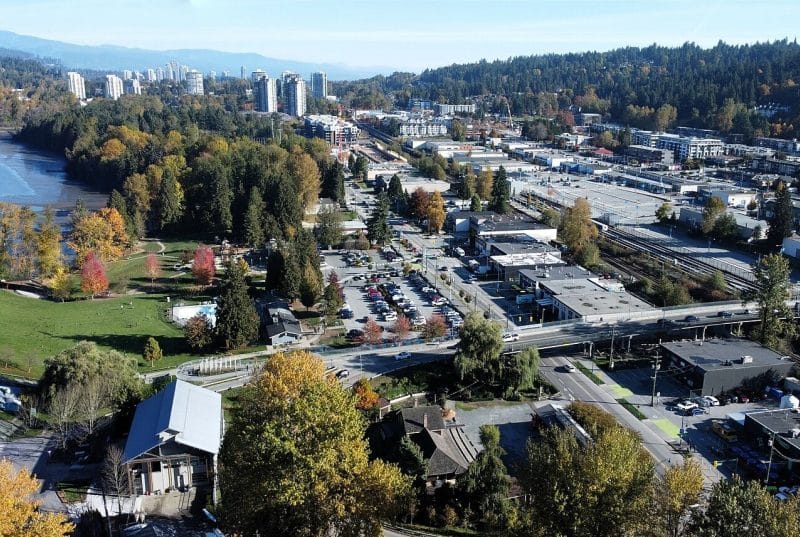
Port Moody council has officially adopted its Parkland Strategy, which emphasizes significantly expanding Rocky Point Park, along with other parks in high-growth areas.
On June 10, council unanimously approved the strategy, which included several amendments following input received at the mayor’s town hall event on parkland expansion.
The revised document now clearly states that expanding Rocky Point Park, Kyle Park and Chip Kerr Park are high priorities for the city, as well as acquisitions of waterfront parkland, and reinforcing public waterfront access where feasible.
Local news that matters to you
No one covers the Tri-Cities like we do. But we need your help to keep our community journalism sustainable.
“This is a very important document for us in terms of future decisions,” said Mayor Meghan Lahti. “It not only identifies the areas where we need to increase and expand parkland, it talks about opportunities and challenges, because we know going forward we will have limited resources.”
Expanding Rocky Point Park, the most-used and central park in the city, has been a hot-button issue for many in the community. Local residents formed an advocacy group last year, gathered thousands of signatures on a petition, and held rallies outside of city hall.
The parkland strategy outlines an ambitious plan to address the growing pressure on green space as the city’s population surges.
With the city’s population projected to rise from approximately 38,942 today to between 68,000 and 76,000 by 2050, demand for parks and recreation space is expected to increase significantly.
While the city currently boasts 365 hectares of parkland – 79 hectares of which are actively managed – this supply will not keep pace with population growth unless new lands are acquired.
If no action is taken, the amount of actively managed parkland per capita would drop from about 3.2 hectares per 1,000 residents today to 1.1 hectares by 2050. Total parkland, including natural areas, would fall to about 1.5 hectares per 1,000 people.
Coun. Haven Lurbiecki said she views the strategy as one of the city’s most important documents, describing it as a: “bit of a warning.”
“We are facing a crisis-level situation regarding loss of per capita parkland if we don’t take immediate action in the long term to expand our parks,” she said. “It needs to be a priority to the city, and I know it’s a priority to the community.”
To address this, the strategy proposes an aspirational target of maintaining 2.5 hectares of parkland per 1,000 residents by 2050. It also aims to ensure that at least 8 percent of each neighbourhood is covered by actively managed parks and trails, and that 85 percent of residents have a park within a five-minute walk.
To meet these goals, the city would need to acquire at least 22 hectares of new, actively managed parkland.
However, escalating land values present a major hurdle, as the city’s primary funding source for parkland expansion – development cost charges (DCCs) – may not generate enough revenue to meet future needs.
Currently, a single hectare of land in Port Moody is estimated to cost up to $27.5 million, according to 2024 BC Assessment data.
Mayor Lahti stressed the city has limited land, and council has to be “creative” and “open minded” about how to meet the public need going forward.
“We are dealing with a finite amount of land,” she said. “While I don’t think it’s quite a crisis, it is a bit of a canary in the coal mines – we do have to be paying attention to this.”
The strategy suggests a multi-pronged approach to bridge the gap, including early land acquisition, land swaps, long-term leases, partnerships with School District 43, and planning tools such as park dedications and community amenity contributions.
Integrating parkland acquisition into the city’s long-term capital planning, including maintenance and renewal, is another major feature.
Neighbourhoods expected to face the greatest parkland shortfalls include Moody Centre, Glenayre, Harbour Heights, College Park, and Seaview. Moody Centre is flagged as the most critical, given the scale of new development anticipated. In some areas, per-capita parkland could drop by more than half unless action is taken.
Coun. Samantha Agtarap noted the strategy is a “living document” and is subject to changes.
She said she likes how the strategy will measure service levels between neighbourhoods and uses objective metrics to assess and track changes over time.
Council received a draft of the parkland strategy back in April, but decided to defer approval until after the town hall event.
A summary of the engagement event was also released at the June 10 meeting. Out of the 49 attendees, concerns were repeatedly raised over increasing population pressures and limited green space in the Moody Centre neighbourhood.
Participants questioned the adequacy of existing parkland, and many described current parks, especially Rocky Point Park, as overcrowded and undersized.
Those pushing for Rocky Point Park’s expansion will likely view the revised language within the strategy as a win.
However, Couns. Kyla Knowles and Callan Morrison underscored that the city has no plans to expropriate any land to expand existing parkland.
Knowles, referencing written submissions from concerned residents, quelled any notion the city was interested in expropriating the Flavelle Lands to the west of Rocky Point Park.
“That’s certainly not something that this council has ever espoused, that is not something that we would be pursuing other than in partnership with the owner,” she said.
In fact, despite changes to the recent language changes, many councillors highlighted the strategy’s plan to enhance smaller parks in the community to take pressure off Rocky Point Park.
Agtarap said the strategy highlights the council’s desire to both expand its main parks and neighbourhood parks.
Knowles said the city’s land management strategy will feed into the park strategy by helping expand parks throughout the city, particularly in Moody Centre.
“People want parks where they live. They don’t necessarily want to pack up for the day, and drag a wagon to Rocky Point,” Knowles said. ”They want to be able to go within walking distance of their homes and set up a picnic or play ball, so that is certainly my focus.”
Coun. Diana Dilworth agreed, stating that the city has made a “very good case” for upgrading neighbourhood parks.
She noted events hosted at Westhill Park, Kyle Centre Park, and Chestnut Way Park have resulted in a significant uptick in their usage.
Dilworth said she was excited to see upgrades to Old Orchard Park, as well as Rocky Point Park.
“Yes, everybody loves Rocky Point Park. It’s the jewel of the city right there at the end of the inlet. But I think we have an opportunity to . . . incentivize residents to go to other parks throughout Port Moody,” Dilworth said. “Let’s accommodate people in their neighborhoods.”
Author