Patios in public spaces may soon be more common in PoCo as city moves to formalize pandemic program
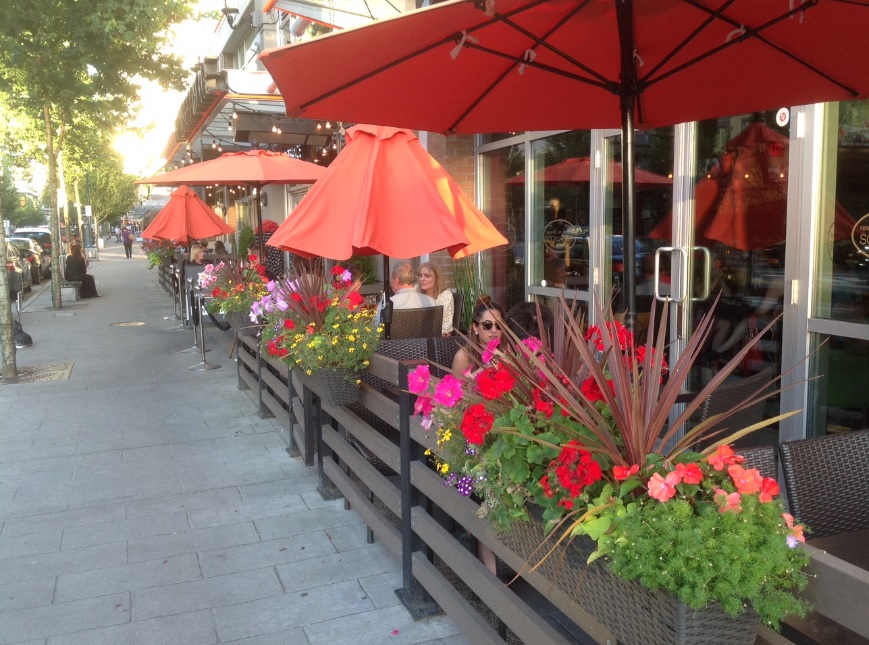
Expanding restaurant patios was a necessity during COVID-19, but the increase in outdoor seating for food and liquor establishments was also extremely popular.
So much so that Port Coquitlam council moved to formalize use of patios on public lands, unanimously endorsing an official program on July 9.
“I think the city has really distinguished itself in this area, particularly during the pandemic, by facilitating patios in public spaces,” said Mayor Brad West. “It’s been very well received, and I’m pleased that we’re continuing in that vein.”
Local news that matters to you
No one covers the Tri-Cities like we do. But we need your help to keep our community journalism sustainable.
The city’s program will replace the Liquor and Cannabis Regulation Branch’s Temporary Expanded Service (TESA) Area program, which expires at the end of 2024.
First initiated in May 2020 as a response to COVID-19 public health orders, staff said the program was well received by the community, stimulated businesses, activated public spaces and attracted visitors to the city’s commercial centres.
Retaining existing patios under the temporary program, and adding new patios across the Port Coquitlam is supported by the recommendations of city planners and downtown businesses, staff noted.
The proposed program is intended to ensure patios are built and operated safely, do not negatively impact surrounding uses, and meet municipal and provincial requirements in a simple and streamlined manner, according to staff.
Key elements of the proposed program:
- Businesses with direct access to city roads, lanes, or sidewalks can apply for a patio through a simplified Public Space Patio Application. Applications will undergo internal review by staff, ensuring compliance with basic guidelines to prevent obstruction of pedestrian traffic or public services.
- Sidewalk patios will be limited to the frontage of the establishment and must maintain a clear walking area of 1.8 meters for pedestrian and cyclist safety. Patios on lanes and road curbside will be evaluated case by case to minimize impacts on vehicular and pedestrian traffic, municipal infrastructure access, and parking availability.
- Patios can vary in size and configuration, accommodating various seating options such as bistro tables, picnic tables, and additional amenities like railings, planters, and non-permanent weather protection such as umbrellas, seasonal tents, decorative lights, and heaters, provided they meet safety standards.
- Approved patios can operate seasonally or year-round with hours of operation until 10 p.m. A nominal fee of $25 per seat annually will be applied. The fee structure aims to recover costs associated with program administration and support ongoing maintenance and enhancements.
- Businesses currently utilizing public space for patio seating under temporary agreements will be supported in transitioning to the new program. Staff said they will work closely with these establishments to ensure a smooth shift, with the new fee structure taking effect in 2025.
Four Port Coquitlam businesses still have temporary licensing agreements under the provincial pandemic program, which have been extended for several years in anticipation of a permanent solution.
These establishments have all indicated a desire to continue using the additional outdoor seating, but staff said they would be left in “no man’s land” after TESA expires at the end of the year.
“We need to create a process to allow them to continue,” said Director of Development Services Bruce Irvin. “Our hope is that instead of having four (program participants), as we have now, we would have many many more in the future.”
Staff will be working over the summer to draft policy and bylaw amendments to facilitate the program, and plan to report back to council in fall 2024.
Author