New Metro Vancouver study shows regional parking oversupply smaller than expected, and Port Moody could cut back on visitor stalls
Port Moody council heard Monday that the region’s appetite for parking stalls isn’t as bottomless as once assumed – and that building them isn’t cheap.
Presenting Metro Vancouver’s new Regional Parking Study 2025 on Oct. 21, senior planner Mark Seinen told council the database shows that the average occupancy rate is 65 percent.
“There actually isn’t a huge degree of parking oversupply in the region,” Seinen said. “What this tells me is that city planners and developers are actually doing a pretty good job already in understanding how much parking is needed in different geographic contexts.”
Local news that matters to you
No one covers the Tri-Cities like we do. But we need your help to keep our community journalism sustainable.
The regional parking study is meant to reinforce Metro 2050’s goals on compact growth, climate, housing and transportation with empirical evidence.
Following earlier iterations in 2012 and 2018, the database has doubled in size, and now includes 35,000 stalls across 216 apartment buildings – 16 of which were non-market to see if affordable development projects behave differently.
Metro collected supply-and-demand counts at various residential and mixed-use sites, and compared occupied stalls per occupied unit to stalls provided per unit
Seinen said the data shows about two-thirds of residential stalls are filled during typical peak night hours, and that ratio is broadly similar whether buildings are strata or rental, near rapid transit or not.
He cautioned against the common assumption that parking is massively oversupplied near stations, arguing planners are already, on average, calibrating to local demand.
The study also documents how municipal bylaw rates have been trending down, noting provincial legislation now prohibits minimum residential parking requirements within 800 metres of rail stations or 400 metres of certain bus and West Coast Express nodes, making it more important to watch real-world use.
On trends over time, Metro’s summary shows occupancy ratios have trended down over time: 0.7 per unit from 2012 to 2017, to 0.63 from 2018 to 2025. It shows that surplus has been rising in stratas, while rental buildings generally match supply to demand more closely.
Near both frequent bus and rapid transit, occupancy has also slipped, implying more room to cut back on stalls around stations.
Port Moody’s slice of the dataset
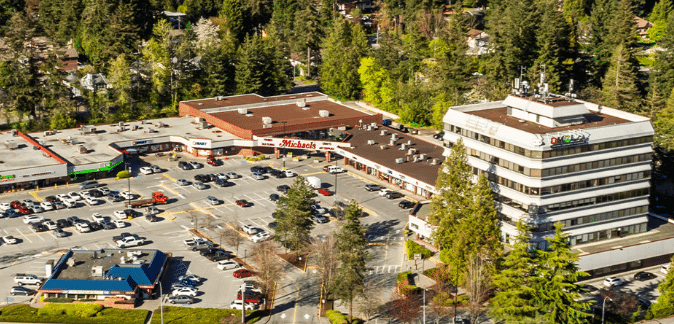
Port Moody’s sample covers five buildings — two in Klahanie, two in Suter Brook, and one non-market building on St. Johns Street — about 511 homes, all within 800 metres of a skytrain station.
The average utilization of stall by residential occupants is 63 percent. Seinen said this is “middle of the pack” regionally, but the city supplies comparatively more stalls at 1.51 per unit.
Visitor parking is markedly underused: just 20 percent occupied at peak times, according to the data. That’s the region’s lowest, versus an average of 36 percent.
Seinen suggested that points to local opportunities to pare back visitor minimums or improve wayfinding and access so guests actually use off-street stalls already built.
Stalls are pricey, and the costs ripple
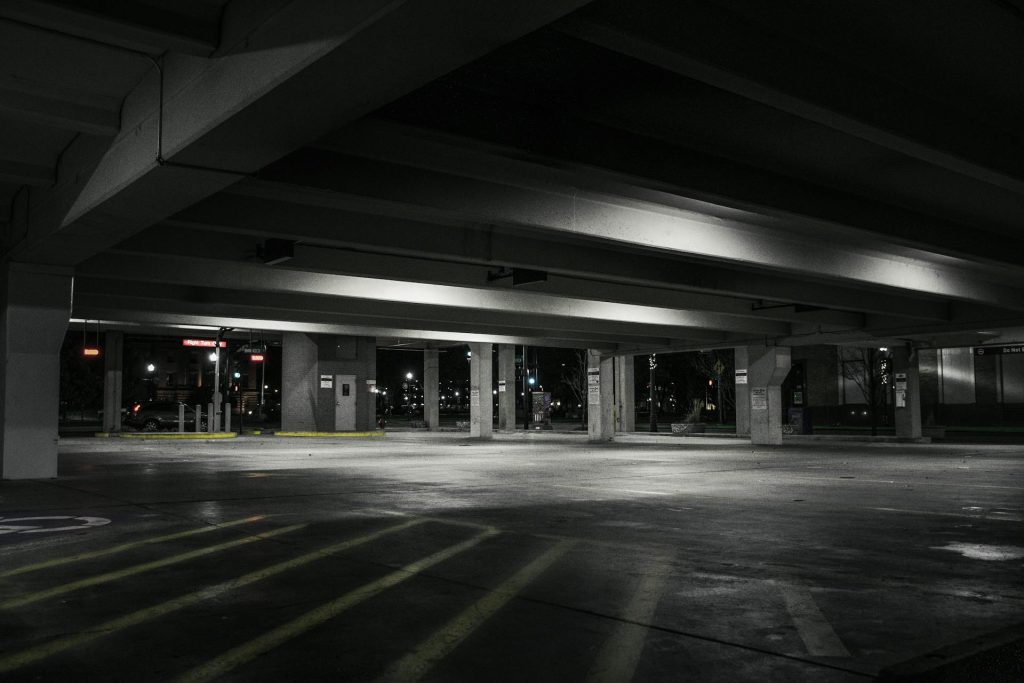
The study, citing interviews with developers, states that underground stalls are expensive to build and finance, and aren’t a profit centre.
Builders try to match what buyers and renters will actually demand. Interviewed developers cited average costs around $115,000 per stall, with a wide range up to $230,000 more challenging urban sites.
Metro’s analysis states that just one dedicated parking stall results in buyers needing an extra $31,000- $36,000 in annual household income just to qualify for a mortgage.
Seinen told council that eliminating parking minimums (as transit oriented areas do), doesn’t mean developers will build “zero parking.” They still build to market demand.
The practical implication, he said, is to focus on right-sizing developments, not rely on arbitrary thresholds, and to recognize that any real savings show up because some households accept fewer amenities (no stall), so the home can be offered at a lower price.
Seinen’s Port Moody datapoints suggest the city can safely test lower visitor minimums and consider flexible tools (shared visitor-commercial stalls, rentable “flex” stalls, clearer off-street wayfinding) around Moody Centre Station, rather than aiming for a ratio target.
Council comments
Coun. Kyla Knowles called the data “so helpful,” stating it validates anecdotal experience as Port Moody maps out TOAs.
She asked how generational shifts in car ownership and use could further reduce the need for parking stalls.
Seinen said Metro hasn’t measured that directly but acknowledged emerging differences in licensing, car share and micromobility use, adding the development market “isn’t quite there yet” to bank projects on drastically lower parking ratios for strata condos.
Coun. Callan Morrison said the findings should cool calls for one-to-one or higher parking ratios near SkyTrain stations.
“This data is showing that even when it’s closer to transit, if you have that lower number of stalls per unit, you’re not even filling up all of those stalls,” he said.
Coun. Amy Lubik pressed on affordability, and whether developers could unbundle parking from units so car-free households aren’t forced into paying for unused stalls.
Seinen said unbundling is already common in rentals, where tenants can opt in to a stall, but because the strata market relies on pre-sales, it makes it harder to be flexible years after drawings are locked in.
Coun. Haven Lurbiecki asked how savings actually reach buyers if cities were to cut parking minimums.
Developers still build to what customers demand; outright maximums could suppress parking – and prices – but at the expense of an amenity many buyers want, Seinen replied. That nuance, he said, is why Metro focused on “right-sizing” rather than a blanket push to zero.
“It’s really hard to convince a developer to go below that sort of organic level of what they think the demand is,” he said. “The unit would be less expensive. But it’s not because the developer will pocket the savings and then subsidize the resident. It’s because they’d be offering up a unit that has fewer amenities that is less in demand and simply demands a lower price in the market.”
Author